

 Arabic
 Spain
Spain Germany
 France
 Japan
Japan Portuguese
 Russian
 Chinese
 Thailand
 Vietnam
 Indonesia
 India
IndiaNews
THE PIONEER IN FACADE SOLUTIONS


In contemporary architecture, some of the most important design decisions are found in details that are easy to overlook.
In contemporary architecture, some of the most important design decisions are found in details that are easy to overlook.
A ceiling profile, a curved panel, a precisely formed edge, or a carefully treated aluminum surface can change how an entire space is perceived.
The recently opened China National Convention Center Phase II in Beijing offers a useful reference. Designed by Christian de Portzamparc's firm, the project brings together exhibition, conference, reception, and international event functions within a large architectural complex of approximately 418,680 square meters. Its design translates the traditional Chinese concept of "flying eaves" into a contemporary architectural language, using flowing forms, large-scale surfaces, and layered spatial relationships.
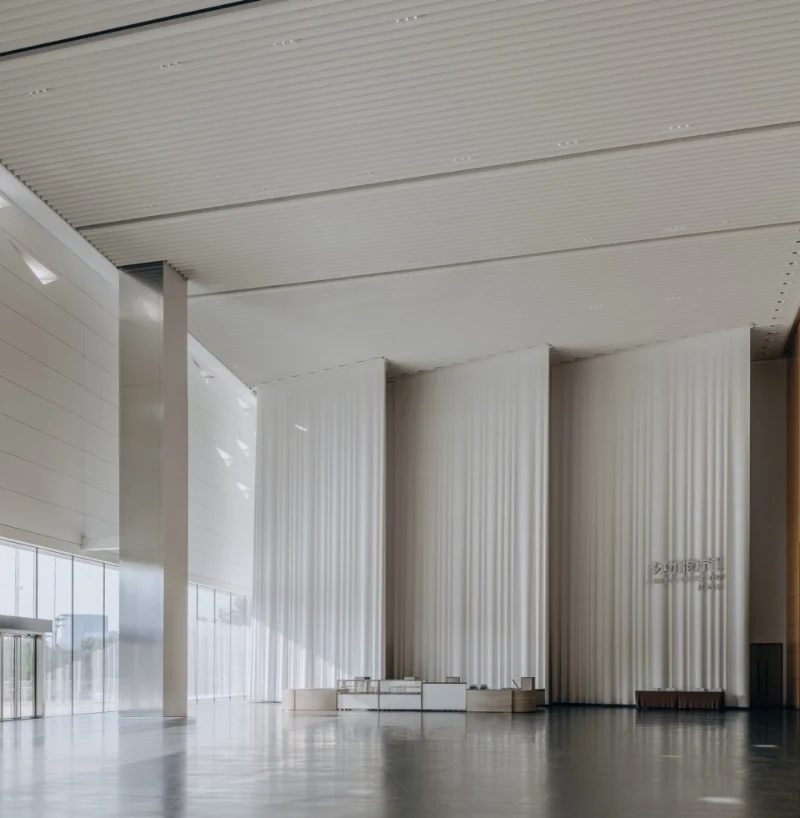
Its interior use of aluminum ceiling elements provides an interesting starting point for understanding how aluminum can move beyond conventional facade applications. More importantly, it raises a practical question for architects and project teams: how can a material be processed accurately enough to become part of an architectural design rather than simply a finishing material?
For WILLSTRONG®, the answer lies in the combination of material quality, precision machining, surface treatment, and experience with customized architectural applications.
The ceiling of a large public building has several functional responsibilities, while also contributing to the architectural language of the space.
The ceiling of a large public building has several functional responsibilities. It may need to accommodate lighting, ventilation, fire protection, access points, and other building services. However, these technical requirements do not have to exist separately from the architectural concept.
In the China National Convention Center Phase II, the interior spaces are designed around openness, circulation, and visual continuity. Large entrances, multi-level public areas, corridors, and gathering spaces require architectural elements that can maintain a consistent visual language across different areas.
Aluminum can be processed into different profiles and forms while maintaining a clean architectural appearance. When the geometry of the panels, the spacing between elements, the surface finish, and the integration of lighting are properly coordinated, the ceiling can become an extension of the architecture.
The same principle applies to walls and facades. Instead of treating aluminum as a standard rectangular panel, architects can use it to create specific forms that respond directly to the design concept.
Turning a complex architectural concept into repeatable, accurately manufactured components requires more than design alone.
A complex architectural form cannot be achieved through design alone.
Once an architect has established a particular shape, the next challenge is turning that drawing into repeatable, accurately manufactured components. This becomes especially important when a project involves curved surfaces, irregular geometries, multiple panel sizes, or detailed transitions.
WILLSTRONG® Architectural Art Aluminium is developed for this type of application.
The material is manufactured from solid aluminum alloy and can undergo precision machining and advanced surface treatment. These processes allow aluminum components to be produced according to project-specific requirements rather than being limited to standardized forms.
Precision machining is particularly important for architectural projects because small dimensional differences can become highly visible when multiple components are installed together. Consistent dimensions and controlled edges help ensure that individual panels work together as one finished architectural surface.
Project-specific geometry can be manufactured through controlled machining rather than being limited to standardized forms.
Consistent dimensions and controlled edges help individual components work together as one finished architectural surface.
Surface quality and consistency are essential when architectural aluminum remains highly visible within the finished project.
Surface treatment is another important part of the process. The final appearance of architectural aluminum depends not only on its shape but also on the quality and consistency of its surface.
For projects where the material is highly visible, manufacturing and finishing need to be considered as part of the architectural design process.
A practical example of how solid aluminum alloy, precision machining, and surface treatment can support customized exterior architecture.
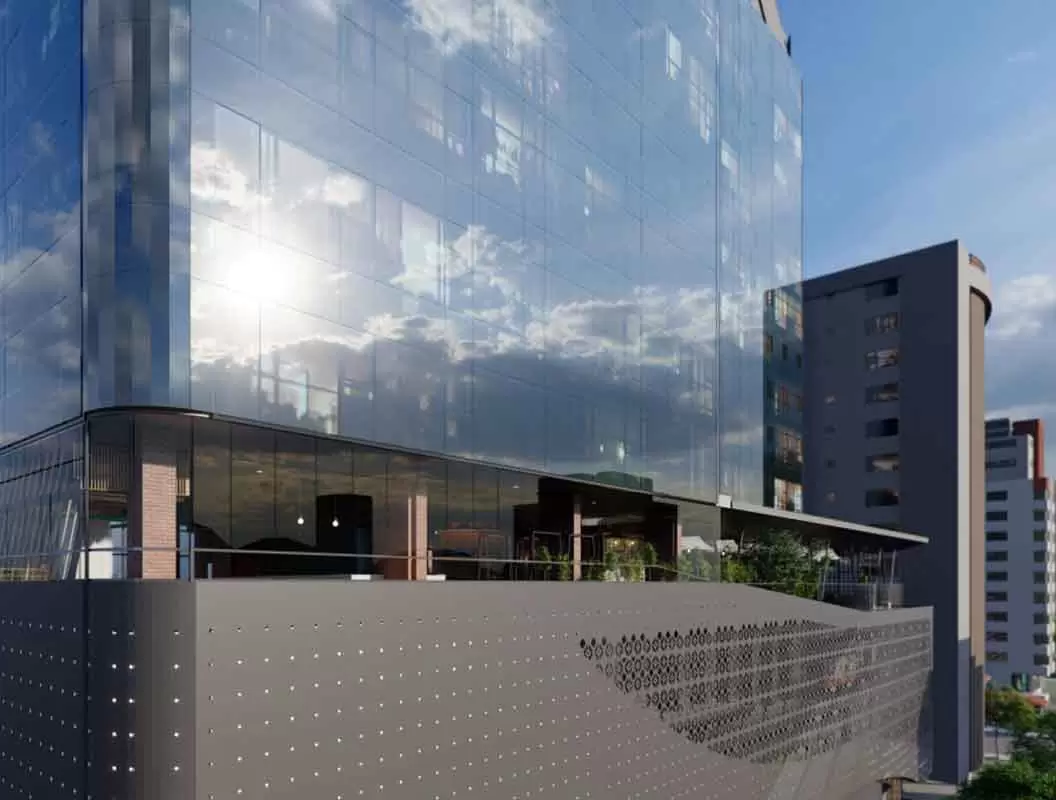
A practical example of WILLSTRONG®'s approach can be seen in the Xi'an Maco Commercial Center project.
For this project, WILLSTRONG® provided Architectural Art Aluminium for the building's exterior wall. The project demonstrates how solid aluminum alloy can be combined with precision machining and surface treatment to create a more customized architectural appearance.
The exterior of a commercial building often needs to perform two roles at the same time. It must provide reliable long-term performance while also giving the building a recognizable visual identity.
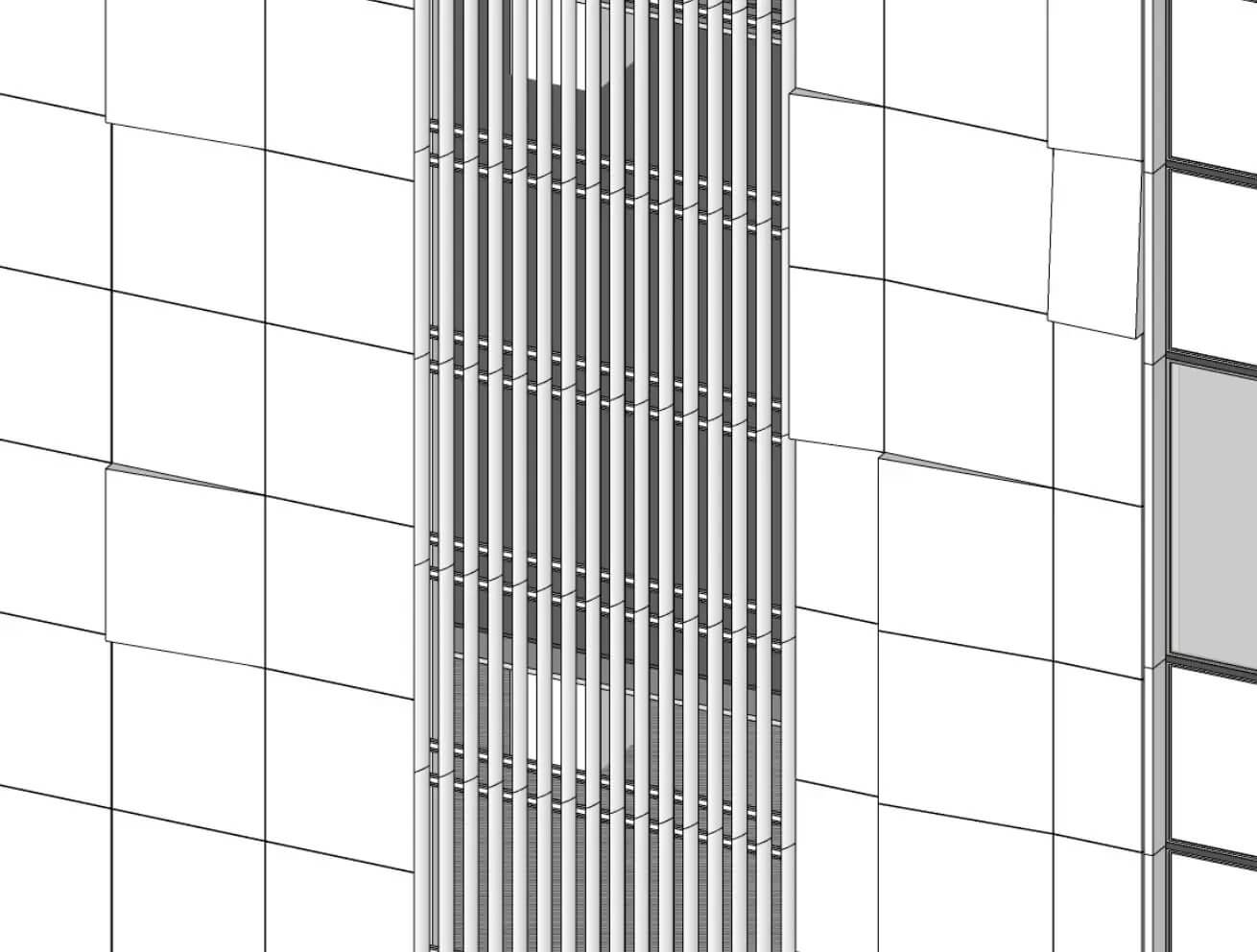
In Xi'an Maco Commercial Center, the flexibility of Architectural Art Aluminium allowed the exterior wall to move beyond a simple flat-panel arrangement. The material could be shaped into different forms, giving the design team greater freedom to develop architectural details and create a contemporary appearance.
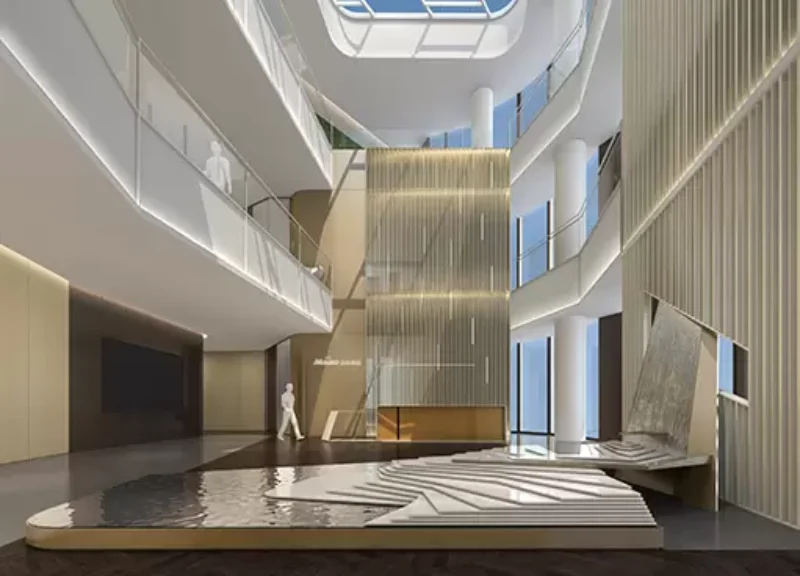
One of the defining characteristics of the project is the use of precision machining.
Architectural aluminum may need to follow specific angles, curves, dimensions, or other geometric requirements. Standard panels are not always suitable when the design depends on these details.
By machining solid aluminum alloy according to project requirements, WILLSTRONG® can support more complex architectural forms while maintaining the dimensional accuracy needed for installation.
This capability is particularly useful when a building facade contains repeated customized elements. Each component needs to correspond with the surrounding panels and the overall architectural geometry.
The objective is not simply to make a visually unusual panel. It is to make a component that can be manufactured, finished, transported, and installed as part of a complete architectural system.
The visual quality of an architectural aluminum installation also depends heavily on surface treatment.
For the Xi'an Maco Commercial Center, the refined appearance of the aluminum panels contributed to the contemporary character of the exterior. The smooth surface worked together with the customized forms to create a more distinctive architectural expression.
At the same time, solid aluminum alloy provides the durability required for exterior applications. Combined with appropriate surface treatment, precision machining helps the finished panels maintain their appearance and performance during long-term use.
This balance between visual quality and practical performance is particularly important for commercial buildings, where the facade remains continuously exposed to the surrounding environment.
Architectural aluminum can support exterior walls, interior walls, ceilings, and other customized applications across different types of spaces.
The Xi'an Maco Commercial Center is one example of how WILLSTRONG® applies Architectural Art Aluminium to exterior architecture, but the material is not limited to facades.
At Vanke Jade State Guest in Xi'an , completed in 2020, WILLSTRONG®® Architectural Art Aluminium was used for an interior wall application. Here, the focus shifted from exterior architectural expression to the creation of refined interior surfaces. The material's solid aluminum construction, customized shaping capabilities, precision machining, and surface treatment helped support the design requirements of the interior spaces.
The same material and manufacturing capabilities can respond to different architectural environments according to the design requirements.
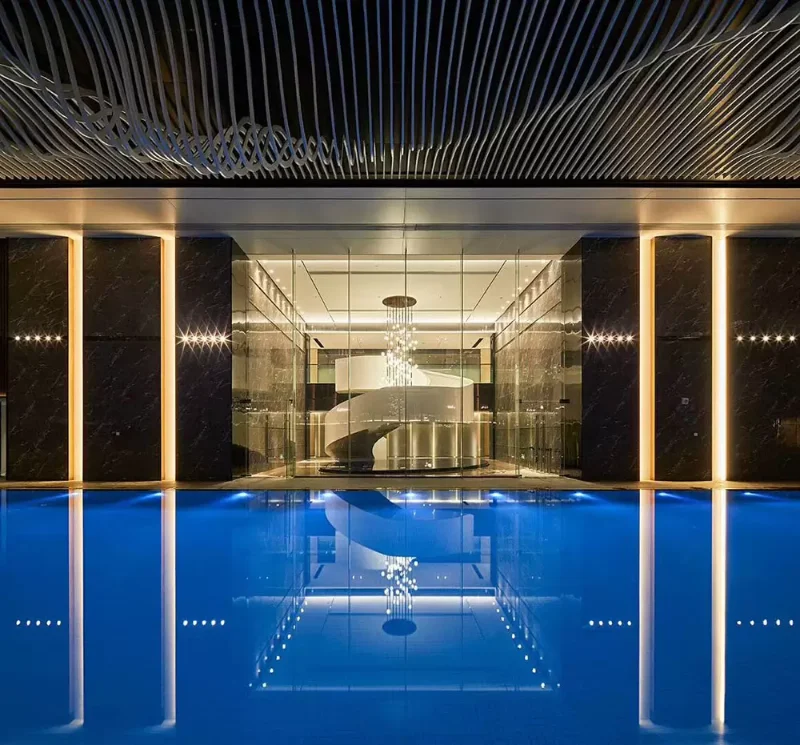
Another example is the Yanji & Xi'an Flagship Store , completed in 2020. Known as "The Most Beautiful Internet Celebrity Bookstore," the project used WILLSTRONG®® Architectural Art Aluminium for its exterior wall. The project demonstrates how customized aluminum can help a commercial space develop a recognizable architectural identity while maintaining practical performance.
These projects illustrate an important point: architectural aluminum does not have to be restricted to one specific building element.
The same material and manufacturing capabilities can support exterior walls, interior walls, ceilings, and other customized architectural applications, depending on the design requirements.
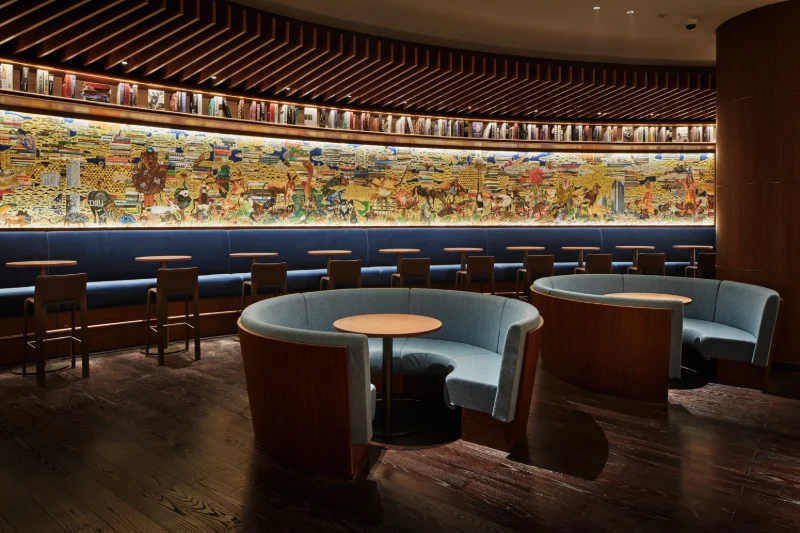
For highly customized architectural projects, craftsmanship extends from material selection through machining, finishing, dimensional control, and project coordination.
For highly customized architectural projects, craftsmanship is more than producing a good-looking finished surface.
It begins with selecting an appropriate aluminum material for the application. It continues through machining, forming, surface treatment, dimensional control, and project coordination. Each stage affects the final result.
This is particularly relevant when the architectural concept depends on subtle details.
A curved panel must follow the intended geometry. A series of repeated components must maintain consistency. A visible surface needs an even finish. Installation dimensions need to correspond with the construction drawings.
This is also the broader lesson that can be taken from the China National Convention Center Phase II. Its architectural language shows how traditional concepts can be translated into contemporary forms, while its large-scale interior spaces demonstrate the importance of coordinating architectural elements with practical building requirements.
The development of WILLSTRONG® reflects its evolution from a facade product manufacturer into a provider of architectural material and facade solutions.
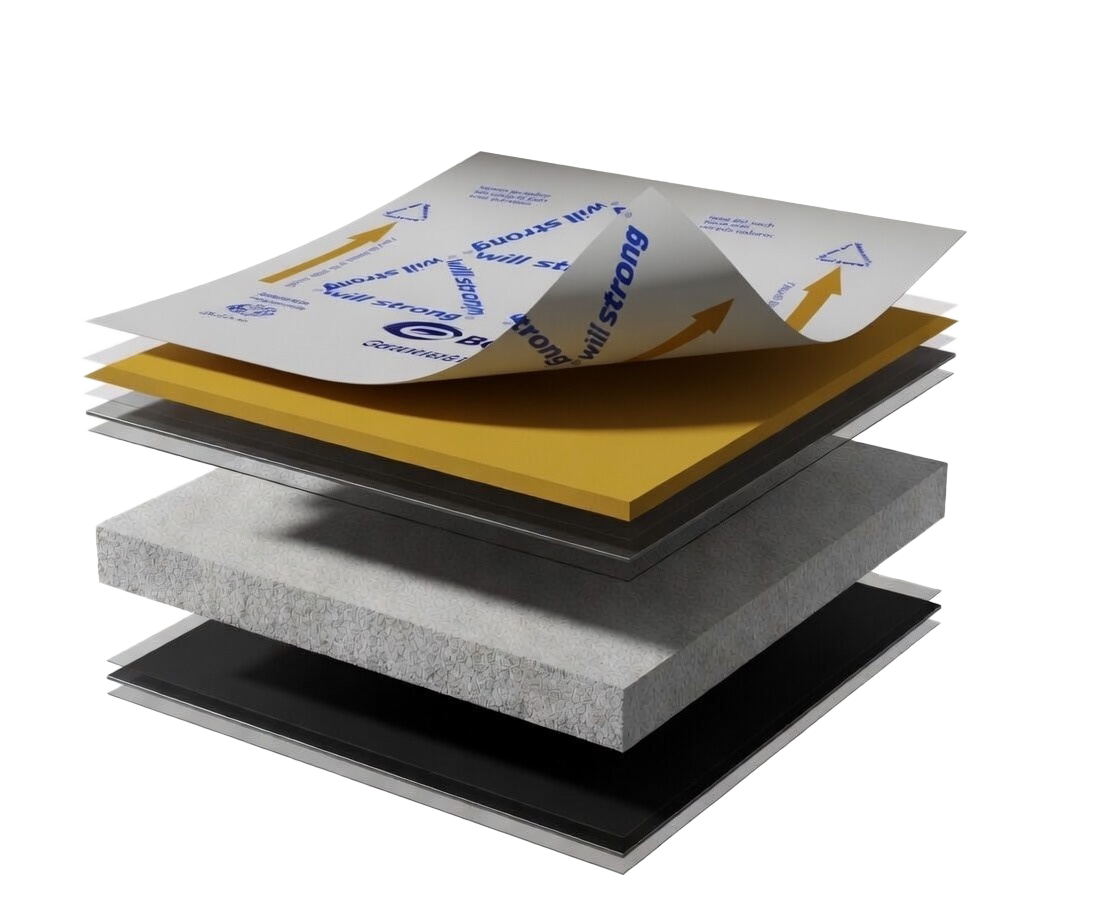
Established in 1995, WILLSTRONG® has developed from a facade product manufacturer into a provider of architectural material and facade solutions. Its product portfolio includes aluminum composite panels, fire-resistant composite materials, aluminum honeycomb systems, and Architectural Art Aluminium.
The company has obtained more than 30 certifications worldwide, holds more than 10 technology patents, and has accumulated more than 100,000 successful project applications. Its customers are located in more than 80 countries and regions.
WILLSTRONG® has also supplied products for internationally recognized projects, including Charles de Gaulle International Airport.
Its development philosophy, "Crafting with Quality, Making for Excellence," reflects an emphasis on material quality, attention to detail, manufacturing capability, and long-term project support.
For architectural aluminum, this approach is particularly relevant because the success of a customized project depends on much more than the material specification itself. The ability to understand the design, manufacture components accurately, control surface quality, and support the project through different stages is what turns an architectural concept into a finished building.
Individual building components can contribute to a larger architectural language when material, manufacturing, and design intent are considered together.
The ceiling elements seen in major public architecture such as China National Convention Center Phase II demonstrate how relatively individual building components can contribute to a larger architectural language.
WILLSTRONG®'s own projects show how the same principle can be applied through customized Architectural Art Aluminium. At Xi'an Maco Commercial Center, solid aluminum alloy, precision machining, and surface treatment were combined for a distinctive exterior wall. At Vanke Jade State Guest, the material moved into an interior application, while the Yanji & Xi'an Flagship Store demonstrated another approach to customized commercial architecture.
The common factor is not a particular shape or application. It is the ability to translate architectural ideas into accurately manufactured aluminum components.
For architects, designers, contractors, and developers, that capability can open more possibilities for facades, interior walls, ceilings, and other architectural elements.
When material, machining, surface treatment, and architectural intent are considered together, aluminum can move from a functional building material to an active part of architectural expression. That is where craftsmanship becomes architecture.
 Leave a Message