

 Arabic
 Spain
Spain Germany
 France
 Japan
Japan Portuguese
 Russian
 Chinese
 Thailand
 Vietnam
 Indonesia
 India
IndiaNews
THE PIONEER IN FACADE SOLUTIONS


In contemporary architecture, ceilings are increasingly treated as part of the overall architectural language rather than simply as functional finishes. Large public buildings demonstrate how customized aluminum elements can contribute to scale, circulation, visual rhythm, and spatial identity.
In contemporary architecture, ceilings are increasingly treated as part of the overall architectural language rather than simply as functional finishes.
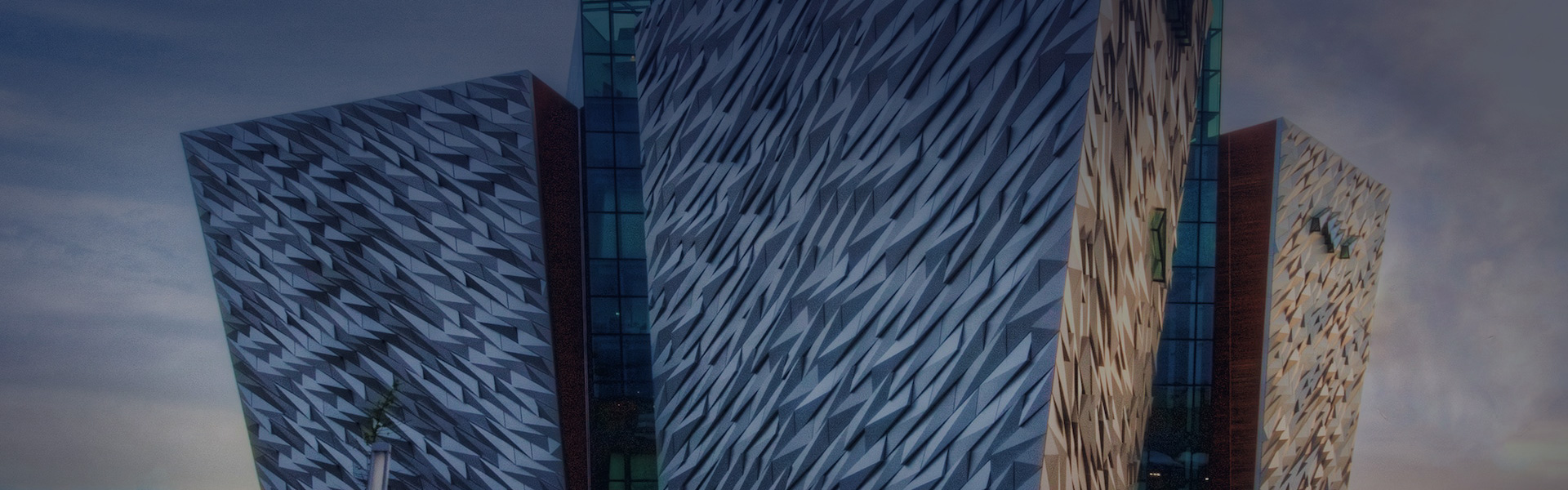
In large public buildings, the ceiling can influence the sense of scale, circulation, lighting, visual rhythm, and the way visitors experience a space.The China National Convention Center Phase II in Beijing is a useful example of this approach. Designed by Christian de Portzamparc's firm, the project opened in 2025 as an extension of the existing China National Convention Center. With a total floor area of approximately 418,680 square meters, the complex accommodates exhibitions, conferences, receptions, and major international events.
Its architectural concept draws on the traditional Chinese "flying eaves," transforming the familiar upward-curving form into a contemporary architectural expression. The exterior uses large white diamond-shaped elements, irregular openings, and flowing forms to create an image associated with birds spreading their wings.
Inside, the same emphasis on openness, movement, and visual continuity can be seen in the large public spaces and architectural details, including the use of aluminum ceiling elements. This is where the role of architectural aluminum becomes particularly interesting: a material traditionally associated with facades can also contribute to the identity and functionality of interior spaces.
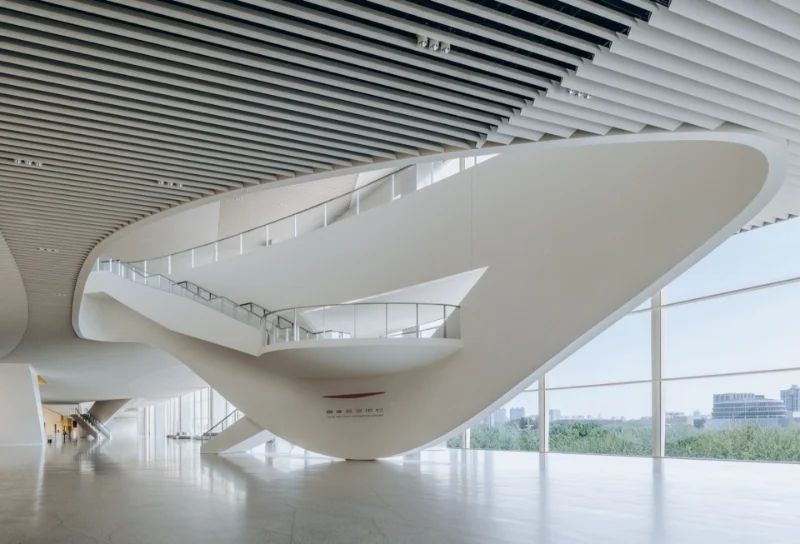
In a convention center of this scale, the ceiling has to do more than cover the space above visitors. Technical requirements and architectural concepts need to coexist within one coordinated system.
In a convention center of this scale, the ceiling has to do more than cover the space above visitors.
Large public interiors require lighting, ventilation, fire protection, access, signage, and other building services. At the same time, these technical requirements need to coexist with the architectural concept.
A well-designed aluminum ceiling can help integrate these different requirements into one coordinated system.
Instead of treating each technical element separately, ceiling panels, linear elements, lighting, and service openings can be organized according to the geometry and rhythm of the interior.
The result is a cleaner visual environment in which the ceiling contributes to the architectural experience rather than competing with it.
The China National Convention Center Phase II demonstrates why customized aluminum forms are increasingly relevant to large-scale architectural projects. The building's overall design is based on movement and layered spatial relationships, so standardized flat ceiling solutions would not always provide the same design flexibility.
For architects, the value of aluminum lies not only in the material itself but also in how precisely it can be processed into the required architectural form.
A well-designed aluminum ceiling can help integrate different technical requirements into one coordinated system, allowing ceiling panels, linear elements, lighting, and service openings to follow the geometry and rhythm of the interior.
Creating a distinctive architectural form is only one part of a successful project. The more important question is whether that form can be manufactured consistently and installed accurately.
Creating a distinctive architectural form is only one part of a successful project.
The more important question is whether that form can be manufactured consistently and installed accurately.
Customized architectural aluminum may require cutting, bending, machining, forming, edge treatment, and surface finishing before it becomes a finished architectural component. When many individual pieces are assembled into a large wall or ceiling, dimensional consistency becomes critical.
This is particularly important when the design contains repeated patterns, curved surfaces, angled elements, or complex transitions.
For this reason, architectural aluminum projects depend heavily on the relationship between design and manufacturing. A material supplier needs to understand how a design will be translated into actual components, while the manufacturing process needs to maintain the intended geometry and finish.
WILLSTRONG® Architectural Art Aluminium is developed with this type of customized application in mind. Made from solid aluminum alloy, the material can undergo precision machining and advanced surface treatment to achieve different architectural forms and finishes.
Customized architectural aluminum may require cutting, bending, machining, forming, edge treatment, and other processing before becoming a finished architectural component.
Solid aluminum alloy can undergo precision machining to achieve different architectural forms while maintaining the dimensional requirements of the project.
Advanced surface treatment helps achieve the intended appearance and finish while supporting consistency across customized architectural components.
Although the China National Convention Center Phase II is an external project and is not a WILLSTRONG® project, its approach to integrating architectural aluminum elements into a highly designed public interior provides a useful reference for understanding how aluminum can move beyond conventional facade applications.
A practical example of WILLSTRONG®'s architectural aluminum capabilities and the relationship between customized forms, precision machining, and surface treatment.
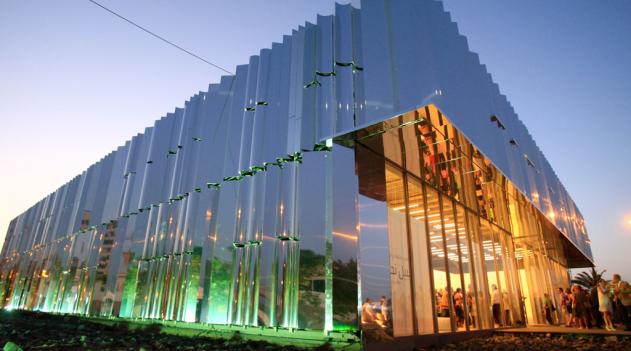
A practical example of WILLSTRONG®'s architectural aluminum capabilities can be seen at Xi'an Maco Commercial Center, where WILLSTRONG® Architectural Art Aluminium was used for the exterior wall.
The project was completed between 2018 and 2019. Rather than using aluminum simply as a flat exterior covering, the project took advantage of the material's ability to be customized into different shapes.
WILLSTRONG® Architectural Art Aluminium is manufactured from solid aluminum alloy and processed through precision machining and surface treatment. This combination gives architects more freedom to develop architectural details that require specific shapes, dimensions, and surface effects.
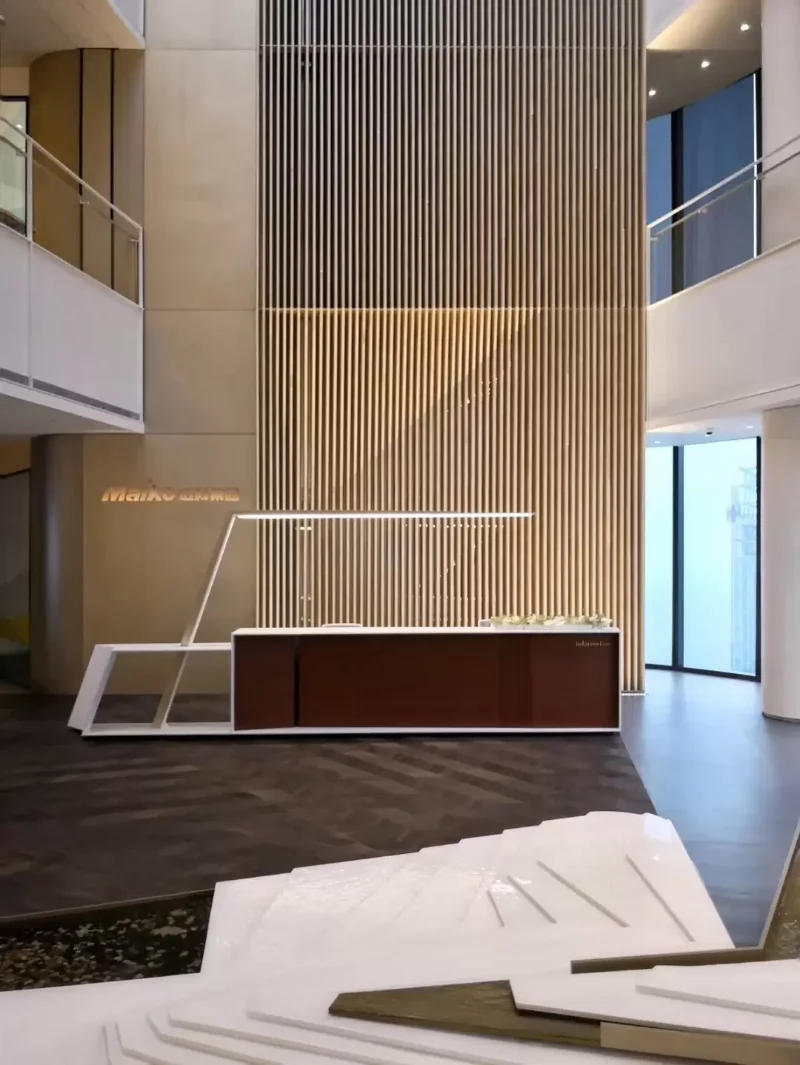
For the Xi'an Maco Commercial Center, this flexibility was important to the overall appearance of the building.
The exterior wall needed to create a contemporary architectural image while maintaining the practical requirements of an exterior building material. The customized aluminum panels helped introduce more varied forms and architectural details, giving the commercial center a distinctive visual identity.
The customized aluminum panels helped introduce more varied forms and architectural details, giving the commercial center a distinctive visual identity.
One of the key advantages demonstrated by the project is the relationship between material and machining.
Architectural designs often contain details that cannot be achieved effectively with standard panels. Curves, angles, irregular profiles, and other customized forms require a manufacturing process capable of translating the design into accurately produced components.
Precision machining provides greater control over these details.
For the Xi'an Maco Commercial Center, the solid aluminum alloy panels could be processed according to the project's requirements, allowing the exterior wall to move beyond a simple flat-panel arrangement.
This is particularly valuable for commercial architecture, where the building exterior often plays an important role in creating recognition and visual differentiation.
The geometry of an aluminum panel is only part of the final result. Its surface appearance also affects how the building is perceived.
High-quality surface treatment can improve the consistency and visual quality of architectural aluminum while supporting the intended design language.
In the Xi'an Maco Commercial Center project, the combination of a refined aluminum surface, customized shapes, and precision processing helped create a contemporary exterior appearance.
At the same time, the solid aluminum alloy construction provides durability for exterior use, while the combination of precision machining and surface treatment contributes to long-term visual and functional performance.
The project also demonstrates an important difference between standard metal cladding and architectural art aluminum.
Standardized panels are suitable for many applications, but highly customized buildings may require materials that can follow more complex design concepts.
WILLSTRONG® Architectural Art Aluminium can be shaped into different forms, giving architects greater freedom when developing distinctive architectural details.
This flexibility does not mean that every project needs complex shapes. Instead, it provides an additional option when the architectural concept requires something beyond conventional rectangular panels.
The same Architectural Art Aluminium approach can be adapted to different architectural environments, from exterior walls to refined interior applications.
The Xi'an Maco Commercial Center is not the only example of WILLSTRONG® applying Architectural Art Aluminium to a customized architectural environment.
At Vanke Jade State Guest in Xi'an, the material was used for an interior wall application completed in 2020. In this project, the focus shifted from exterior architectural expression to the creation of refined interior surfaces. The solid aluminum construction, precision machining, and surface treatment supported customized interior forms and a sophisticated spatial appearance.
The Yanji & Xi'an Flagship Store, completed in 2020, provides another example of Architectural Art Aluminium used on an exterior wall. Known as "The Most Beautiful Internet Celebrity Bookstore," the project demonstrates how customized aluminum forms can contribute to the identity of a commercial building while maintaining practical performance.
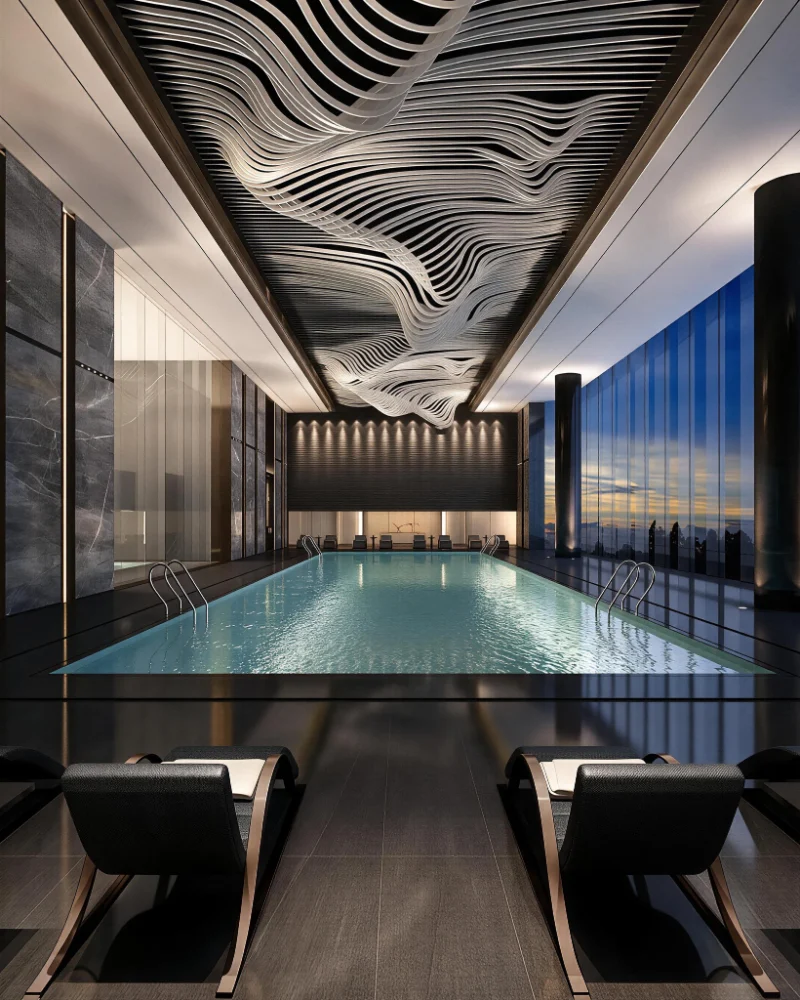
Together with the Xi'an Maco Commercial Center, these projects show that the same material approach can be adapted to different architectural environments.
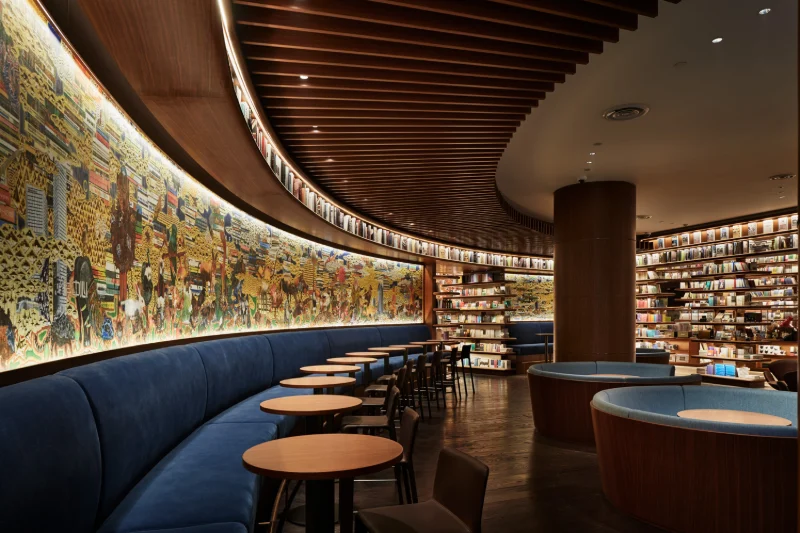
Aluminum becomes especially valuable when a project requires a combination of design flexibility, precise fabrication, surface quality, and practical performance.
The lesson from projects such as the China National Convention Center Phase II and WILLSTRONG®'s completed architectural applications is not that aluminum should replace every other architectural material.
Rather, aluminum becomes valuable when the project requires a combination of design flexibility, precise fabrication, surface quality, and practical performance.
For ceilings, this may mean creating curved or linear forms that work with lighting and building services.
For interior walls, it can mean developing customized surfaces that reinforce the character of a space.
For exterior walls, it can mean producing complex architectural details that give a commercial or institutional building a distinctive appearance.
In each case, the material is only one part of the solution. Manufacturing accuracy, surface treatment, project coordination, and the ability to translate architectural drawings into finished components are equally important.
Manufacturing accuracy, surface treatment, project coordination, and the ability to translate architectural drawings into finished components are equally important to the final result.
The relationship between materials and architecture continues to evolve as buildings demand greater flexibility, performance, and visual expression.
As architectural design continues to evolve, the relationship between materials and architecture is becoming increasingly important. Buildings are no longer defined only by their structural form. Facades, ceilings, interior walls, and customized architectural elements all contribute to how a space performs and how people experience it.
This is where WILLSTRONG® continues to develop its capabilities.
Established in 1995, WILLSTRONG®is a professional manufacturer and provider of facade products and architectural material solutions. The company specializes in aluminum composite panels, fire-resistant composite materials, aluminum honeycomb systems, and Architectural Art Aluminium, serving a wide range of architectural applications.
Over more than 30 years, WILLSTRONG® has built experience across both conventional and highly customized architectural projects. The company has obtained more than 30 certifications worldwide, holds more than 10 technology patents, and has completed more than 100,000 successful projects and applications. Its customers are located across more than 80 countries and regions.
WILLSTRONG® has also participated in projects associated with internationally recognized buildings, including Charles de Gaulle International Airport, demonstrating its ability to provide architectural material solutions for demanding projects.
The company's approach is summarized by its philosophy: "Crafting with Quality, Making for Excellence."
For WILLSTRONG®, quality is not limited to the finished appearance of a product. It also involves material selection, manufacturing precision, surface treatment, project coordination, and long-term support.
The development of Architectural Art Aluminium reflects this approach. By combining solid aluminum alloy with precision machining and surface treatment, WILLSTRONG® can support architects and project teams looking for greater flexibility in architectural forms.
For WILLSTRONG®, quality is not limited to the finished appearance of a product. It also involves material selection, manufacturing precision, surface treatment, project coordination, and long-term support.
From exterior walls such as Xi'an Maco Commercial Center, to interior applications such as Vanke Jade State Guest in Xi'an, the company's project experience continues to expand across different architectural environments.
Looking ahead, the role of architectural materials will continue to move beyond basic enclosure and decoration. More projects will require materials that can respond to complex forms, integrate with different building functions, and maintain consistent quality across large-scale applications.
Architectural aluminum can connect design intent with practical manufacturing, creating components that contribute to the overall identity and performance of a building.
As architectural design continues to evolve, the relationship between materials and architecture is becoming increasingly important. Buildings are no longer defined only by their structural form. Facades, ceilings, interior walls, and customized architectural elements all contribute to how a space performs and how people experience it.
The development of Architectural Art Aluminium reflects this approach. By combining solid aluminum alloy with precision machining and surface treatment, WILLSTRONG® can support architects and project teams looking for greater flexibility in architectural forms.
More projects will require materials that can respond to complex forms, integrate with different building functions, and maintain consistent quality across large-scale applications.
 Leave a Message