

 Arabic
 Spain
Spain Germany
 France
 Japan
Japan Portuguese
 Russian
 Chinese
 Thailand
 Vietnam
 Indonesia
 India
IndiaNews
THE PIONEER IN FACADE SOLUTIONS


Modern architecture is no longer defined only by shape or structure. The materials selected for a project increasingly determine how a building ages, interacts with its environment, and tells its own story over time. Among these materials, Contern Steel has become one of the most recognizable choices for architects seeking durability, character, and sustainability.
Unlike conventional steel, Corten steel develops a stable protective rust-like patina after exposure to the atmosphere. Instead of weakening the material, this weathered surface protects the inner steel from further corrosion while creating a distinctive appearance that changes naturally with time. Every season leaves its own mark, allowing buildings to evolve visually while maintaining excellent structural performance.
This combination of engineering performance and architectural beauty has made Corten steel an essential material for contemporary facades, cultural landmarks, public spaces, and residential projects worldwide.
Most exterior building materials require regular coatings or repainting to resist corrosion. Corten steel follows a different approach.
Its carefully engineered alloy composition forms a dense oxide layer that slows down further corrosion after initial exposure. As the protective patina matures, the material gradually transforms from bright metallic tones to rich shades of orange, brown, and deep earthy red.
For architects, this natural aging process offers more than protection. It introduces texture, depth, and visual warmth that cannot be replicated with artificial finishes. Buildings appear increasingly connected with their surrounding landscape, making Corten steel particularly suitable for projects where architecture is intended to blend with nature rather than dominate it.
The result is a facade that continues to mature throughout its lifetime while requiring relatively low maintenance compared with many painted steel systems.
Many internationally recognized buildings have demonstrated how weathering steel can become an architectural language rather than simply a construction material.
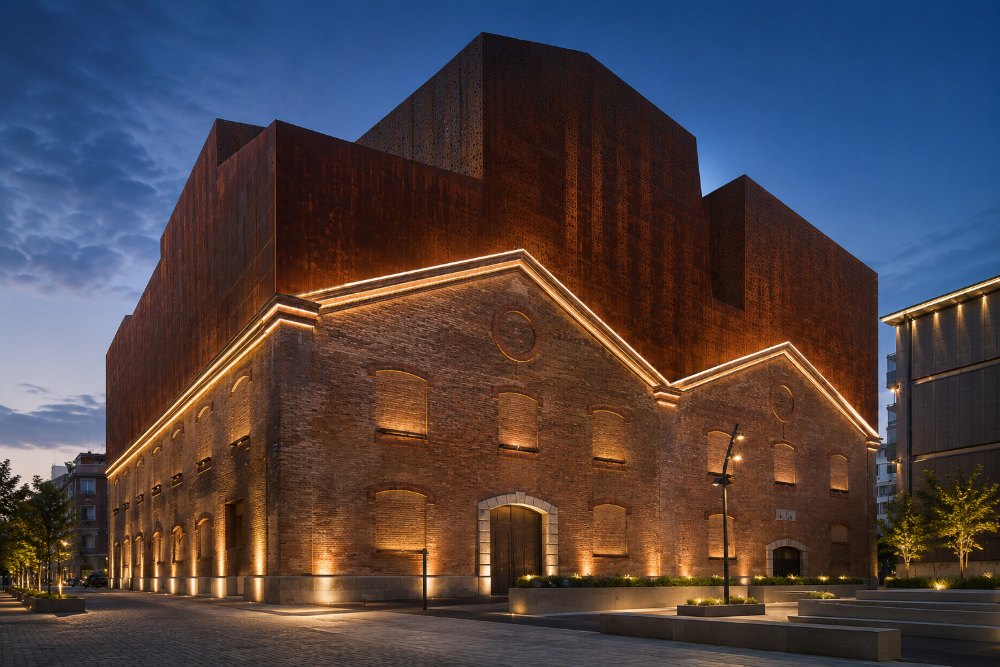
Designed by Herzog & de Meuron, CaixaForum Madrid is one of the best-known examples of adaptive reuse architecture.
The project preserved the original brick power station while introducing a striking floating upper volume clad in Corten steel. The weathered exterior creates a powerful contrast with the historic masonry below, allowing old and new architecture to coexist without competing against one another.
Instead of hiding the passage of time, the material celebrates it, reinforcing the building's industrial history while giving it a distinctly contemporary identity.
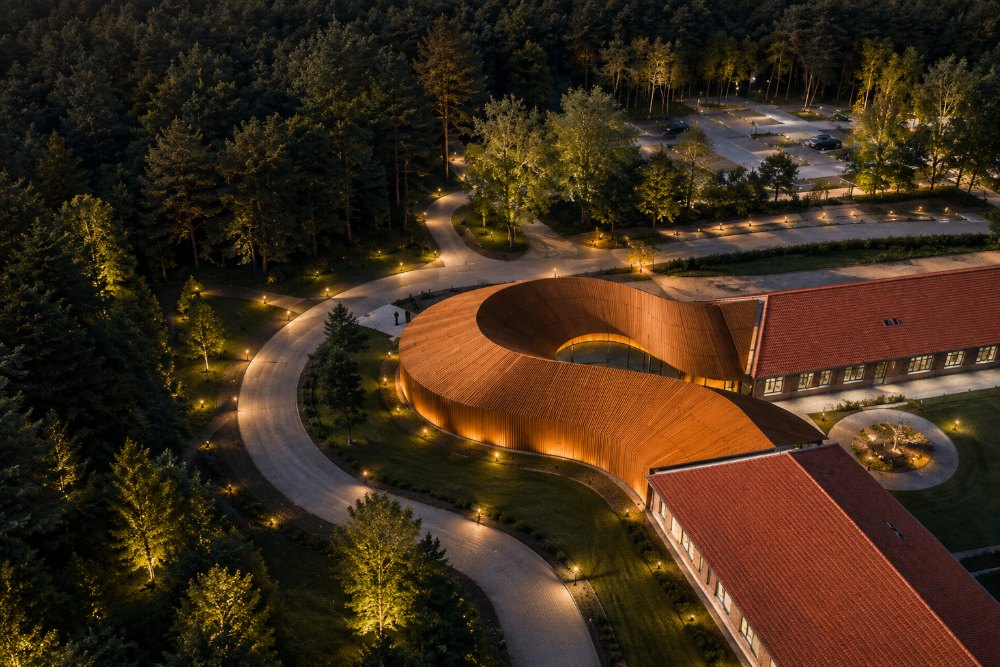
The FLUGT Refugee Museum in Denmark, designed by BIG (Bjarke Ingels Group), demonstrates another interpretation of weathering steel.
The museum transformed a former World War II refugee hospital into a modern cultural destination. Curved new exhibition spaces connect existing brick buildings through carefully designed Corten steel elements that symbolize transition, resilience, and openness.
As the steel continues to weather naturally, the building itself reflects the museum's narrative of memory, transformation, and hope.
Rather than functioning only as exterior cladding, the material becomes part of the storytelling experience for every visitor.
White Rock House – Architecture in Harmony with Nature
Located on the rugged coastline of Nova Scotia, Canada, White Rock House by Omar Gandhi Architect showcases how Corten steel responds beautifully to natural landscapes.
The elevated house is wrapped in weathering steel panels that gradually develop their signature reddish-brown finish. Against rocky cliffs, dense forests, and changing seasonal colors, the evolving facade allows the building to blend seamlessly into its surroundings.
Instead of appearing as a foreign object placed within nature, the residence gradually becomes part of the landscape itself.
This design philosophy reflects one of the greatest strengths of Corten steel—its ability to create architecture that feels increasingly authentic as it ages.
Beyond museums and cultural institutions, Corten steel has become a preferred material for residential, infrastructure, and public landscape projects because it combines structural reliability with a distinctive architectural identity.
Another notable project by Omar Gandhi Architect, the Schlotfeldt Residence in British Columbia, Canada, demonstrates how weathering steel can strengthen the relationship between architecture and its natural surroundings.
The house features a bold geometric form wrapped entirely in Corten steel. Over time, the facade develops a rich patina that echoes the colors of nearby rock formations and forests. Large panoramic windows provide uninterrupted valley views, while the weathered exterior allows the building to sit comfortably within its rugged environment rather than overpower it.
This project illustrates how material selection can become an essential part of architectural storytelling.
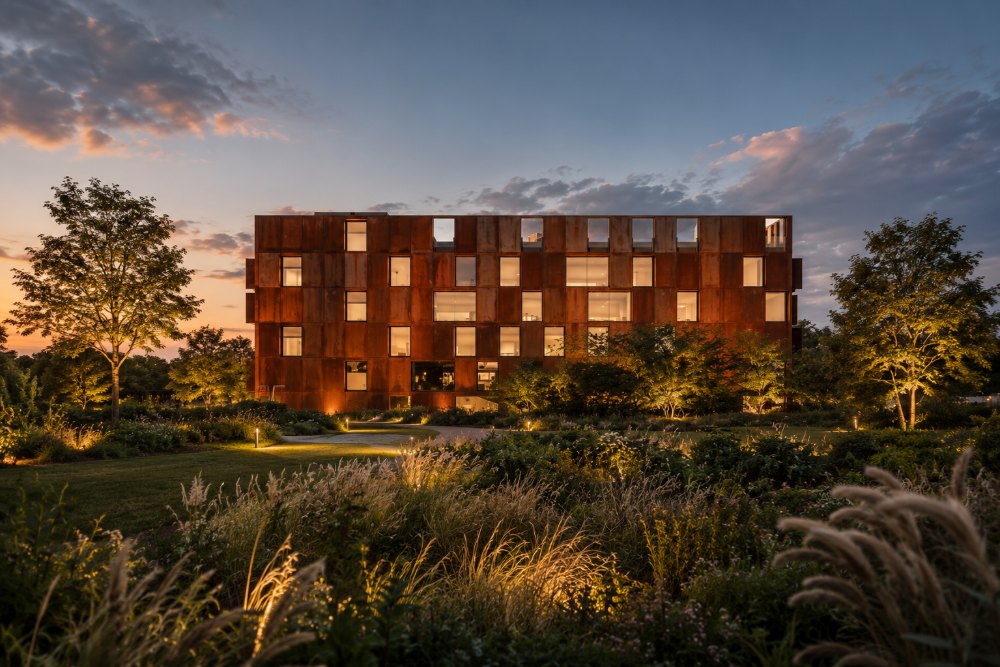
Industrial buildings are often designed primarily for function, but the Helsingør Utility Headquarters in Denmark proves they can also contribute positively to the urban landscape.
Designed by Christensen & Co. Architects, the building incorporates Corten steel panels across its exterior. The weathering finish gives the facility a refined industrial appearance while providing long-term resistance against the challenging Nordic climate.
Rather than requiring frequent repainting, the facade naturally protects itself through oxidation, reducing maintenance while maintaining an attractive appearance throughout its service life.
Weathering steel is equally effective in landscape architecture.
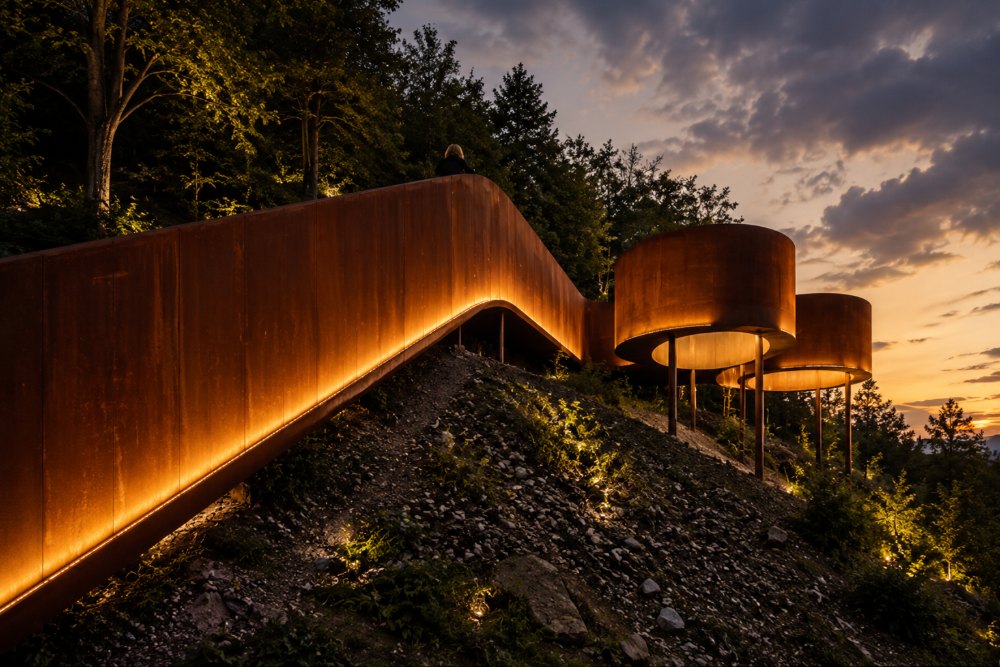
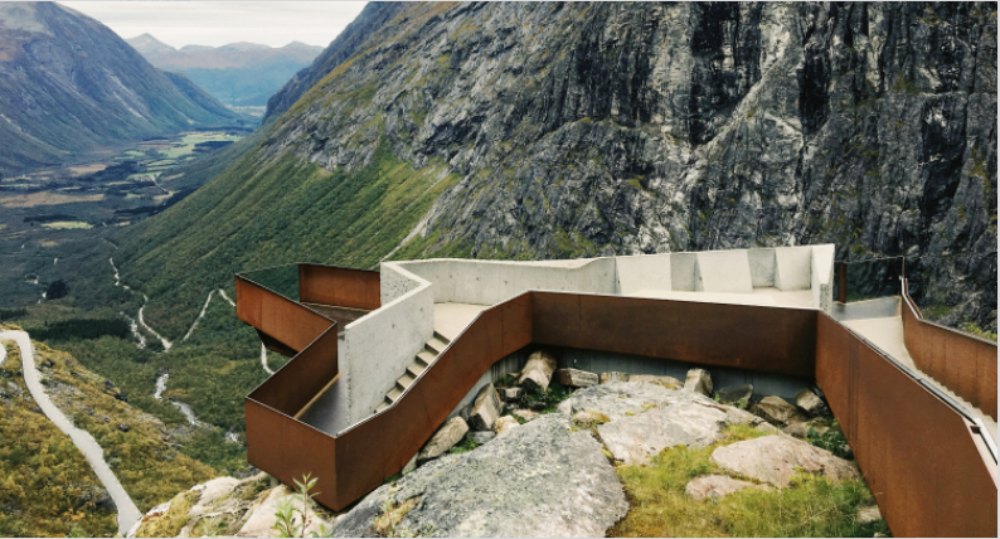
The Chemin des Carrières trail in France transformed an abandoned railway into an 11-kilometer pedestrian route that celebrates both industrial heritage and natural scenery. Throughout the project, Corten steel is used for bridges, viewing platforms, railings, and landscape features.
Instead of contrasting with the surrounding vegetation, the gradually weathered surfaces create visual continuity with stone, soil, and woodland environments. The material reinforces the site's history while enhancing visitors' outdoor experience.
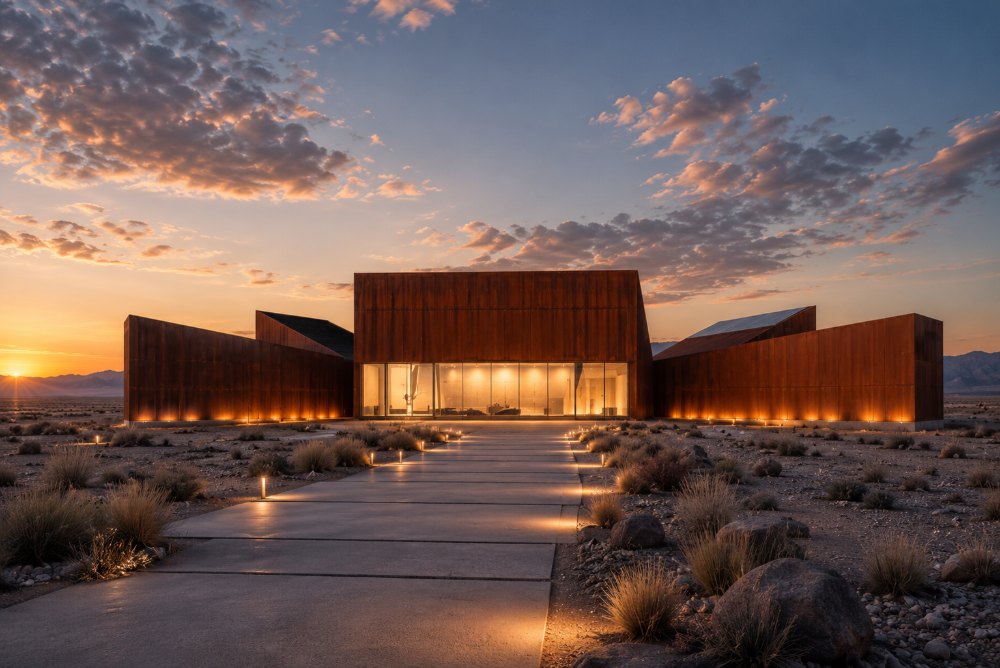
Located in Chile's Atacama Desert, one of the driest regions on Earth, the Desert Interpretation Center demonstrates another important advantage of Corten steel.
The building's weathering steel facade withstands intense sunlight, strong winds, and abrasive sand while developing its own protective surface. The warm earthy tones also reflect the surrounding desert landscape, allowing the architecture to feel rooted in its environment rather than imposed upon it.
Projects like this highlight why architects increasingly specify weathering steel for regions where both durability and visual integration are essential.
As architectural expectations continue to evolve, designers are looking beyond traditional solid steel panels toward lighter, higher-performance facade systems that retain the visual appeal of weathering steel.
This is where Willstrong® combines architectural aesthetics with advanced manufacturing technology.
Willstrong® Steel Honeycomb Panels using Contern Steel deliver the signature appearance of weathering steel while offering significant advantages in weight reduction, rigidity, and installation efficiency.
Manufactured using technologies originally developed for the aerospace industry, the honeycomb structure provides exceptional flatness without adding unnecessary weight. Compared with conventional solid metal panels, the composite design achieves excellent stiffness while remaining easier to transport, fabricate, and install.
The panels also provide valuable performance benefits for modern buildings, including:
l Lightweight construction with high structural rigidity
l Excellent flatness for premium facade applications
l Sound insulation and thermal insulation
l Fire-resistant performance
l Outstanding impact resistance
l Flexible fabrication for folding, bending, and curved architectural designs
Available with thicknesses from 8 mm to 40 mm, widths up to 1200 mm, lengths up to 6000 mm, and manufactured using 0.8–2.0 mm Contern Steel, these honeycomb panels meet the requirements of architects working on curtain walls, transportation, public buildings, airports, commercial complexes, and other demanding projects.
In addition to steel honeycomb panels, Willstrong® also offers aluminum honeycomb panels, titanium-zinc honeycomb panels, and stone-aluminum composite honeycomb systems, providing architects with a complete range of lightweight facade solutions.
Established in 1995, Willstrong® has become one of China's leading facade solution providers. Its commitment to "Crafting with Quality, Making for Excellence" has supported projects across commercial, transportation, and public architecture worldwide.
As one of China's Top 100 facade solution companies, Willstrong® specializes in aluminum composite panels, fire-resistant composite panels, and innovative honeycomb systems that combine aesthetics with engineering performance. Its products have been used in internationally recognized projects, including Charles de Gaulle International Airport, demonstrating the company's ability to meet demanding architectural standards.
The world's most memorable buildings rarely rely on appearance alone. They create lasting impressions because every material contributes to the architectural narrative.
From the historic transformation of CaixaForum Madrid and the symbolic design of the FLUGT Refugee Museum to contemporary residences in Canada and infrastructure projects in France and Chile, Corten steel continues to prove that durability and beauty can evolve together.
For architects, developers, and facade contractors seeking a modern solution that combines the timeless appearance of weathering steel with lightweight engineering and advanced composite technology, Contern Steel honeycomb panels from Willstrong® provide an innovative option for creating buildings that remain visually compelling for decades.
 Leave a Message