

 Arabic
 Spain
Spain Germany
 France
 Japan
Japan Portuguese
 Russian
 Chinese
 Thailand
 Vietnam
 Indonesia
 India
IndiaNews
THE PIONEER IN FACADE SOLUTIONS


In modern architecture, designers constantly face a familiar challenge: how can a building become lighter without compromising structural performance, durability, or visual impact?
Traditional steel panels provide excellent strength, but they also introduce significant dead loads that increase structural requirements, transportation costs, and installation complexity. As architectural projects continue to feature larger façades and more complex geometries, lightweight building materials have become increasingly important.
This is exactly where Steel honeycomb panel systems demonstrate their value.
By combining a weather-resistant steel surface with an aerospace-grade aluminum honeycomb core, steel honeycomb panels achieve exceptional rigidity while reducing weight dramatically. They are now widely specified for commercial façades, museums, airports, industrial renovation projects, and premium architectural interiors where both performance and aesthetics matter.
In this article, we'll explore the engineering principles behind steel honeycomb panels, explain how they reduce building weight without sacrificing strength, and examine why more architects are choosing this advanced composite material.
Reducing the dead load of a building affects much more than the structural frame.
A lighter façade can improve nearly every stage of a construction project, including:
Smaller structural steel requirements
Lower foundation loads
Easier transportation
Faster installation
Reduced lifting equipment requirements
Better seismic performance
Greater design flexibility
For high-rise buildings and renovation projects, every kilogram removed from the façade contributes to lower structural stress and improved construction efficiency.
However, reducing weight should never come at the expense of stiffness or long-term durability.
This is the engineering challenge that honeycomb composite technology successfully addresses.
Unlike conventional steel sheets, steel honeycomb panels use a three-layer composite structure.
The panel typically consists of:
Weathering steel or stainless steel face sheet
Aerospace-grade aluminum honeycomb core
Aluminum or galvanized steel back panel
These layers are permanently bonded under high temperature and pressure, creating an integrated sandwich panel that behaves as a single structural component. According to the product specifications, the face sheet provides weather resistance and impact protection, the aluminum honeycomb core supplies bending and shear strength, while the back panel enhances overall stability and moisture resistance.
The secret lies inside the panel.
Instead of relying on thick solid steel, steel honeycomb panels use thousands of interconnected hexagonal cells.
This biomimetic structure resembles natural honeycombs, one of nature's most efficient load-bearing geometries.
Each cell works together to distribute forces across the entire panel.
As a result, the panel gains:
High bending stiffness
Excellent shear resistance
Superior dimensional stability
Outstanding flatness across large panel sizes
Because most of the panel volume consists of lightweight air trapped inside the honeycomb cells, the material achieves remarkable mechanical efficiency with very little weight.
This engineering principle allows architects to specify larger panels without the excessive dead load associated with traditional steel construction.
One of the most impressive advantages documented in the technical specifications is weight reduction.
For example, a 30 mm steel honeycomb panel typically weighs only 8.5–10 kg/m², while a comparable solid Corten steel plate can weigh approximately 235 kg/m².
That represents a weight reduction of more than 90%.
This substantial reduction delivers practical benefits throughout a project:
Reduced façade weight decreases the demand on structural framing, supporting brackets, and building foundations.
Lightweight panels require fewer logistics resources and simplify on-site handling.
Installation crews can position and align lighter panels more efficiently, especially on high-rise buildings where lifting capacity is limited.
For industrial renovation and adaptive reuse projects, lower panel weight often eliminates the need for costly structural reinforcement.
Some architects initially assume that reducing weight automatically reduces strength.
In reality, composite engineering works differently.
Instead of increasing material thickness, steel honeycomb panels optimize how material is distributed.
The face sheets resist compression and tension, while the honeycomb core transfers shear forces between them.
This configuration creates a highly efficient structural system capable of maintaining rigidity across large spans.
According to the engineering specifications, honeycomb construction provides bending stiffness approximately 5 to 8 times greater than solid plates of the same weight, while maintaining excellent panel flatness.
This makes steel honeycomb panels particularly suitable for oversized curtain wall panels where appearance and dimensional stability are equally important.
For many façade applications, the steel face sheet uses weathering steel such as ASTM A242 (Corten A) or ASTM A588 (Corten B).
Unlike ordinary carbon steel, weathering steel contains copper, chromium, nickel, and phosphorus.
After repeated wet-dry cycles, these alloying elements help form a dense, stable oxide layer.
This natural patina gradually transforms from light brown to deep reddish-brown while protecting the underlying steel from continued corrosion.
Rather than being a sign of deterioration, the rust layer becomes a self-protective barrier that minimizes future maintenance. Technical documentation indicates that weathering steel can offer atmospheric corrosion resistance approximately three to eight times greater than ordinary steel, with service life reaching several decades in suitable environments.
Traditional weathering steel often presents challenges during the initial oxidation period.
Architects may encounter:
Uneven rust color
Rust runoff
Difficult quality control
Unpredictable project appearance
Modern steel honeycomb panels solve these issues through factory pre-weathering technology.
Instead of waiting for natural oxidation after installation, manufacturers create a controlled, uniform patina before delivery.
This approach offers several advantages:
Consistent appearance from day one
Better color control
Reduced rust staining
Improved project acceptance
Faster architectural completion
For premium commercial buildings, museums, and public spaces, pre-weathered panels provide greater design certainty while preserving the authentic appearance of natural weathering steel.
Because steel honeycomb panels combine low weight with high rigidity, they are suitable for numerous architectural applications.
Common examples include:
Large façade panels remain flat while reducing structural loading.
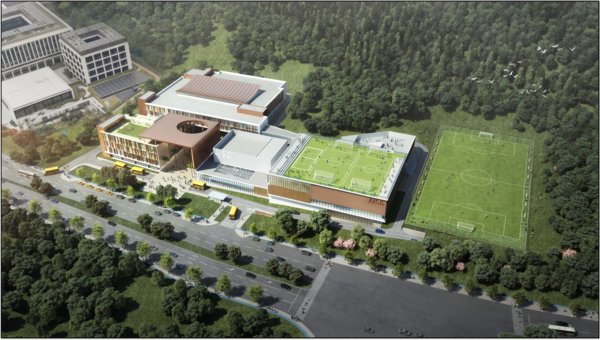
Lightweight materials simplify installation while meeting strict fire safety and durability requirements.
Existing factory buildings can receive entirely new façades without significantly increasing structural loads.
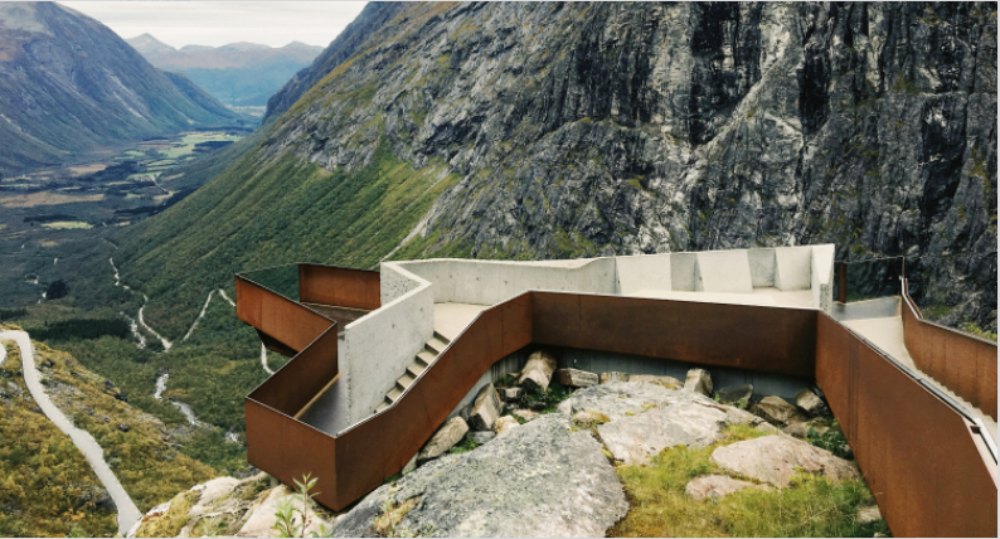
Weathering steel creates an evolving architectural surface that develops richer character over time.
Garden walls, sculptures, pergolas, signage, and artistic installations benefit from both structural efficiency and natural aesthetics.
Reception areas, hotel lobbies, elevator halls, and feature walls achieve an industrial yet refined appearance without excessive weight.
The performance of a steel honeycomb panel depends not only on its design but also on manufacturing quality.
Panel bonding, honeycomb core precision, flatness control, and weathering treatment all influence long-term performance.
Established in 1995, WILLSTRONG® is one of China's leading façade solution providers and one of China's Top 100 façade solutions companies.
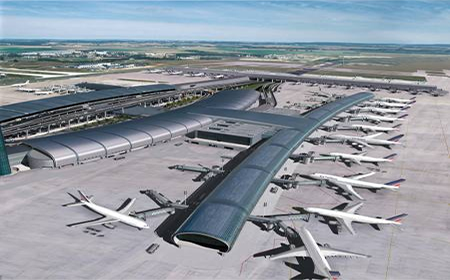
Specializing in aluminum composite panels, fire-resistant composite panels, and innovative aluminum honeycomb systems, WILLSTRONG has supplied façade materials for landmark international projects, including Charles de Gaulle International Airport.
Its steel honeycomb panel solutions combine precision manufacturing with customized fabrication, supporting architects, façade consultants, and contractors across a wide range of commercial and public building projects.
Modern architecture increasingly demands materials that are lighter, stronger, and more durable.
Steel honeycomb panels successfully meet these requirements through intelligent composite engineering rather than simply adding more material.
By replacing heavy solid steel with a lightweight honeycomb core, these panels reduce façade weight by over 90% while maintaining exceptional stiffness, flatness, weather resistance, and long-term reliability.
For architects seeking larger panel sizes, cleaner façades, easier installation, and lower structural loads, steel honeycomb panels represent one of today's most practical and technically advanced façade solutions.

 Leave a Message