

 Arabic
 Spain
Spain Germany
 France
 Japan
Japan Portuguese
 Russian
 Chinese
 Thailand
 Vietnam
 Indonesia
 India
IndiaNews
THE PIONEER IN FACADE SOLUTIONS


Choosing a metal honeycomb panel manufacturer for a custom project involves more than comparing panel prices or browsing product catalogs. The same type of panel may perform very differently depending on its core material, face skin, bonding system, fabrication method, and installation requirements.
This becomes particularly important when a project involves large facade panels, curved surfaces, lightweight structures, transportation interiors, marine environments, or other applications where standard panel dimensions are not sufficient.
Choosing a metal honeycomb panel manufacturer for a custom project involves more than comparing panel prices or browsing product catalogs. The same type of panel may perform very differently depending on its core material, face skin, bonding system, fabrication method, and installation requirements.
This becomes particularly important when a project involves large facade panels, curved surfaces, lightweight structures, transportation interiors, marine environments, or other applications where standard panel dimensions are not sufficient.
The metal honeycomb panel industry includes manufacturers serving different technical fields, including aerospace, architecture, marine engineering, transportation, interior design, and industrial applications. Because these sectors have different performance requirements, no single manufacturer is necessarily the right choice for every project.
A useful comparison should therefore consider more than company size or market visibility. Core products, industries served, customization capabilities, certifications, processing technologies, engineering support, and production limitations all affect whether a manufacturer is suitable for a particular application.
This article compares representative metal honeycomb panel manufacturers using these criteria. The goal is not simply to identify one universal winner, but to show which manufacturers may be better suited to different custom project requirements.

There are many manufacturers producing honeycomb cores, sandwich panels, or finished honeycomb composite panels. However, their capabilities can vary considerably.
Some manufacturers focus primarily on aerospace materials and certified composite structures. Others concentrate on architectural facades, marine panels, transportation, interiors, or industrial applications.
For custom projects, comparing manufacturers according to the same criteria provides a more useful picture than simply ranking them by company size.
The following manufacturers represent different areas of the metal honeycomb panel market.
Manufacturer | Core Products / Focus | Main Industries | Customization | Certifications / Standards | Main Strength | Best For |
WILLSTRONG® | Aluminum, zinc, stone and stainless steel honeycomb panels | Architecture, transportation, marine, aviation and other engineered applications | Curving, right-angle forming, CNC fabrication, custom dimensions | Quality and project-specific compliance depending on application | Architectural facade customization | Complex building envelopes |
Hexcel | Aluminum and composite honeycomb materials | Aerospace, defense, transportation and industrial applications | Material and structural customization | AS9100, ISO 9001 and aerospace-related approvals | Aerospace material qualification and traceability | Aviation and aerospace |
Plascore | Aluminum, polypropylene and composite honeycomb products | Aerospace, marine, transportation and industrial applications | Custom cores and panels | AS9100 and marine-related approvals for applicable products | Multi-industry honeycomb technology | Marine and industrial applications |
Panelite | Lightweight architectural honeycomb panels | Architecture and interior design | Panel dimensions, finishes and architectural configurations | Product-specific testing and compliance | Design-oriented lightweight panels | Interior and decorative applications |
Corex Honeycomb | Honeycomb cores and sandwich panels | Marine, transportation and industrial applications | Custom dimensions and configurations | Wheelmark and USCG approvals for applicable marine products | Marine applications | Marine structures |
The Gill Corporation | Aerospace honeycomb and composite structures | Aerospace and transportation | Engineered composite structures | Aerospace quality and process requirements | Aerospace engineering | Aircraft interiors and structures |
Chalco Aluminum | Aluminum honeycomb materials and related aluminum products | Construction, transportation and industrial sectors | Material and dimension options | Product and application dependent | Aluminum supply capabilities | Large-scale aluminum applications |
Refitech | Composite sandwich panels | Marine, transportation and industrial sectors | Lightweight structural configurations | Application-specific standards | Composite panel engineering | Lightweight industrial structures |
The comparison shows an important point: a manufacturer can be highly suitable for one project and less suitable for another.
For example, aerospace projects may prioritize certification, traceability, and material qualification. Architectural facade projects may place greater emphasis on large-format fabrication, surface finishes, bending, dimensional flexibility, and coordination with the building envelope.
The term "top manufacturer" therefore needs to be interpreted in relation to the project.
Aerospace honeycomb materials are subject to demanding requirements for weight, stiffness, flame performance, environmental resistance, traceability, and manufacturing consistency.
Manufacturers such as Hexcel and The Gill Corporation operate strongly in this field. Their value is not simply the availability of honeycomb cores, but the ability to support highly controlled aerospace material and manufacturing requirements.
For these projects, engineers may need:
The selection process is therefore heavily documentation-driven.
Architectural projects present a different set of challenges.
A facade panel may need to cover a large surface while maintaining low dead load, dimensional stability, weather resistance, visual consistency, and compatibility with the supporting structure.
The panel may also need to follow curved or irregular geometries.
Manufacturers serving this sector therefore need fabrication capabilities beyond simply producing a flat sandwich panel. They may need to provide:
For a landmark building, these fabrication capabilities can be as important as the basic mechanical properties of the honeycomb core.
Marine applications introduce another group of requirements.
Panels may be exposed to humidity, saltwater, vibration, temperature changes, and strict fire regulations. Weight reduction is also important because panel weight can affect vessel efficiency and structural loading.
Corex Honeycomb and Plascore, for example, have product offerings associated with marine applications and relevant marine approvals.
For marine projects, buyers should verify the exact certification of the proposed panel rather than assuming that a manufacturer's general certification covers every product.
Interior projects may place greater emphasis on surface appearance, panel weight, dimensional accuracy, acoustic performance, and ease of installation.
Panelite is one example of a manufacturer focused on lightweight architectural panel applications.
In this segment, the visual system may be just as important as structural performance. Surface finish, edge details, color consistency, and integration with interior systems can influence the final result.
The manufacturer is only one part of the system.
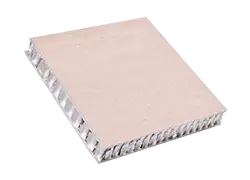
A honeycomb panel consists of multiple components working together. The face skins carry loads and provide the visible surface, the honeycomb core contributes stiffness and separation between skins, and the adhesive system transfers loads between the components.
This means that a panel with a strong core does not automatically become a strong finished panel.
Engineers should consider the entire construction.
Aluminum honeycomb is widely used because it provides a favorable combination of low density and structural stiffness.
The hexagonal cell structure allows the core to separate the two face skins while keeping material consumption relatively low. This increases the panel's bending stiffness without requiring a solid plate of equivalent thickness.
For architectural applications, aluminum cores are often selected when designers need:
Aramid honeycomb cores are another option. They are commonly associated with lightweight composite structures and can provide useful fire, insulation, and dielectric characteristics.
Thermoplastic honeycomb cores can provide moisture and chemical resistance and may offer recycling advantages, although bonding the core to different face materials can require careful process control.
The appropriate core therefore depends on the complete panel system rather than the core material alone.
The face skin determines much of the panel's appearance, surface durability, and environmental resistance.
Common options include:
Aluminum skins are commonly used for architectural applications because they combine low weight with a broad range of finishing possibilities.
Possible finishes include:
Stainless steel can be selected where a different appearance or additional surface characteristics are required. Zinc offers a distinctive architectural surface that can develop a natural patina.
Stone-faced honeycomb panels are another approach for projects that require the appearance of natural stone while reducing the weight associated with conventional solid stone panels.
The key engineering question is not simply which skin looks best, but how the skin interacts with the core, adhesive, supporting system, environment, and installation method.
Standard flat panels are relatively straightforward.
Custom projects become more complicated when panels must follow building geometry or integrate with other structural components.
Curved facade elements may require controlled bending or forming processes.
The challenge is to achieve the required radius without damaging the core, separating the face skin from the core, or creating excessive residual stress.
Some manufacturers provide non-destructive arc-bending processes for this type of application.
For example, WILLSTRONG® applies non-destructive arc bending and right-angle forming to selected honeycomb panel configurations, allowing custom panels to follow curved or folded architectural geometries.
The important point is that the processing method should be evaluated according to the panel structure, radius, dimensions, and final load conditions.
A 90-degree panel can sometimes replace multiple separately fabricated components.
Instead of manufacturing a flat panel and attaching another piece to create a corner, a formed honeycomb panel can create an integrated geometric element.
This can simplify certain facade or interior details while reducing visible joints.
However, the feasibility depends on the core, skin thickness, adhesive system, bending radius, and forming process.
Large architectural panels often require openings for:
CNC machining can provide repeatable dimensions for these features.
The manufacturer should be able to work from accurate CAD drawings and clearly define tolerances before production begins.
Honeycomb panels are efficient because the core is lightweight, but lightweight construction also means that local fastening points need to be designed carefully.
A standard fastener cannot simply be installed anywhere in a thin honeycomb panel without considering local load transfer.
Depending on the application, manufacturers may incorporate:
These details can determine whether the panel can be installed safely and repeatedly.
A honeycomb panel should not be evaluated independently from its installation system.
A facade panel may have excellent laboratory properties but still experience problems if the supporting structure, connections, tolerances, or drainage strategy are poorly designed.
For building projects, engineers should consider at least five areas:
Reducing panel weight can reduce the load transferred to the building structure.
However, lower weight should not come at the expense of required stiffness, impact resistance, connection strength, or fire performance.
The panel must be matched to the expected wind pressure, span, support spacing, and local loading conditions.
The required panel thickness is therefore not determined by appearance alone.
Connections need to transfer loads from the panel into the sub-frame.
Fastener position, reinforcement, edge treatment, inserts, and local stresses should be considered during design.
Large-format panels can be difficult to transport and handle.
Panel dimensions may need to be coordinated with container dimensions, trucks, lifting equipment, site access, and installation sequence.
The panel's fabrication tolerances need to work with the building's actual tolerances.
A panel system that looks precise in a factory can create installation problems if the supporting structure varies significantly on site.
This is why custom honeycomb panel projects should involve engineering coordination before production rather than treating fabrication as a standalone purchasing step.
The most useful way to judge a manufacturer's experience is to examine whether its previous applications resemble the current project.
Airport architecture often combines large spans, complex facade geometry, high pedestrian traffic, strict fire requirements, and demanding maintenance expectations.
Honeycomb panels can help reduce facade dead load while supporting large-format architectural designs.
For airport projects, manufacturers may need to coordinate panel geometry with structural systems, glazing, signage, mechanical openings, and maintenance access.
Museums often prioritize architectural expression.
Complex curves, folded surfaces, irregular geometries, and carefully controlled finishes can become major parts of the building's identity.
Here, fabrication capability can be more important than simply offering standard panel dimensions.
Stadium facades may involve large panel areas, repetitive modules, curved surfaces, and exposure to wind and weather.
Manufacturing consistency becomes important because small dimensional differences can become highly visible when repeated across a large facade.
Honeycomb panels are also used in transportation applications where weight reduction and stiffness are important.
Applications can include vehicle interiors, railway components, marine interiors, and other lightweight structures.
The specific core, face material, fire requirements, and connection system should be selected according to the transportation environment.
The lesson across these applications is straightforward: past project experience matters most when it demonstrates experience with similar engineering conditions, not simply a long list of project names.
Once the technical requirements are defined, manufacturers can be evaluated using a consistent framework.
ISO 9001 can provide evidence of a structured quality management system.
Aerospace projects may require AS9100 or additional aerospace-specific qualifications.
Marine projects may require Wheelmark, USCG, IMO-related approvals, or other project-specific certifications.
The important point is to verify whether the certification applies to the actual product and manufacturing process being purchased.
Ask whether the manufacturer produces the honeycomb core internally or purchases it from another supplier.
Vertical integration can provide greater control over:
However, external sourcing is not automatically a disadvantage. What matters is whether the supply chain is controlled and traceable.
Custom projects often require more than a quotation.
A capable supplier should be able to review:
Engineering communication is particularly important when the final panel differs significantly from standard catalog products.
Ask for actual production tolerances rather than general statements about precision.
Relevant information may include:
These details can have a direct impact on installation.
Testing should correspond to the intended application.
Depending on the project, relevant data may include:
A single general test result cannot describe every aspect of a honeycomb panel.
The ability to change panel length or width is only one level of customization.
More demanding projects may require:
The manufacturer should confirm which operations can be performed without compromising the panel's structural characteristics.
Production time varies according to panel size, material availability, surface finish, tooling, quantity, testing requirements, and customization.
A standard panel made from readily available materials may have a significantly different lead time from a project requiring custom colors, unusual dimensions, special forming, or additional testing.
The same applies to minimum order quantities.
Some suppliers may accept relatively small custom orders when materials are available, while others may establish minimum quantities based on coil size, production batches, color matching, or manufacturing efficiency.
Instead of asking only, "What is your MOQ?", buyers should ask:
These questions provide a more realistic understanding of the project's cost and schedule.
A useful selection process can be divided into six steps.
Identify whether the panels are intended for:
Determine the required:
Clarify whether the project requires:
Choose the core and face skin according to the environmental and structural requirements.
Use the same criteria for every supplier:
Evaluation Factor | Questions to Ask |
Core | What alloy, density and cell size are available? |
Face Skin | Which metals, stones or finishes are available? |
Engineering | Can the supplier review CAD drawings? |
Fabrication | Can it perform bending, forming and CNC work? |
Testing | Which performance tests are available? |
Certification | Does the certification apply to the proposed product? |
Quality | How are dimensional tolerances controlled? |
Supply | What are the realistic lead time and MOQ? |
References | Has the manufacturer completed comparable projects? |
Request samples or prototypes where practical.
For complex architectural panels, a prototype can reveal problems with:
This is generally more useful than selecting a supplier solely from a product brochure.
Within this broader manufacturer landscape, WILLSTRONG® is particularly relevant to projects where architectural customization and panel fabrication are important.
Its product range includes aluminum, zinc, stone, and stainless steel honeycomb panels, allowing the face material to be selected according to the architectural and environmental requirements of the project.
For complex building envelopes, its fabrication capabilities include non-destructive 90-degree right-angle forming, arc bending, CNC processing, and custom panel dimensions.
For example, a project involving curved facade sections can be developed around the required geometry first, with panel thickness, core construction, bending method, edge treatment, and connection details then coordinated with the supporting facade system.
This makes the manufacturer relevant to applications where the challenge is not simply producing a honeycomb panel, but converting a specific architectural geometry into a manufacturable panel system.
The same principle applies to stone-faced honeycomb panels. Instead of treating the stone surface as an isolated decorative layer, the panel can be designed as a lightweight composite system in which the stone veneer, honeycomb core, and supporting components work together.
The appropriate choice still depends on the project's engineering requirements. Aerospace certification, marine approval, architectural fabrication, or industrial performance may lead to different manufacturer selections.
There is no single metal honeycomb panel manufacturer that is automatically the best choice for every custom project.
The market includes specialists in aerospace, marine engineering, architecture, transportation, interiors, and industrial applications. Their capabilities differ in core materials, certifications, fabrication technologies, engineering support, and production scale.
For aerospace applications, certification, traceability, and controlled manufacturing processes may be the deciding factors. For marine projects, fire and marine approvals can carry more weight. For architectural projects, large-format fabrication, surface options, curved forming, connection details, and coordination with the facade system may be more important.
The most reliable selection method is therefore to define the engineering requirements first and compare manufacturers against the same technical criteria.
A supplier should be judged by what it can actually manufacture, test, document, and support for the intended application—not simply by how prominent its name is.
For custom honeycomb panels, the best manufacturer is ultimately the one whose material system, fabrication process, quality controls, and engineering support align with the project's real constraints.
Compare the manufacturer based on core materials, face skins, panel construction, customization capabilities, certifications, testing, production tolerances, engineering support, lead time, and MOQ. The most important criteria depend on the application.
Aluminum honeycomb is commonly selected for architectural applications because it provides low weight, structural stiffness, dimensional stability, and good compatibility with metal face skins. However, the final selection should consider fire, environmental, acoustic, and structural requirements.
Yes, some manufacturers provide controlled bending and forming processes for curved panels. The feasible radius depends on the core, face skin, panel thickness, dimensions, and manufacturing method. A prototype or engineering review is recommended for unusual geometries.
No. Exterior facade panels must be evaluated for weather exposure, wind loads, fire performance, water management, thermal movement, connections, and applicable building regulations. A panel designed for interior decoration should not automatically be considered suitable for an exterior facade.
The certification should match the application. ISO 9001 is commonly used as a quality management reference. Aerospace projects may require AS9100, while marine projects may require Wheelmark, USCG, IMO-related approvals, or other applicable certifications.
Both are important because the finished panel works as a composite structure. The core provides separation and supports the face skins, while the skins carry much of the panel's bending load and provide surface protection. The adhesive system is also critical because it transfers loads between the components.
For complex projects, yes. Samples or prototypes can help verify surface finish, flatness, bonding, dimensions, edge details, bending geometry, and installation compatibility before full production.
Provide CAD drawings whenever possible, together with panel dimensions, thickness, core requirements, face material, finish, quantity, edge configuration, cutouts, bending requirements, reinforcement requirements, installation method, and applicable performance standards.
This information allows manufacturers to evaluate the project based on actual engineering requirements rather than providing a generic panel quotation.
For custom honeycomb panel projects, manufacturer selection should be based on the actual engineering, fabrication, quality, and installation requirements of the application.
 Leave a Message