

News
News

News

The pioneer in facade solutions
Home About WILLSTRONG's Newsroom Why Fire Rating Alone Cannot Tell the Full Story of an Aluminum Composite Panel

Why Fire Rating Alone Cannot Tell the Full Story of an Aluminum Composite Panel

Sep 14, 2026
Topic Fire Rating & Aluminum Composite Panels
Focus Fire Performance Evidence
Application Building Facades

Why Fire Rating
Alone Cannot Tell
the Full Story.

A fire rating looks simple on a specification sheet: A1, A2, B1, Class A, or another classification required by a local building code. But for an aluminum composite panel installed on a building facade, the engineering question goes much further.

Introduction

A fire rating looks simple on a specification sheet: A1, A2, B1, Class A, or another classification required by a local building code.

But for an aluminum composite panel installed on a building facade, one question is often overlooked:

What does that fire rating actually tell us about the material's behavior in a real facade?

This matters because an aluminum composite panel is not simply an aluminum sheet. It is a layered construction, usually consisting of aluminum skins bonded to a core. When exposed to heat or flame, the behavior of the core can strongly influence the overall fire performance of the panel.

For architects, facade engineers, contractors, and procurement teams, the important task is therefore not simply to find a panel carrying a fire classification. It is to understand how that classification was achieved, what was tested, and what the test results mean for the intended facade application.
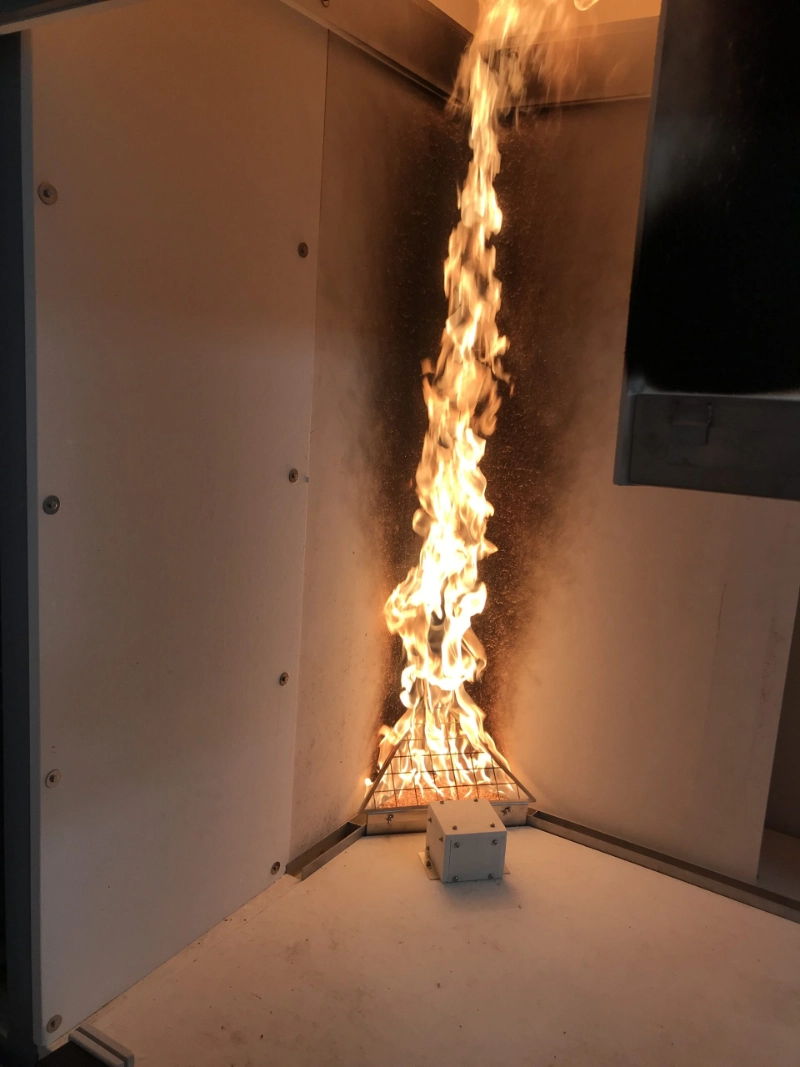
Fire Rating Alone Cannot Tell the Full Story of an Aluminum Composite Panel

1 Section

The Fire Rating on the Datasheet Is Only the Starting Point

A fire classification provides important information, but it should be understood as part of a broader assessment of material behavior.

One common mistake is to treat the fire rating as a single, universal measure of safety.

It is not.

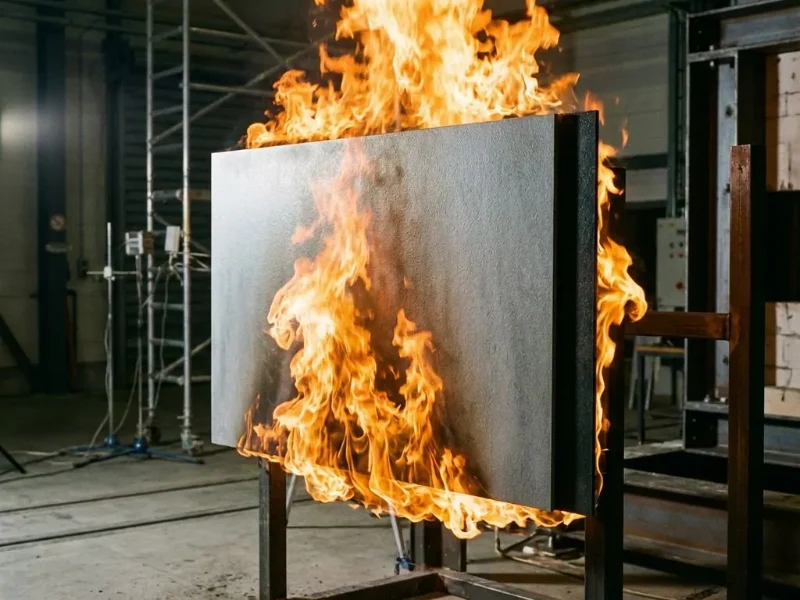
Different fire tests examine different aspects of material behavior. Some focus on flame spread. Others measure heat release, smoke production, ignition behavior, or the contribution of a material to fire growth.

This becomes particularly important when comparing a conventional PE core with a fire-resistant core.

A PE core can provide useful processing and mechanical characteristics, but polyethylene is an organic polymer and can contribute combustible material when exposed to sufficient heat. In a facade assembly, the concern is not only whether the aluminum surface itself burns. The question is what happens when heat reaches the core through an exposed edge, damaged area, joint, penetration, or prolonged fire exposure.

Core Behavior

The engineering question goes beyond whether a panel is labeled fire-resistant.

A fire-resistant core approaches the problem differently. Its formulation is designed to reduce the combustible contribution of the panel and limit fire development under specified test conditions.

The difference is therefore not simply “one panel is fireproof and the other is not.”

The engineering question is:

How much does the panel contribute to fire growth when it is exposed to the conditions defined by the relevant test standard?
02 Section

Look at the Test Behavior, Not Just the Classification

The final classification is only one part of the evidence. The underlying test behavior provides additional engineering context.

To answer that question, engineers need to look behind the final fire classification.

One important parameter is Total Heat Release (THR).

Heat release matters because a material that releases more heat can contribute more energy to an existing fire. In facade engineering, this becomes relevant when considering whether combustible components can accelerate fire development or contribute to fire spread.

Another important assessment is the Single Burning Item (SBI) test.

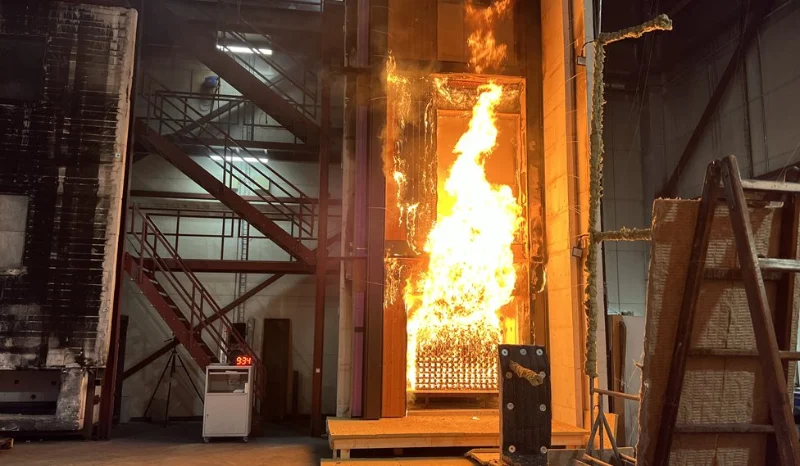
SBI testing evaluates the reaction of a construction product to fire under a defined test configuration. Rather than simply asking whether a material ignites, the test considers fire growth and related parameters under controlled exposure.

This distinction is important.

Fire Performance

Fire behavior has to be understood under the conditions defined by the applicable test.

TEST 01

Flame Exposure

A material may behave differently under a small flame, a larger localized fire exposure, or a configuration that allows heat to accumulate around the specimen.

TEST 02

Fire Growth

Simply stating that a panel “does not easily ignite” does not provide the same information as demonstrating its behavior under the applicable reaction-to-fire test.

TEST 03

Smoke Behavior

A facade material can have a relatively low flame contribution while still producing smoke under certain conditions.

Fire Rating Alone Cannot Tell the Full Story of an Aluminum Composite Panel

A material may behave differently under a small flame, a larger localized fire exposure, or a configuration that allows heat to accumulate around the specimen. Therefore, simply stating that a panel “does not easily ignite” does not provide the same information as demonstrating its behavior under the applicable reaction-to-fire test.

The same principle applies to smoke.

A facade material can have a relatively low flame contribution while still producing smoke under certain conditions. For occupied buildings, smoke production is an engineering concern because visibility, evacuation conditions, and exposure to combustion products can affect the consequences of a fire.

Test Evidence

Fire classification, THR, SBI behavior, and smoke characteristics should be read together.

This is why fire classification, THR, SBI behavior, and smoke-related characteristics should be considered as related pieces of information rather than isolated marketing terms.

03 Section

The Core Changes the Fire Behavior of the Panel

Because an aluminum composite panel is a layered material, the core deserves direct attention when evaluating fire performance.

03.1 — Panel Structure

The Core Sits Between the Aluminum Skins

The structure of an aluminum composite panel makes the core particularly important.

The aluminum skins are thin compared with the overall panel thickness. They provide the visible surface, weathering layer, and part of the panel's structural behavior, but they do not automatically determine how the entire composite behaves under fire exposure.

The core sits between those skins.

03.2 — Heat Exposure

Heat Can Reach the Core

When the panel is exposed to high temperatures, heat can transfer through the aluminum skin. If the core contains combustible material, its thermal decomposition and combustion can become part of the fire behavior of the panel.

This is one reason why the difference between a PE core and a fire-resistant core should be evaluated at the material-system level.

A fire-resistant core is not selected merely because the word “fire” appears in its product name. Its relevance comes from measurable behavior under specified test conditions.

Engineering Perspective

Shift the question from the label to the evidence.

For project teams, the better question is therefore not:

“Does this panel have a fire rating?”

It is:

“What core construction produced that rating, which test was performed, and what were the measured fire-performance characteristics?”

That shift from label to evidence is a small change in wording, but a major change in engineering judgment.

04 Section

Fire Classification Is an Outcome, Not the Whole Engineering Story

Material classification is important, but installed facade performance also depends on construction, connections, and integration with the building envelope.

This leads to an important distinction:

A fire rating is the result of a test and classification process. It is not a complete description of how a facade will behave in every fire scenario.

The actual performance of a facade also depends on how panels are cut, joined, fixed, supported, and integrated with other building components.

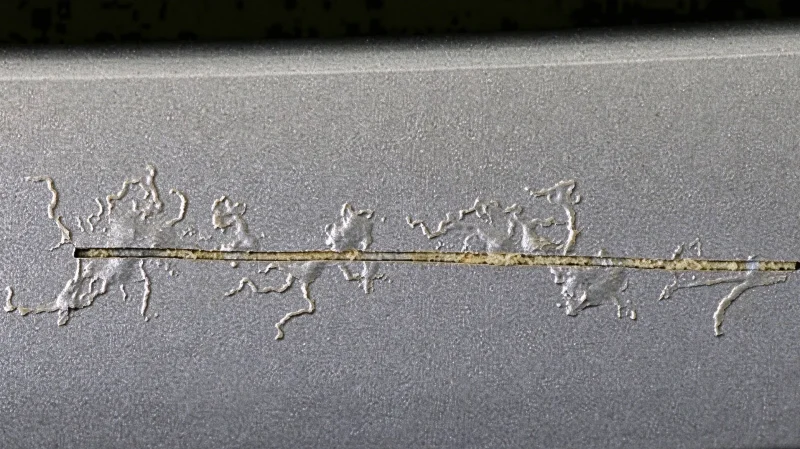
For example, panel edges may be exposed during fabrication or installation. Joints may introduce gaps. Fasteners and support systems can create localized thermal paths. Openings around windows and other facade penetrations can interrupt otherwise continuous protective layers.

These details do not invalidate a material's fire classification. They simply demonstrate why material selection is only one stage of facade fire engineering.

Complete Facade System

Fire performance has to coexist with structural requirements.

The same principle applies to structural design.

A panel may be lightweight and easy to fabricate, but the facade still needs to accommodate wind pressure, thermal movement, building tolerances, joint movement, and connection requirements. Fire performance has to coexist with these requirements rather than being considered independently.

Fire Rating Alone Cannot Tell the Full Story of an Aluminum Composite Panel

Good facade engineering is rarely about maximizing one property. It is about making different requirements work together.

05 Section

Evaluate the Evidence Behind the Fire-Resistant Core

A practical procurement review should examine the core, classification, testing evidence, measured parameters, and correspondence between the tested and supplied construction.

For a project requiring fire-resistant aluminum composite panels, a practical evaluation should begin with several questions.

01 — Core Material

1. What is the core material?

Do not evaluate the visible aluminum skin alone. Confirm whether the panel uses a PE core, a mineral-based or other fire-resistant core, and what construction is covered by the test documentation.

02 — Classification

2. What fire classification has been achieved?

Confirm the applicable classification system and standard. “Class A” in one testing system should not automatically be treated as equivalent to every other fire classification.

03 — Test Evidence

3. What test supports the classification?

Review the actual test report rather than relying only on a product brochure. Check the test standard, specimen construction, thickness, configuration, and tested product identification.

04 — Test Parameters

4. What does the test measure?

Look for relevant information such as flame behavior, heat release, THR, SBI results, smoke characteristics, and other parameters required by the project specification.

05 — Supplied Construction

5. Does the tested construction match the supplied panel?

This is especially important in procurement. A test report only has engineering value when the material construction, core, thickness, and relevant configuration correspond to what will actually be installed.

Supplier Selection

This is also where supplier selection becomes more than a purchasing decision.

A supplier capable of providing consistent documentation, material traceability, testing information, fabrication guidance, and project-specific technical support can reduce the gap between a tested material and its actual use on the facade.

06 Section

Testing Has to Connect With Real Facade Applications

Laboratory evidence establishes material behavior under defined conditions, while project design determines how that material is actually used.

For projects with demanding fire requirements, laboratory evidence should be considered alongside the actual facade application.

WILLSTRONG®has developed facade products around aluminum composite panels, fire-resistant composites, and aluminum honeycomb systems since 1995. Its technical scope includes fire-performance documentation and facade applications where material behavior has to be considered together with the requirements of the building envelope.

Product Application

Fire-resistant panels should be evaluated by both classification and supporting evidence.

For example, fire-resistant aluminum composite panels can be evaluated not only by their classification but also by the supporting test documentation and the way the panel is integrated into the facade design.

WILLSTRONG®'s published testing resources include fire-related standards and test documentation, providing project teams with a basis for reviewing material performance rather than relying solely on a classification label. Product test reports can therefore become part of the technical evaluation process.

The company also has facade applications across different building types and regions. WILLSTRONG® facade projects provide another useful reference point: fire-resistant facade materials have to function as part of an installed building envelope, not as isolated laboratory specimens.

The engineering lesson is straightforward. Test data establishes what a material did under defined conditions. Project design determines how that material is used.
07 Section

A Better Way to Compare Aluminum Composite Panels

A useful comparison starts with the core and follows the evidence through testing, classification, construction, and application.

Fire Rating Alone Cannot Tell the Full Story of an Aluminum Composite Panel

When comparing two aluminum composite panels, the shortest datasheet is not necessarily the easiest to evaluate.

A more useful comparison can follow this sequence:

Core→ Test Standard→ Test Result→ Classification→ Construction→ Application

Start with the core because it influences the combustible content of the composite.

Then identify the test standard and understand what it measures.

Next, review the actual test results and classification.

After that, confirm whether the tested construction corresponds to the panel being specified.

Finally, consider how the panel will be fabricated and installed within the complete facade system.

International Projects

The applicable project standard should determine the required evidence.

This approach also helps avoid a common procurement problem: selecting a material based on a familiar fire-rating term without checking whether the underlying test method and construction are appropriate for the project.

For international projects, this becomes even more important because fire classifications and test methods can vary between jurisdictions. The project specification should therefore determine which standard and evidence are required.

08 Section

Engineering Requirements Come Before Product Selection

Product selection should follow the engineering requirements rather than relying on a single descriptive fire-performance term.

For WILLSTRONG®, this engineering-first approach is reflected in its broader facade product range, which covers aluminum composite panels, fire-resistant composites, and aluminum honeycomb systems.

08.1 — Requirement

The Relevant Question

The relevant question is not whether a product can simply be described as “fireproof.”

08.2 — Alignment

The Engineering Alignment

The relevant question is whether the product construction, test evidence, fabrication requirements, and facade application can be aligned with the project's engineering requirements.

Final Engineering Principle

Material selection becomes meaningful when it is connected to the complete facade solution.

That is the point at which a facade material becomes part of a solution rather than just another line item in a specification.

09 Closing

Closing

Fire classification is important, but the engineering story continues behind the label.

A fire classification tells us something important about an aluminum composite panel—but it does not tell us everything.

Engineers do not stop at the rating. They ask what was tested, how it behaved, what the core contributes, and whether the tested construction matches the facade being built.

Because in facade fire safety, the label is only the beginning of the engineering.
```