

 Arabic
 Spain
Spain Germany
 France
 Japan
Japan Portuguese
 Russian
 Chinese
 Thailand
 Vietnam
 Indonesia
 India
IndiaNews
THE PIONEER IN FACADE SOLUTIONS


Modern architectural projects demand more than durable exterior materials—they require façade systems that create a lasting visual impression while maintaining reliable performance in challenging outdoor environments. Among today's premium decorative materials, Chameleon Colors Aluminum Composite Panels (ACP) stand out for their ability to produce dynamic color-changing effects that transform a building's appearance throughout the day.
However, not all Chameleon ACP products deliver the same level of quality. The optical effect, weather resistance, coating durability, and color consistency all depend on raw materials, manufacturing technology, and quality control. Whether you are specifying materials for a landmark commercial building or a luxury residential project, choosing a trusted supplier is essential. WILLSTRONG® ACP provides premium aluminum composite panels manufactured with advanced fluorocarbon coating technology and strict production standards for demanding architectural applications.
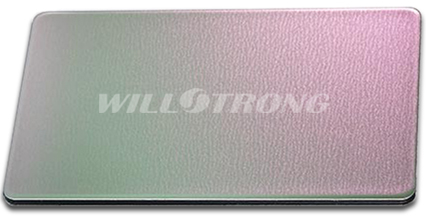
Before selecting a product, it is important to understand what makes Chameleon Colors different from ordinary metallic finishes.
Chameleon Colors are a premium ACP surface coating technology that allows the panel to display continuous color shifts under different viewing angles or lighting conditions. Instead of showing one fixed color, the coating may gradually transition from gold to green, blue to purple, or red to gold.
This unique appearance is created through interference pearl pigments combined with multi-layer optical interference, rather than conventional colored pigments.
Because of their complex coating systems and outstanding decorative performance, Chameleon Colors are generally positioned as high-end customized ACP finishes. Most premium products use PVDF or FEVE resin systems that comply with AAMA 2605 or equivalent architectural weatherability standards.
These panels are widely used for:
· Landmark architectural facades
· Luxury commercial buildings
· High-end residential developments
· Transportation terminals
· Interior decorative panels
· Museums and exhibition centers
The beauty of Chameleon ACP comes from physics rather than artificial lighting.
When sunlight reaches the interference pigment, part of the light reflects from the outer surface of the metal oxide film while another portion penetrates the film and reflects from the lower surface.
Because the reflected light travels different optical distances, interference occurs according to the equation:
2nd cosθ = mλ
Where:
· n represents the refractive index
· d represents film thickness
· θ represents the refraction angle
· m represents interference order
· λ represents the reflected wavelength
As the viewing angle changes, different wavelengths become dominant, creating the well-known Flop or Color Travel effect.
A high-quality panel should produce smooth, vivid, and consistent color transitions instead of weak or cloudy color changes.
The optical performance of Chameleon ACP depends heavily on the quality of its interference pigments.
Premium manufacturers typically use substrates such as:
· Synthetic mica
· Natural mica
· Alumina
· Silica
· Glass flakes
Among these materials, alumina generally delivers the highest gloss and strongest color brilliance because of its higher refractive index.
The titanium dioxide coating thickness also determines the reflected color:
· 80–100 nm → Red
· 100–130 nm → Purple
· 130–160 nm → Blue
· 160–190 nm → Green
· 190–220 nm → Gold
Professional coating manufacturers may also combine transparent absorption pigments with interference pigments to stabilize the primary color while enhancing angle-dependent color travel.
When evaluating suppliers, ask about the pigment system used and whether they can maintain consistent optical performance across production batches.
One of the most important purchasing decisions is selecting the correct resin system.
PVDF (Polyvinylidene Difluoride) remains the industry standard for architectural exterior coatings because it offers:
· Excellent UV resistance
· Long-term gloss retention
· Outstanding corrosion resistance
· Superior chemical stability
· Compliance with AAMA 2605
FEVE coatings provide similarly excellent weather resistance while offering additional benefits:
· Higher transparency
· Better color depth
· Improved interference color visibility
· Enhanced gloss performance
Compared with modified polyester coatings, both PVDF and FEVE deliver significantly better long-term durability for exterior cladding.
A premium Chameleon ACP should include a complete multilayer coating system rather than a single decorative layer.
The standard structure generally consists of:
· 3003 or 5052 aluminum coil
· Anti-corrosion primer (15–25 μm)
· Chameleon color coat (20–35 μm)
· Transparent PVDF or FEVE clear coat (10–20 μm)
The clear coat plays an especially important role because its refractive index influences how effectively the interference colors are displayed. FEVE clear coats generally provide better color clarity than conventional PVDF clear coats.
One manufacturing detail often overlooked by buyers is pigment orientation.
The microscopic pearl flakes inside the Chameleon coating must align almost perfectly parallel to the panel surface.
Poor orientation results in:
· Cloudy appearance
· Reduced color saturation
· Weak Flop effect
· Uneven color travel
Manufacturers achieve proper orientation by carefully controlling:
· Resin shrinkage
· Solvent evaporation speed
· Coating shear force
· Oven airflow distribution
This is one of the key factors that separates premium Chameleon ACP from lower-quality alternatives.
High-quality Chameleon ACP requires much stricter production control than ordinary painted panels.
Interference pigments should only be dispersed using controlled mixing equipment.
Grinding with sand mills or three-roll mills must be avoided because excessive mechanical force permanently damages the interference flakes.
Before each production batch, coating equipment should be thoroughly cleaned to prevent contamination from conventional pigments, which can produce dull or gray colors.
A professional production line generally follows these steps:
· Coil cleaning and pretreatment
· Primer coating
· Cooling
· Chameleon color coating
· Cooling
· Clear coat application
· Final curing
· Protective film lamination
Peak Metal Temperature (PMT) should generally remain between 224°C and 241°C to achieve complete curing without degrading the coating.
Modern production lines also use three- or four-zone ovens with carefully controlled temperature gradients to allow sufficient time for pigment orientation.
Appearance alone is not enough when selecting ACP for architectural projects.
Ask suppliers whether their products have been tested according to internationally recognized standards.
Typical performance indicators include:
· Total dry film thickness: 40–60 μm
· Gloss (60°): 40–90
· Pencil hardness: HB or above
· ASTM D3359 adhesion: Grade 0
· ASTM D2794 impact resistance
· ASTM D5402 MEK resistance: 100 double rubs or more
· ASTM G154 QUV weathering: Delta E ≤5 after 4,000 hours
· ASTM B117 salt spray: creep ≤2 mm after 4,000 hours
· ISO 11341 accelerated weathering
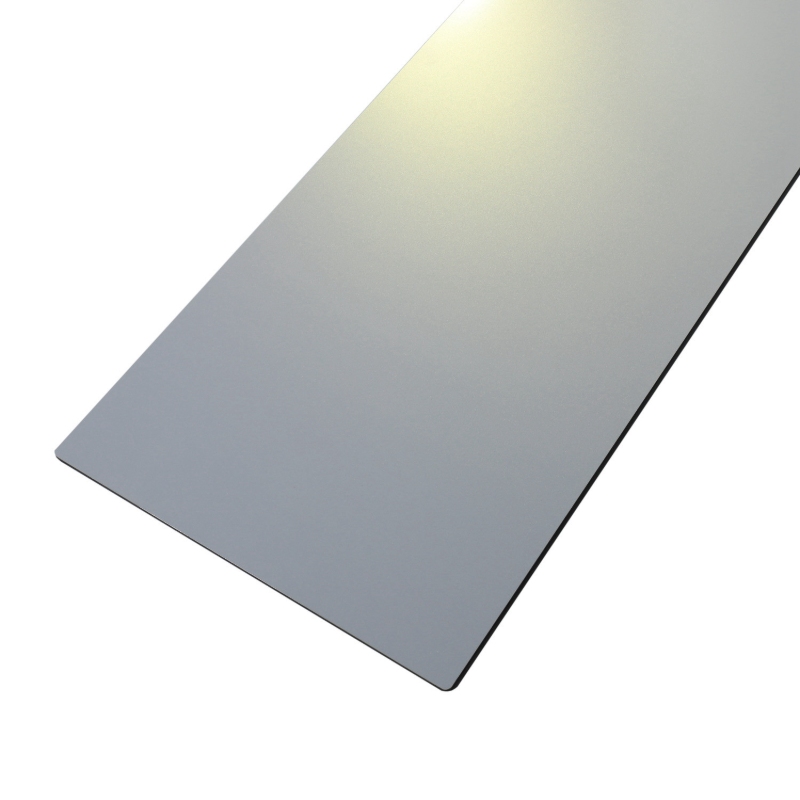
For premium Chameleon coatings, color quality is equally important.
Look for:
· Batch color difference (Delta E) ≤0.5
· Flop Index ≥15
· Color Travel (Delta h) ≥30°
Higher Flop Index values generally indicate stronger and more noticeable color-changing effects.
Reliable manufacturers perform quality inspection throughout the entire production process.
Incoming inspection includes:
· Pigment particle analysis
· Resin viscosity
· Aluminum alloy verification
· Surface roughness measurement
Process inspection monitors:
· Coating viscosity
· Wet film thickness
· Instant color values
· Peak Metal Temperature
· MEK resistance
Final inspection typically includes:
· Multi-angle spectrophotometer measurements (15°, 25°, 45°, 75°, 110°)
· Adhesion testing
· Impact testing
· Gloss measurement
· Visual inspection under D65 lighting
· Accelerated weathering verification
A comprehensive quality control system significantly improves batch consistency and long-term product reliability.
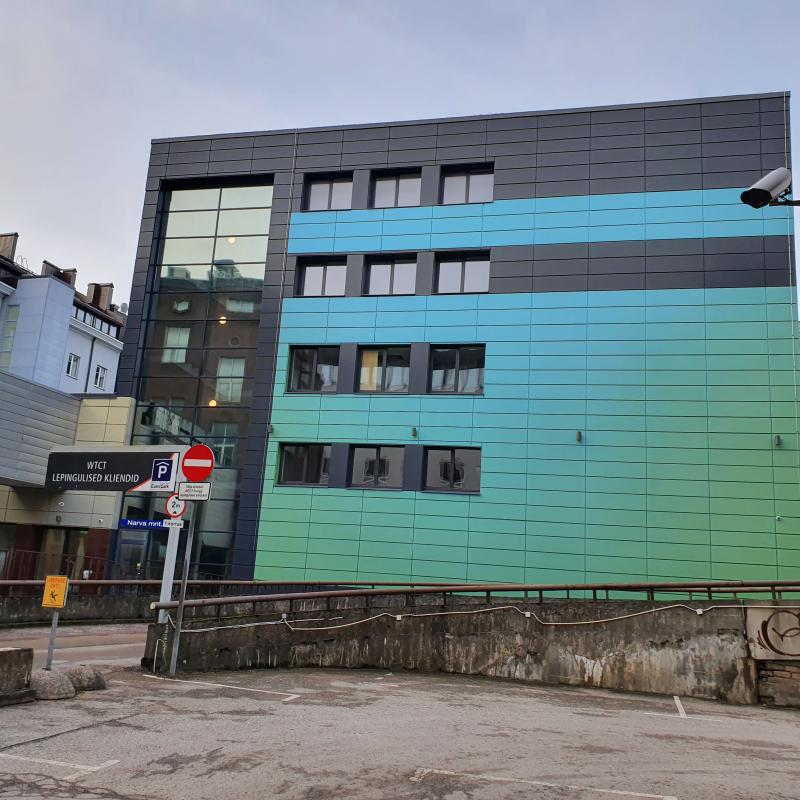
Technical capability is often reflected in a manufacturer's project experience.
Established in 1995, WILLSTRONG® has become one of China's leading facade solution providers and one of the country's TOP 100 facade solutions companies.
Its products include:
· Aluminum Composite Panels
· Fire-resistant composite panels
· Aluminum honeycomb systems
WILLSTRONG® materials have been installed on internationally recognized projects, including Charles de Gaulle International Airport, demonstrating proven quality in demanding architectural environments.
Beyond Chameleon Colors, the company also offers weather-resistant fluorocarbon coatings, antibacterial and antistatic surfaces, nano self-cleaning technology, and fire-resistant composite solutions.
Standard ACP specifications include:
· Standard thickness: 4 mm
· Optional thickness: 3 mm
· Standard width: 1220 mm
· Optional width: 1500 mm
· Standard lengths: 2440 mm and 3200 mm
· Maximum customized length: 8000 mm
These options provide architects and fabricators with greater design flexibility for projects of different scales.
Selecting high-quality Chameleon Colors Aluminum Composite Panels requires more than comparing colors or panel thickness. Buyers should evaluate the optical interference technology, interference pigment quality, PVDF or FEVE coating systems, multilayer coating structure, pigment orientation, manufacturing process, performance testing, and quality control capabilities of the manufacturer.
By choosing an experienced supplier with proven architectural expertise, project owners can ensure long-term durability, excellent weather resistance, and consistent color-changing performance. For premium facade projects that demand both engineering reliability and striking visual impact,WILLSTRONG® ACP offers advanced aluminum composite panel solutions designed to meet the highest expectations of modern architecture.
 Leave a Message