 Arabic
 Spain
Spain Germany
 France
 Japan
Japan Portuguese
 Russian
 Chinese
 Thailand
 Vietnam
 Indonesia
 India
IndiaNews
The pioneer in facade solutions


A facade does not corrode simply because it is near the sea. It corrodes when salt, moisture, oxygen, materials and geometry create the conditions for corrosion to continue.
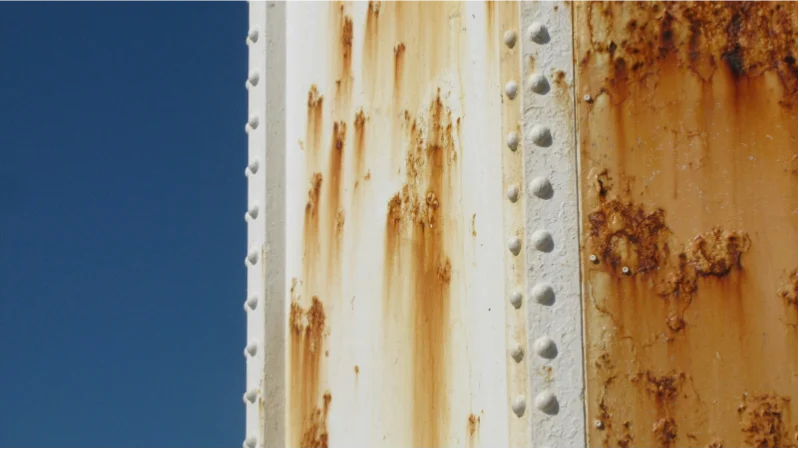
A facade does not corrode simply because it is near the sea.
It corrodes when salt, moisture, oxygen, materials and geometry create the conditions for corrosion to continue.
This distinction matters when designing facades for coastal buildings, ports, airports, waterfront developments and other projects exposed to marine environments. Engineers may specify a corrosion-resistant coating and a high corrosion-resistance classification, yet localized corrosion can still appear around joints, fasteners, folded edges or areas where water cannot drain properly.
So when a project requires C5-M corrosion resistance, the engineering question should not be limited to:
The more important question is:
Marine environments are difficult for facade materials because salt does not need to visibly accumulate on a panel to influence corrosion.
Marine environments are difficult for facade materials because salt does not need to visibly accumulate on a panel to influence corrosion.
Fine salt particles can be transported by wind and moisture. Surfaces can experience repeated wetting and drying. Joints can retain water. Contaminants can concentrate in protected areas where natural washing by rain is limited.
This creates a different corrosion environment from a relatively dry inland building.
A flat facade panel may remain visually clean while a nearby joint experiences repeated moisture retention.
A fastener may remain mechanically secure while the surrounding interface becomes a localized corrosion site.
A coating may remain intact across most of the panel while a small damaged edge becomes the starting point for corrosion.
This is why corrosion classification and facade detailing need to be considered together.
C5-M provides an exposure framework, but the classification itself does not replace facade design.
C5-M is associated with very high corrosivity in marine environments under the ISO 12944 corrosion classification system.
The classification is useful because it gives project teams a common framework for defining environmental exposure and selecting protective systems.
But C5-M should not be interpreted as a guarantee that every component of a facade will remain corrosion-free under every condition.
The classification describes an exposure category.
The facade still has to be designed to deal with that exposure.
marine salt exposure
humidity and condensation
wet-dry cycles
drainage
joints and interfaces
fasteners and dissimilar metals
coating damage
cut edges
maintenance access
fabrication and installation conditions
A corrosion class is therefore better understood as a design input, not the final design solution.
Salt alone is not the complete corrosion problem. Water enables many electrochemical corrosion reactions to proceed.
Salt alone is not the complete corrosion problem.
Water is what allows many electrochemical corrosion reactions to proceed.
When moisture forms a conductive electrolyte layer on a metal surface, electrochemical reactions can occur between anodic and cathodic areas.
For aluminum and other facade metals, the natural oxide layer provides an important protective barrier. But localized damage, contamination, unfavorable material combinations and persistent moisture can change the local electrochemical conditions.
The problem becomes more serious when moisture remains trapped rather than draining away.
This is why a facade exposed to the same marine atmosphere can show very different corrosion behavior depending on its geometry.
Two panels may receive the same coating.
One may dry quickly after rainfall.
The other may have a narrow joint that repeatedly retains moisture.
The material specification is the same.
The corrosion environment is not.
Joints are essential to facade movement and installation tolerance, but they can also concentrate corrosion conditions.
Joints are essential to facade movement and installation tolerance, but they also create locations where corrosion conditions can become more concentrated.
A narrow crevice can restrict airflow and drainage. If water and salt enter the space, evaporation can increase the local concentration of dissolved salts.
This can create a more aggressive environment inside the crevice than on the surrounding exposed surface.
That is the basic engineering concern behind crevice corrosion.
The same principle applies around fasteners, folded returns, overlapping components and poorly drained interfaces.
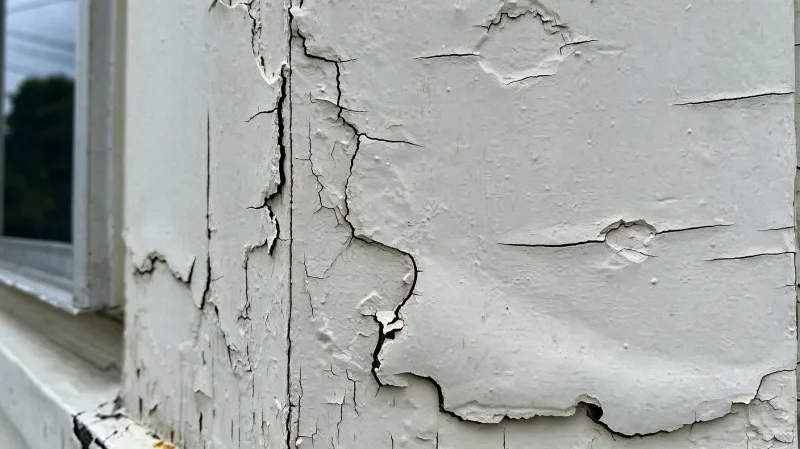
For facade engineers, this means a corrosion-resistant system cannot be evaluated only by the performance of a large flat panel.
A facade has hundreds or thousands of individual interfaces. The long-term performance of the system can be influenced by a relatively small number of vulnerable locations.
Drainage is usually discussed as a waterproofing issue. It is also a corrosion-control issue.
Drainage is usually discussed as a waterproofing issue.
It is also a corrosion-control issue.
If water can enter a facade cavity, the design should provide a reliable path for that water to leave.
When water is repeatedly trapped at a joint or behind a component, the metal surface can experience prolonged exposure to moisture and dissolved contaminants.
This is fundamentally different from a surface that becomes wet and then dries quickly.
Good drainage therefore reduces the duration of exposure.
The engineering objective is not necessarily to prevent every drop of water from entering the facade system. That is often unrealistic for ventilated or pressure-equalized assemblies.
The more practical objective is to control where water goes and how quickly the system can drain and dry.
Material compatibility becomes part of corrosion control when different metals are connected within the facade assembly.
Facade systems often combine different materials.
Aluminum panels may be connected with stainless steel fasteners. Subframes may use other metals. Brackets, anchors and accessories may introduce additional material interfaces.
When dissimilar metals are electrically connected in the presence of an electrolyte, galvanic corrosion can become a concern.
The severity depends on factors such as material combinations, electrical contact, electrolyte availability, exposed areas and environmental conditions.
This does not mean different metals cannot be used together.
It means the connection needs to be engineered.
Isolation can influence the electrical interaction between dissimilar materials.
Compatible materials and suitable fasteners help control corrosion behavior at interfaces.
Drainage reduces electrolyte availability and limits prolonged moisture exposure around connections.
Material performance and environmental exposure interact continuously throughout the life of a facade.
This is perhaps the most important point when discussing C5-M facades.
Engineers often think about material performance and environmental exposure as two separate subjects.
In reality, they interact continuously.
A coating has one performance profile under controlled laboratory conditions.
The same coating on a building experiences sunlight, rain, salt deposition, condensation, thermal movement, mechanical handling, cleaning and local water retention.
The facade geometry changes the environment immediately next to the material.
Therefore:
That is why corrosion control should begin with geometry and water management, not only with coating selection.
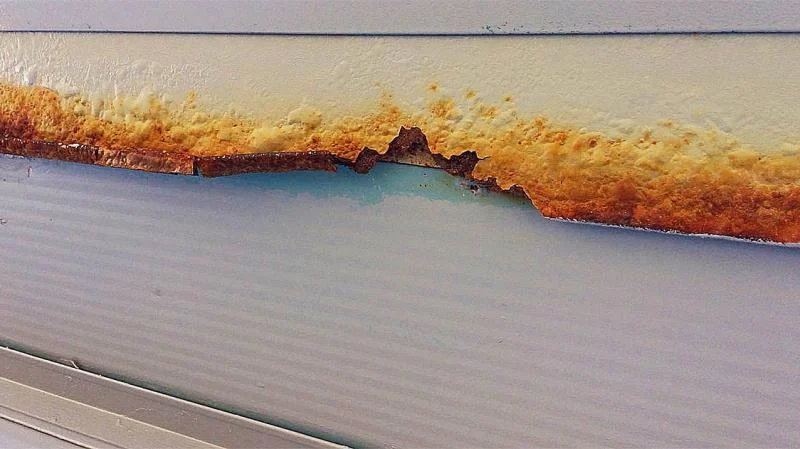
For a C5-M project, the corrosion strategy should connect several engineering decisions.
Determine whether the facade is exposed to direct marine spray, salt-laden air, high humidity, industrial contaminants or combinations of these conditions.
Depending on the substrate and project requirements, this may involve anodizing, powder coating, PVDF coating or other protective systems.
The selection should consider the environment rather than relying only on the coating name.
Edges, joints, fasteners, folds and material interfaces should receive specific attention during design and fabrication.
Water should have a controlled route through the facade assembly rather than becoming trapped in concealed locations.
Facade joints are not static.
Panels expand and contract with temperature changes. If the joint design does not accommodate movement, coating damage, mechanical stress or loss of sealing performance can develop over time.
A corrosion-resistant specification can be undermined by site damage.
Cutting, drilling, transportation, storage and installation can expose areas that were not part of the original laboratory test.
The final system therefore depends on both factory control and site execution.
Large architectural projects require system-level thinking because corrosion often begins at relatively small and repeated details.
On major buildings such as airports, museums, transportation hubs and waterfront developments, facade areas can be extremely large.
But corrosion rarely begins because the entire facade suddenly fails.
It is more likely to appear locally.
This is why large architectural projects require a different mindset from simple material selection.
The engineering team has to think about thousands of repeated details rather than one perfect sample.
The sample demonstrates material behavior.
The facade demonstrates system behavior.
Supplier evaluation should go beyond asking whether a product is simply “C5-M suitable.”
A useful supplier evaluation should therefore go beyond asking whether a product is “C5-M suitable.”
What corrosion environment is the system designed for?
What surface treatment is applied to the substrate?
How are coating thickness and adhesion controlled?
How are cut edges treated after fabrication?
What materials are used for fasteners and subframes?
How are dissimilar metals isolated where necessary?
How does the facade drain water from joints and cavities?
What happens if the coating is damaged during fabrication or installation?
These questions reveal whether corrosion resistance is being treated as a complete engineering requirement or simply as a coating specification.
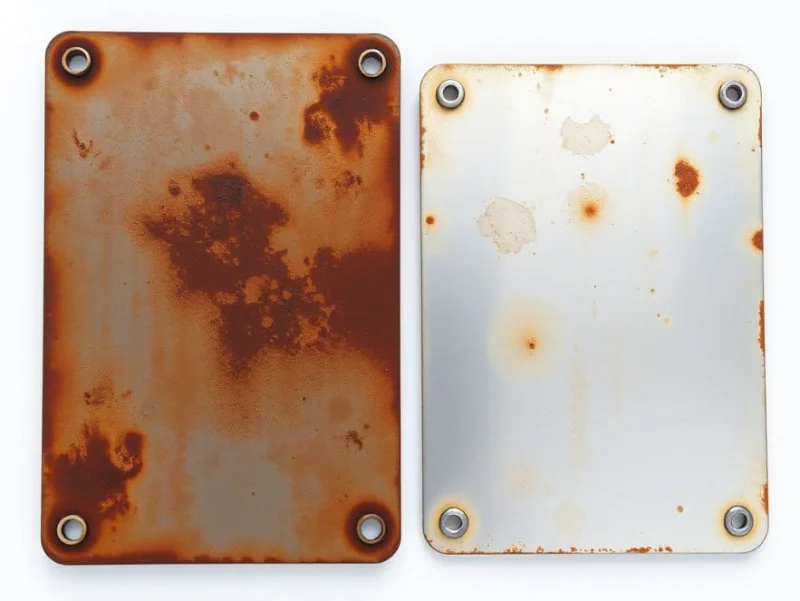
The system-level approach is relevant to facade work where environmental exposure is a major design factor.
This system-level approach is relevant to the facade work of WILLSTRONG®, which has developed aluminum composite panels, fire-resistant composites and aluminum honeycomb systems since its establishment in 1995.
For projects where environmental exposure is a major design factor, the relevant engineering task is not simply selecting a facade panel. The material, surface treatment, structural configuration, joints and installation conditions need to be considered together.
WILLSTRONG® has supplied facade applications across more than 80 countries and regions, with project applications stated by the company to exceed 100,000. Its international project experience includes Charles de Gaulle International Airport.
The practical value of this experience is best understood through project requirements: the exposure environment must first be identified, then the material and surface-treatment system can be matched to the facade's actual engineering conditions.
That approach is more useful than treating a corrosion classification as a product label.
Corrosion resistance is not defined by a coating specification alone. It is the result of how the entire facade system responds to its environment.
A facade does not become corrosion-resistant simply because its coating passes a test.
In a marine environment, salt, moisture, joints, drainage, fasteners, movement and surface treatment interact continuously.
C5-M is an environmental requirement. Corrosion resistance is a system-design task.
The coating protects the surface.
The detail protects the coating.
And the drainage protects the detail.