 Arabic
 Spain
Spain Germany
 France
 Japan
Japan Portuguese
 Russian
 Chinese
 Thailand
 Vietnam
 Indonesia
 India
IndiaNews
The pioneer in facade solutions


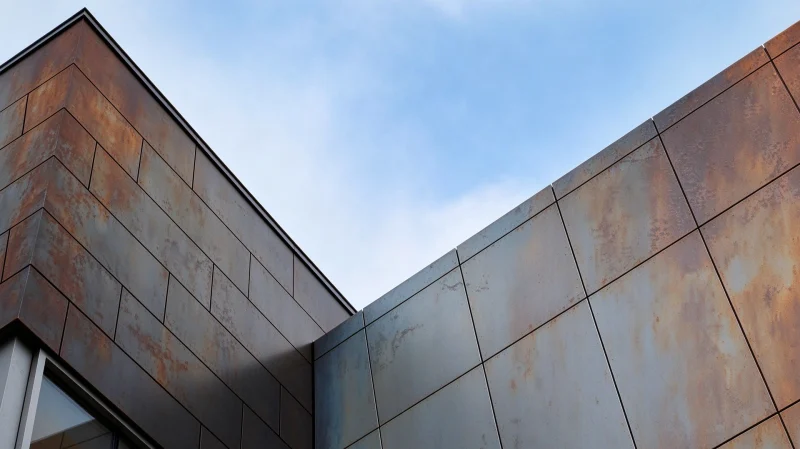
A facade coating can look intact when a building opens and still be an engineering problem waiting to appear.
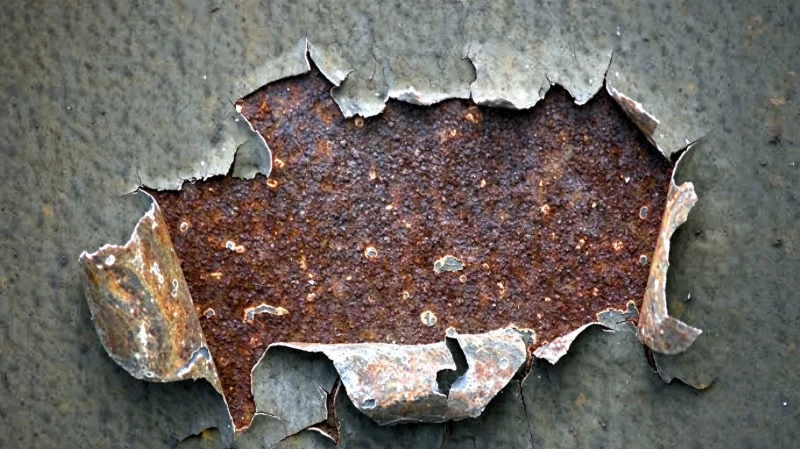
A facade coating can look intact when a building opens and still be an engineering problem waiting to appear.
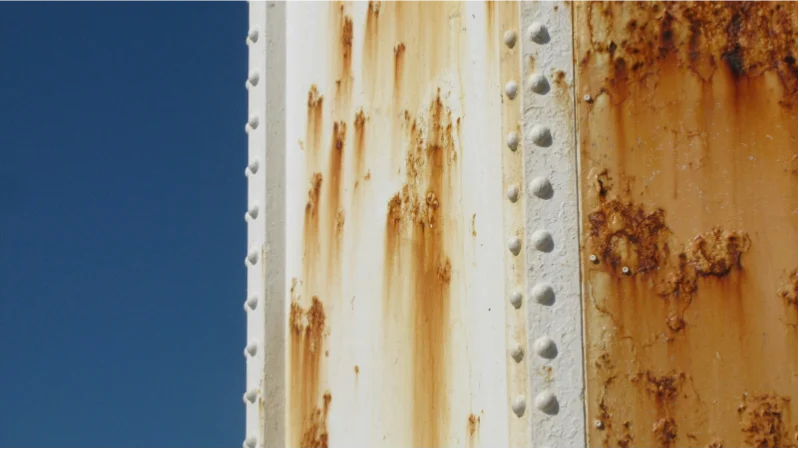
This becomes more obvious on coastal buildings, high-humidity sites, transportation hubs, and facades exposed to deicing salts or industrial pollutants. A small coating defect can become a corrosion path. Once moisture and dissolved salts reach the metal substrate, the visible damage may develop long after the original surface treatment was completed.
That raises a practical question: Why do some facade coatings fail salt spray testing even when the finished surface looks uniform and well protected?
The answer is rarely just the coating itself. It is usually a combination of surface preparation, coating adhesion, substrate condition, film continuity, and the way the facade is exposed to moisture.
Salt spray testing is often treated as a simple durability check, but its engineering value is in revealing weaknesses within the complete surface-treatment system.
Salt spray testing is often treated as a simple durability check: expose a coated panel to a corrosive salt environment and observe what happens.
But the test is more useful when viewed as an engineering stress test.
The salt solution provides an electrolyte. Moisture allows ionic movement across the surface. If the coating contains a defect, weak interface, exposed edge, scratch, or poorly treated area, the electrolyte can reach the metal substrate.
At that point, corrosion becomes an electrochemical process rather than a cosmetic surface issue.
For facade engineers, this distinction matters.
A coating may have an acceptable appearance and still have poor resistance to corrosion propagation. Conversely, a coating system with a properly prepared substrate and strong adhesion can limit the movement of moisture beneath the coating.
The critical question is therefore not simply:
“How thick is the coating?”
It is:
“How well does the entire surface-treatment system prevent corrosion from developing and spreading?”
Coating performance begins with the actual substrate surface, not simply with the coating specification.
A coating does not bond to an abstract material specification. It bonds to an actual surface.
That surface may contain oxide layers, contaminants, oil, dust, moisture, processing residues, or other conditions that affect adhesion. Even when these contaminants are not obvious to the eye, they can create weak areas between the substrate and coating.
This is why surface treatment is not a secondary production step.
Cleaning, degreasing, chemical treatment, conversion or passivation, rinsing, and controlled drying can all influence the final interface.
For aluminum facade materials, the natural oxide layer is also part of the engineering picture. Aluminum reacts with oxygen and forms an oxide film naturally, which provides a degree of protection. However, the condition, thickness, uniformity, and subsequent treatment of that surface can affect how later coating systems behave.
The principle is straightforward:
A coating cannot compensate indefinitely for a poorly prepared substrate.
This is particularly important when a facade is expected to operate for years in a humid or salt-laden environment.
Real facade surfaces can experience scratches, cuts, handling damage and installation defects, making adhesion around damaged areas an important engineering consideration.
One of the most useful ways to understand coating adhesion is to look at what happens after the surface is deliberately damaged.
A cross-cut test creates a defined grid of cuts through the coating. The surface is then evaluated to determine whether the coating remains attached around the damaged area.
When this principle is combined with salt spray exposure, the test becomes more informative.
The cut exposes the underlying system to the corrosive environment. If the coating interface is weak, corrosion or coating detachment may extend outward from the damaged area.
This is different from simply looking at whether the coating changes color.
The engineering concern is corrosion creep and loss of adhesion around the defect.
For facade applications, this matters because real buildings are not laboratory-perfect surfaces. Panels can experience handling damage during transportation, cutting and fabrication, fastener installation, joint movement, maintenance work, or accidental impact.
A coating system therefore needs to perform not only on an untouched laboratory surface but also around the types of defects that can occur during the life of a facade.
Coating thickness is only one part of corrosion protection. Adhesion, substrate preparation, continuity and fabrication details also affect performance.
It is tempting to assume that a thicker coating automatically provides better corrosion resistance.
The relationship is more complicated.
A coating needs sufficient thickness to provide continuous protection, but excessive thickness can introduce its own process-control challenges. More importantly, thickness does not eliminate poor adhesion, substrate contamination, edge defects, pinholes, or weaknesses created during fabrication.
The same principle applies to anodized surfaces.
With anodizing, protection is associated with the controlled formation of an aluminum oxide layer rather than simply depositing a conventional paint film. Oxide film thickness, sealing, surface condition, and environmental exposure all influence performance.
Powder coating and PVDF coating systems work through different mechanisms, but the engineering question remains similar:
Is the complete surface-treatment system appropriate for the exposure environment and controlled consistently during production?
That is why specifications should not stop at a coating name.
Large flat surfaces are easy to inspect. Edges, joints, fasteners and material interfaces often require more attention.
Large flat facade surfaces are easy to inspect. The difficult areas are usually the details.
These areas can retain moisture or create localized electrochemical conditions.
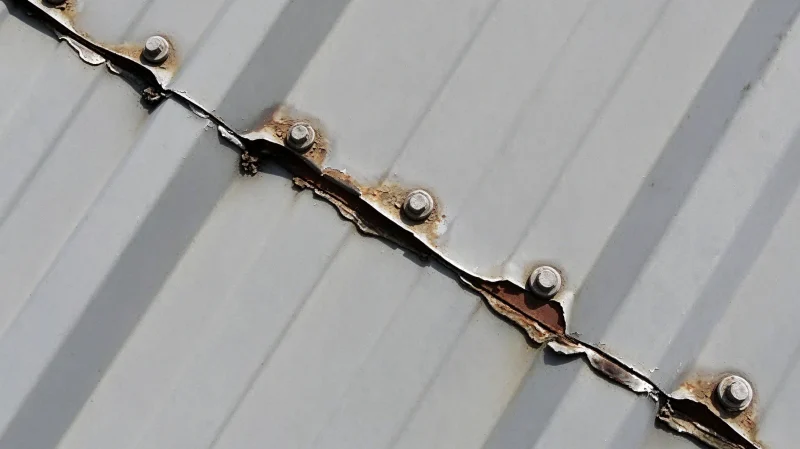
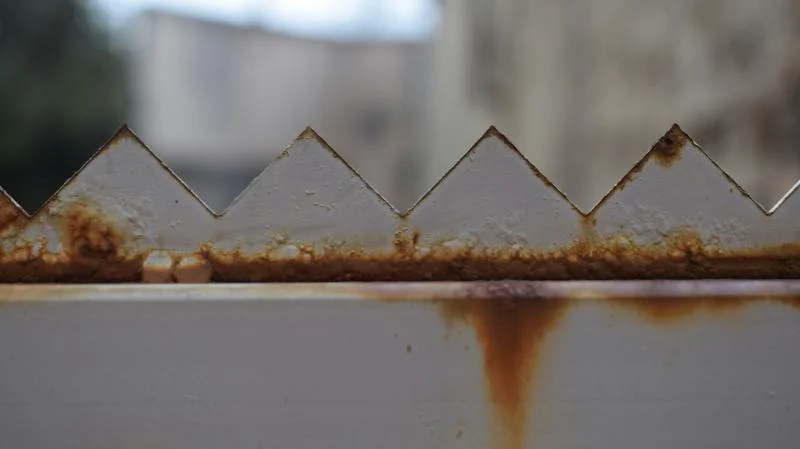
Crevice corrosion is a typical example. A narrow gap can trap moisture and reduce the ability of the area to dry. If salts are present, the environment inside the crevice can become more aggressive than the exposed surface.
This is one reason why corrosion resistance cannot be evaluated only by looking at a large, flat sample.
A facade is a system of materials and connections.
The coating is only one layer of that system.
Corrosion resistance depends on how substrate, pretreatment, coating, detailing, drainage, fasteners and installation interact.
The important lesson from salt spray testing is not that every facade should simply receive a thicker coating.
It is that corrosion resistance is an interface problem as much as a material problem.
The coating, pretreatment, substrate, edge condition, joints, drainage, fasteners, and installation process all interact.
A facade may pass a coating specification but still experience premature corrosion if water is repeatedly trapped at a joint.
A thick coating may still fail if adhesion is compromised by inadequate surface preparation.
An aluminum panel may have good intrinsic corrosion resistance but develop localized problems where dissimilar metals, moisture, and contamination meet.
This changes how facade durability should be evaluated.
Instead of asking only, “Which coating is best?”, engineers should ask:
What is the exposure environment, how is the substrate prepared, where can moisture enter, and what happens when the surface is damaged?
That is a much more useful engineering question.
Surface-treatment decisions should begin with the actual environmental exposure and project requirements.
For a facade project, the surface-treatment process should begin with the environment rather than the product brochure.
A coastal building may face salt-laden moisture and frequent wet-dry cycles. A high-humidity project may have limited drying conditions. Industrial environments can introduce additional contaminants.
These conditions influence the required surface-treatment strategy.
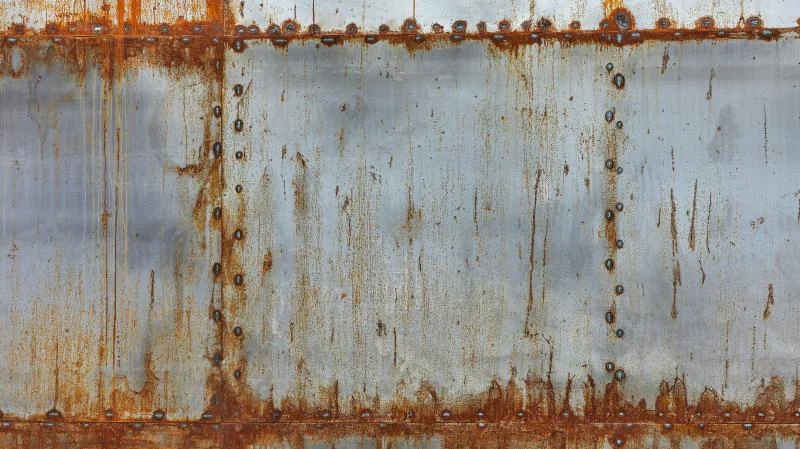
Depending on the substrate and project requirements, the system may involve:
l controlled substrate cleaning
l chemical pretreatment or passivation
l anodizing with specified oxide film thickness
l powder coating
l PVDF coating
l controlled curing
l coating thickness inspection
l adhesion testing
l salt spray or other corrosion-resistance testing
Acid and alkali resistance can also become relevant where cleaning chemicals, pollutants, or industrial exposure are part of the operating environment.
The objective is not to select the longest list of treatments.
The objective is to establish a controlled chain from substrate → pretreatment → coating → curing → inspection → installation.
Laboratory testing provides controlled information, but facade durability also depends on design, handling, fabrication and installation conditions.
Laboratory testing cannot reproduce every condition found on a building.
Salt spray testing is valuable because it provides a controlled and repeatable corrosive environment. But test results should be interpreted together with the actual facade design and exposure conditions.
For example, a panel that performs well in a flat-surface test still needs appropriate detailing around joints and edges.
Likewise, a coating that maintains adhesion under controlled conditions still depends on correct handling and installation on site.
This is especially relevant for large architectural projects, where facade components may be transported over long distances, stored temporarily, fabricated before installation, and exposed to construction-site conditions before the building envelope is completed.
The engineering chain does not end when the coating leaves the production line.
Supplier evaluation becomes more transparent when it focuses on measurable engineering controls rather than coating names alone.
When evaluating corrosion-resistant facade materials, several questions are more useful than simply asking for a coating brand.
What surface preparation is used before coating?
Is cross-cut testing part of quality control where appropriate?
What corrosion-resistance tests are specified, and under which standard?
How is coating thickness controlled?
How are cut edges and fabricated components treated?
How does the proposed system match the actual exposure environment?
These questions shift the discussion from product labels to engineering controls.
They also make supplier evaluation more transparent because the same technical logic can be applied across different coating systems.
Corrosion resistance is connected to process control across the complete facade material system.
For a facade manufacturer, corrosion resistance is ultimately connected to process control across the material system.
WILLSTRONG®, established in 1995, works across aluminum composite panels, fire-resistant composites, and aluminum honeycomb systems. Its facade applications include major international projects, including Charles de Gaulle International Airport.
The relevant point is not simply the range of facade products. For corrosion-sensitive applications, the engineering value lies in matching the surface-treatment process with the substrate, fabrication requirements, and expected environmental exposure.
That can include consideration of coating systems, surface preparation, adhesion, film thickness, and the conditions that facade components will encounter during fabrication and installation.
With more than 30 certifications worldwide and more than 100,000 project applications stated by the company, WILLSTRONG® has developed facade solutions for projects in more than 80 countries and regions.
For engineers, however, the more important question remains project-specific: whether the selected surface-treatment system, testing method, facade detailing, and installation process work together for the intended environment.
Salt spray testing reveals weaknesses, but long-term facade durability depends on the complete engineering system.
Salt spray testing does not tell the whole story of facade durability.
It exposes weaknesses that may already exist at the interface between the substrate, pretreatment, coating, and surrounding environment.
The most durable facade is therefore not necessarily the one with the thickest coating.
It is the one where surface preparation, adhesion, corrosion protection, detailing, drainage, fabrication, and installation are designed as one engineering system.