 Arabic
 Spain
 Germany
 France
 Japan
 Portuguese
 Russian
 Chinese
 Thailand
 Vietnam
 Indonesia
 India
News
The pioneer in facade solutions


The facade drawings look fine. Then the connection package arrives, and the gaps show up: no anchor pull-out reports, no bracket drawings, no torque values. You cannot build from that.
The facade drawings look fine. Then the connection package arrives, and the gaps show up: no anchor pull-out reports, no bracket drawings, no torque values. You cannot build from that.
The answer is in supplier groups by facade type. Each group can provide samples, technical data, and installation details together.
This post names specific Chinese facade suppliers. It explains what a complete connection and anchorage data package contains. It also gives you a checklist to check the data. You will know what to ask for and how to judge what comes back.
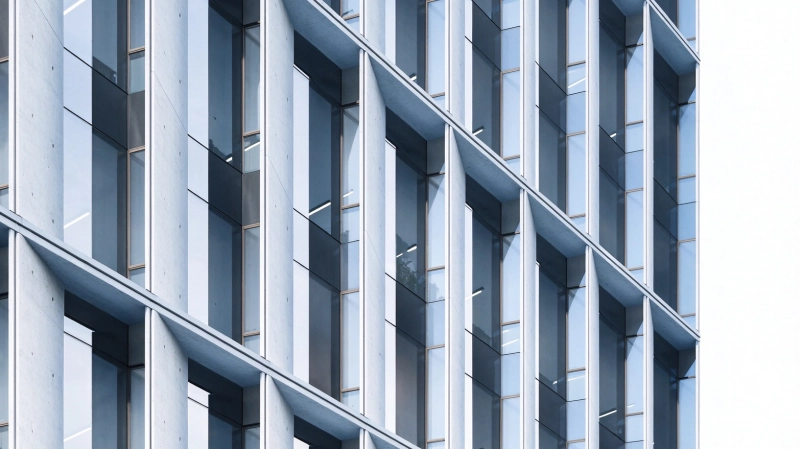
Put suppliers in groups by facade type. This way, you can get samples, technical data, and installation details all in one place.
Always ask for a production sample, complete technical data, and detailed installation drawings.
Send a numbered request with a deadline to get complete and comparable responses.
Make sure the anchor grades, embedment depths, and torque values are the same in all the documents.
Rate suppliers on sample quality, how complete their data is, and drawing traceability to pick the best ones.
Supplier selection starts with matching each facade type to the right manufacturer and technical documentation.
Suppliers who can reliably send all three items together are grouped by facade type. Terracotta, aluminum systems, and specialty or metal mesh each have their own makers. A broad architectural facade supplier handles mixed scopes. Directory listings cover the gaps for niche items.
Terracotta and clay systems come from makers who control firing and color in-house. Aluminum facade systems come from fabricators who extrude, coat, and assemble panels and rails. Specialty facades — kinetic panels, expanded metal mesh, perforated screens — come from shops built around one product family. Broad architectural facade suppliers bundle several systems under one contract.
This grouping matters when you send your request. A terracotta maker holds clay test data and anchor pull-out reports for heavy panels. An aluminum fabricator holds bracket schedules and fastener torque values. A kinetic panel workshop holds hanging hardware drawings. Ask the wrong category for the wrong document, and you get a polite no or a generic PDF.
The table below gives you a starting list of Chinese facade suppliers by category.
Category | Named suppliers | What they typically supply |
|---|---|---|
Terracotta and clay | LEIYUAN, Togen | Samples, technical information, quotations, packing and delivery coordination; full-service design support |
Aluminum facade systems | M-City, Newcobond | Custom aluminum facade systems, panel facades, bracket and rail schedules |
Kinetic facade panels | Keenhai | Wind kinetic panels supplied with all hanging hardware |
Expanded metal mesh | YueChu | Custom expanded metal mesh and facade panels for architects, contractors, and B2B buyers |
Broad architectural facade | Shanghai Facade Solutions | Multiple facade systems under one supplier |
Directory listings | Paragon Metallic, Jiangsu Neolithic, Foshan Tengba (Made-in-China) | Mixed catalogs; verify documents case by case |
One useful sourcing fact: Keenhai charges sample cost and freight separately, and quotes a 20–35 working day lead time. Add that to your schedule before you promise a sample date to the client.
Treat the directory listings as a starting point, not a shortlist. A Made-in-China storefront shows product photos and basic specs. It rarely shows anchor grades, embedment depths, or node drawings. You still need to ask for the full package and check it against the list later in this post.
Samples, technical data, and installation details close the gaps between approved design and site installation.
A facade package can fail on site for three reasons. The panel color does not match the approved render. The bracket does not fit the slab edge. The anchor pulls out under wind load. Each problem comes from a missing deliverable. Samples, technical data, and installation details close these gaps before building starts.
A sample answers the finish question. You hold the coated panel next to the render and check the color in daylight. You measure the sheet thickness with a caliper. You check how flat the panel face is. A catalog photo cannot do this.
Ask for a sample from the production line, not a hand-made bench piece. Production samples have the real coating thickness and the real fold tolerance. Keenhai charges sample cost and freight separately, so plan for it. A paid sample also shows you how the supplier handles a small, urgent order.
Technical data proves the system meets the project specification. Installation details show your crew how to build it. You need both, and you need them before you sign.
The data package covers panel performance, coating class, and connection capacity. The installation package covers bracket layout, anchor type and grade, embedment depth, torque values, and node drawings. A supplier who sends one without the other leaves you to guess the rest. Guessing on a rainscreen connection is how callbacks start.
The sample verifies the physical product. Technical data verifies performance. Installation details tell the site team how to assemble the system. All three are necessary before approval.
A numbered request with clear document requirements makes supplier responses easier to compare.
A vague email gets a vague reply. Most suppliers answer only what you ask, and nothing more. Your request decides whether you get a real document package or just a folder of catalog pages.
Send one message with numbered items. Name the facade type, the project location, and the stage. Then list each deliverable on its own line.
Physical sample: one panel from a real production run in the finish you specified, plus a cut edge that shows the sheet thickness.
Technical data: coating class, panel performance values, and connection capacity.
Installation details: bracket layout, anchor type and grade, embedment depth, torque values, and node drawings.
Test evidence: pull-out test reports and shear strength checks for the anchor you specified.
End with a deadline and a named contact. Ask each supplier to confirm which items they can ship this week. This shows you which suppliers already have the documents and which ones only promise to find them.
Watch for replies that answer a different question. A supplier who sends a color chart when you asked for anchor torque values did not read your list. A PDF with no project name, no date, and no revision number is a template, not a submittal.
A supplier who cannot name the anchor grade and embedment depth for your slab condition has not designed the connection.
Other warning signs: sample photos instead of a real sample, test reports with no testing body named, and drawings that show brackets without fasteners. Any one of these means you push back before shortlisting. Compare responses from several Chinese facade suppliers side by side, and score each one against the same list.
Terracotta systems require careful attention to panel weight, fixing design, and long-term surface performance.
Terracotta panels work well for ventilated rainscreen cladding and exteriors that must keep their color for many years. The clay body is fired into a dense surface that resists fading. Sun and rain do not fade it like they fade applied coatings. That makes terracotta a smart choice for civic buildings, cultural projects, and facades where the owner wants a steady look over a long service life.
Connection design matters more here than with thin metal panels. A terracotta unit is heavier, so the bracket and anchor schedule must fit the panel weight and the slab condition. LEIYUAN handles samples, technical information, quotations, packing, and delivery, and it manages technical feasibility and quality control in-house. Togen designs its terracotta cladding for safety and durability, and it offers full-service design support. Ask either supplier for the bracket layout, the anchor type and grade, and the node drawings before you approve the sample.
Compliance for clay systems focuses on the fired body and the fixing assembly. Ask for coating or glaze data where the finish is applied, plus pull-out reports for the anchors you plan to use. Match those documents to your project specification and your local code.
Cost depends on panel size, profile complexity, and the fixing package. Terracotta costs more per unit than flat metal cassettes, and the connection hardware adds to that. Weigh that against the finish life and the low maintenance the material allows. For a facade that must look the same in twenty years, the numbers often work. For a tight budget on a short-life building, they may not.
Aluminum fabricators need to provide more than panels. Their bracket, rail, and fastener schedules are essential to installation.
Aluminum systems work well for projects that need large flat panels, tight joints, and a light structural load. The metal is easy to fold, extrude, and coat, so fabricators can match complex profiles and long runs. M-City builds custom aluminum facade systems and runs strict quality control through professional test labs. Newcobond supplies aluminum panel facades for cladding and rainscreen work. Both are in the category where you should expect a full fixing package, not just panels.
That package is the key difference. Aluminum suppliers usually deliver bracket, rail, and fastener schedules as part of the installation detail package. You get the rail spacing, the bracket type at each condition, and the fastener callout in one set. Ask for the slab-edge condition, the corner detail, and the parapet termination. A supplier who draws only the typical bay leaves your crew to solve the hard nodes on site.
Check that the bracket schedule names the anchor grade and the embedment depth for each substrate. A rail drawing without an anchor callout is not an installation detail.
Compliance for aluminum systems centers on the coating class, the alloy and temper of the sheet, and the connection capacity. Ask M-City or Newcobond for coating data, panel performance values, and pull-out reports for the anchors they specify. Match those documents to your project specification before you approve the sample.
These systems fit commercial high-rises, retail fronts, and transport buildings where flat geometry and fast installation matter. Cost tracks panel size, coating grade, and the complexity of the fixing package. A simple cassette wall costs less than a folded profile with many brackets. Compare quotes on the same bracket schedule, or the numbers will not line up.
Kinetic panels and expanded metal mesh need product-specific hardware and fixing details.
Specialty facades are good at solving one design problem. Kinetic panels move with the wind and add a changing pattern to a flat wall. Expanded metal mesh screens shade glazing, hide plants, and filter light. Both types are not in the main rainscreen catalog, so you buy them from shops that focus on a single product.
Keenhai supplies wind kinetic facade panels with all hanging hardware included. That inclusion is the point to check. A kinetic panel moves, so every pivot, hanger, and fixing point carries a moving load. Ask for the hardware schedule, the fixing detail at each panel edge, and the clearance that lets the panel swing without hitting its neighbor.
YueChu makes custom expanded metal mesh and facade panels for architects, contractors, and B2B buyers. Mesh panels are lighter and easier to hang, but the frame and tension detail still decide performance. Request the frame section, the tensioning method, and the fixing pattern at the panel edge.
For kinetic and mesh systems, complete hanging hardware is the key installation-detail question. A panel drawing without its hangers is an unfinished submittal.
Compliance work for these systems centers on the fixing assembly and the panel movement. Ask for pull-out reports for the anchors at the hanger points, plus a statement of the design movement range for kinetic units. Match those documents to your project specification and local code.
These facades fit retail fronts, parking screens, cultural buildings, and feature walls where pattern and depth carry the design. Cost tracks panel size, mesh pattern openness, and hardware count. A kinetic wall carries more hardware per square meter than a fixed mesh screen, so compare quotes on the same hardware schedule.
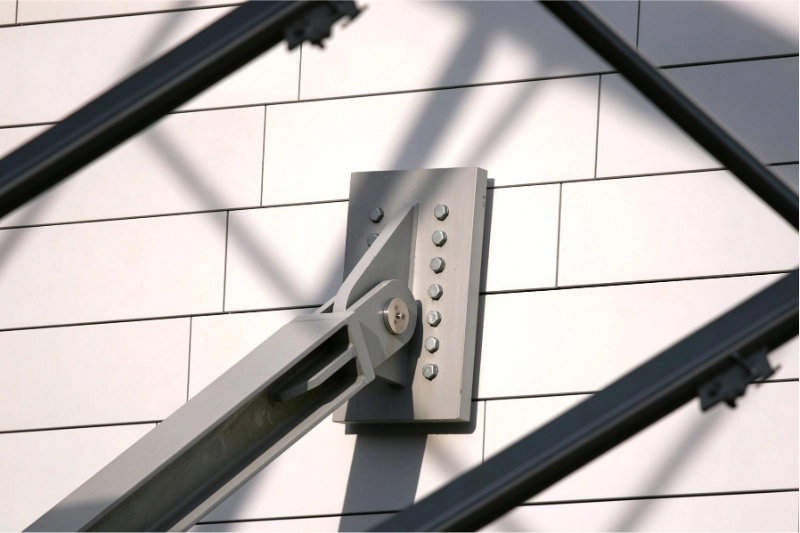
A complete connection package needs traceable information for every fixing component and connection condition.
A complete connection package has seven parts. Each part needs its own papers. If one is missing, it turns into a question on site later. The answer often comes after the crew has already drilled.
Component | What the data package must contain |
|---|---|
Embedded parts | Anchor type and grade, embedment depth, node drawings |
Post-installed embedded parts | Anchor grade, embedment depth, pull-out test report |
Chemical anchors | Anchor grade, embedment depth, cure data, torque values |
T-type and L-type brackets | Bracket drawing, bolt callout, torque values |
Back bolts | Bolt grade, torque values, anti-loosening measure |
Corner bracket connections | Node drawing, fastener schedule, anti-loosening detail |
Cast-in embedded parts need a node drawing. It must show the plate position, the anchor grade, and the embedment depth. Post-installed parts need that same drawing, plus a pull-out report for the substrate you really have. Concrete strength differs from project to project, so a report from another site proves very little.
Chemical anchors add one more item: the cure schedule. Ask for the anchor grade, the embedment depth, and the torque value the supplier sets. Request the installation steps in writing. A crew that over-torques a chemical anchor can crack the capsule and lose the bond.
T-type and L-type brackets carry the panel load into the structure. Ask for a bracket drawing that shows the bolt callout and the torque value at each fixing point. Back bolts need a grade and an anti-loosening measure — a washer type, a thread-locking element, or a set preload.
Corner bracket connections fail without anyone noticing, so demand a node drawing for each corner condition. Check that the drawing names the fastener schedule and the anti-loosening detail. Then confirm the installation requirement: the bracket must sit flat, the bolt must reach the set torque, and the anti-loosening measure must go on before the panel closes. Write these three checks into your site inspection sheet.
These three details must be consistent across the node drawing, bracket schedule, and relevant test report. Any mismatch needs written clarification before installation.
Material certificates, weld inspections, pull-out tests, and seismic calculations help verify that the proposed connection is suitable for the project.
Material papers prove what the metal is before anyone drills a hole. Ask for a mill certificate for stainless steel 304 or 316. The certificate should name the grade and the heat number. Check that the grade on the paper matches the grade on the bracket drawing. A 304 bracket specified for a coastal site is a substitution you want to catch early.
For galvanized steel, request hot-dip galvanizing layer thickness measurements. The coating weight or thickness should trace to a named standard, such as ASTM A123. Ask where on the part the supplier measured. Corners and cut edges coat differently from flat faces.
Weld inspection reports close the material check. The report should name the weld type, the inspection method, and the result. A bracket with an uninspected weld is a bracket with an unknown capacity.
Pull-out tests show how much tension an anchor holds in the actual substrate. They matter because concrete strength varies by project. A report from another site tells you little about your slab. Ask for the test substrate, the anchor grade, and the embedment depth used.
Shear strength verification covers the sideways load — wind pushing the panel along the wall. Pull-out covers the pull away from the wall. You need both, because a connection can pass one and fail the other.
Seismic design calculations address movement during an earthquake. The calculation should show the connection detail and the bolt anti-loosening measure. Ask any of the Chinese facade suppliers on your shortlist for these documents by name, and compare what comes back against the same list.
Use the same sample, document, and drawing review process for every supplier to make the final comparison objective.
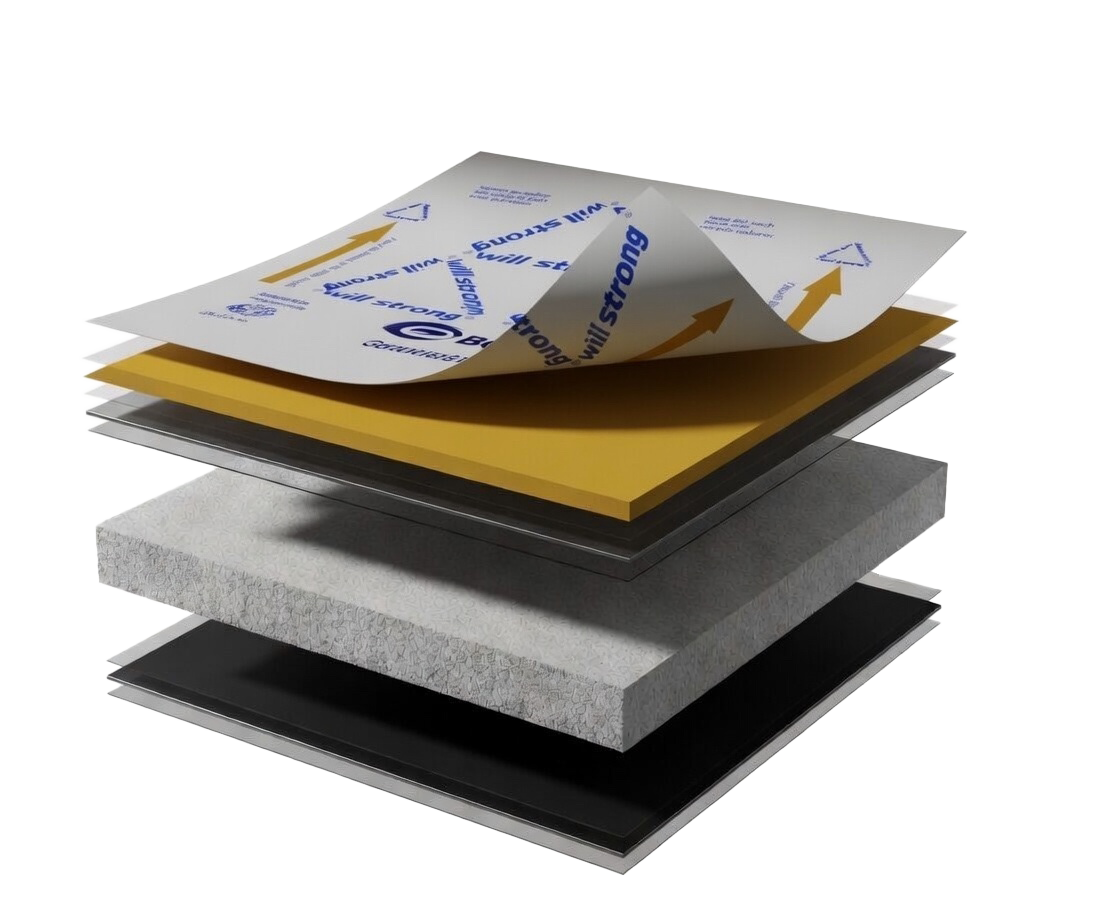
Start with the sample on your desk. Use a caliper to measure the sheet thickness and compare it to the data sheet. Check the finish in daylight, then look at it again under the site lighting. Look at the cut edge for coating coverage and fold accuracy. A sample that passes this step earns a place on the shortlist.
Next, open the technical data package and read it against your specification. Confirm the coating class, the panel performance values, and the connection capacity. Check that every document has a project name, a date, and a revision number. A template with no revision history tells you the supplier reuses paperwork across jobs.
Then put the node drawings next to the bracket schedule. Follow one anchor from the drawing to the schedule to the pull-out report. The anchor grade, the embedment depth, and the torque value must match in all three. Do this same check for the corner condition and the parapet termination. Any mismatch means you send the package back with written questions.
Finally, check the sample lead time against your schedule. Keenhai quotes 20–35 working days with sample cost and freight billed separately. Build that window into your procurement plan before you commit to a client date.
Measure thickness, inspect the finish, and check fold accuracy.
Verify coating, performance, capacity, and document revisions.
Match anchor grade, embedment depth, and torque across documents.
Score each supplier on the same sheet, and give more weight to items that carry site risk. A simple approach works: give each item a score from one to five, then multiply by a weight. The weighted total = sum of each score times its weight. Keep the weights fixed across all suppliers, or the comparison means nothing.
Criterion | What you check | Suggested weight |
|---|---|---|
Sample quality | Production sample, real thickness, finish match | High |
Data completeness | Coating, performance, connection capacity, revision control | High |
Drawing traceability | Anchor grade, embedment depth, torque values consistent | High |
Test evidence | Pull-out and shear reports for your substrate | High |
Material certificates | 304/316 mill certs, galvanizing thickness to ASTM A123, weld reports | Medium |
Response speed | Answers your numbered list within the deadline | Medium |
Lead time | Sample and production dates fit the program | Medium |
Shortlist three suppliers per facade category. Drop any supplier who fails the drawing traceability check, even if the price looks good. A cheap bracket with no anchor callout costs more later than a documented one. Compare the remaining quotes on the same bracket schedule, then ask the top two for one more round of documents. This second pass shows which supplier answers technical questions without prompting. That habit predicts how they behave once the panels ship.
A closer look at the 3D Facade system, its mounting approach, certifications, and project evidence.
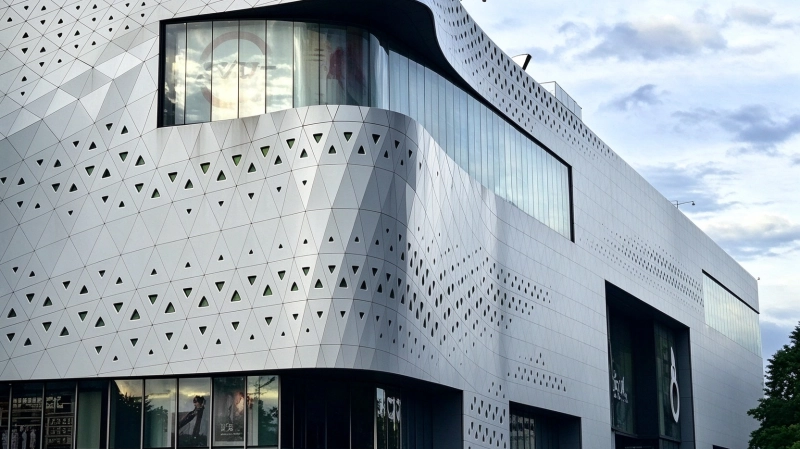
The 3D Facade is a ventilated rainscreen made from metal cassettes that are folded with precision. Each panel steps and tapers out from the wall plane, so the facade changes with the light during the day. Hidden rail mounting keeps the face free of visible fasteners. A ventilated cavity behind the panels drains water and vents heat all year. Single cassettes can be swapped out in minutes, which keeps maintenance off the scaffold.
The system comes in four shapes: Twist Form, Pleat Fin, Pyramid Facet, and Plane Cassette. The folded shape makes each panel stiffer, so large formats hold their form without oil-canning. All the visual depth sits outside the waterproofing line, and the building envelope stays protected. For your connection package, the hidden rail is the detail to review first. Ask for the rail spacing, the bracket type at each condition, and the cassette removal clearance.
WILLSTRONG was founded in 1995 and holds 30+ certifications for safety, durability, and sustainability. The company is among the TOP 100 facade solutions companies in China. Treat those claims the way you treat any supplier claim: ask for the certificate numbers and check what each one covers against your project specification.
Project evidence supports the system. The Shamsa Shopping Mall in Kamchatka, Russia, used 6,000 square meters of 3D Facade, installed in 2020. A cold-climate installation like that gives you a reference for cavity performance and fixing behavior. Request the node drawings from that project and compare them to your slab condition. Then run the same traceability check from the earlier checklist: anchor grade, embedment depth, and torque value must match across drawing, schedule, and test report.
Suppliers grouped by facade type are the ones that send all three items together. Terracotta makers like LEIYUAN and Togen, aluminum system fabricators like M-City and Newcobond, and specialty shops like Keenhai and YueChu each keep the documents for their own product family. Send your numbered request to the right group, and you get real papers back.
Judge every Chinese facade supplier's response by three main points. Put a production sample on your desk. Read the connection and anchorage data package line by line. Follow each node drawing to a test report. A package that passes all three checks earns the order.
Good engineering often goes unseen. The connection package nobody talks about on site is the one that was documented the right way.
Practical answers to common questions about supplier technical checks, samples, and connection documents.
Ask for one anchor and follow its paperwork. The grade, embedment depth, and torque value must match on the node drawing, the bracket schedule, and the pull-out report. A supplier who passes this check without being asked shows real engineering control. A supplier who sends catalog pages instead has not designed your connection.
Yes, and expect freight to be charged on top of the panel price. Keenhai bills sample cost and freight separately. A paid sample tells you two things: how the supplier handles a small urgent order, and whether the production finish matches the approved render. Free bench samples often hide the real coating and fold tolerance.
Treat it as a reference, not proof. Concrete strength changes from site to site, so an anchor that holds in one slab may fail in another. Ask for the test substrate, the anchor grade, and the embedment depth used. Then request a test on your own concrete class before you approve the fixing schedule.
Start at the anchor and work outward. Confirm the drawing names the anchor grade, the embedment depth, and the torque value. Then check the bolt anti-loosening measure and the bracket contact condition. A drawing that shows brackets without fasteners is incomplete. Send it back with written questions before you shortlist the supplier.
Request the connection and anchorage package before the color sample. Panels are easy to replace. A failed anchor is not. Ask for the bracket layout, the anchor schedule, the pull-out and shear reports, and the corner details in one numbered message. Set a deadline and name a contact, so you can compare responses on equal terms.
A complete connection package is not just paperwork. It is the information that allows the facade system to be checked, coordinated, and installed with confidence.
From production samples to anchor test reports, every deliverable has a role in closing the gap between the architectural drawing and the finished building.