 Arabic
 Spain
 Germany
 France
 Japan
 Portuguese
 Russian
 Chinese
 Thailand
 Vietnam
 Indonesia
 India
News
The pioneer in facade solutions


The panel isn't the problem. The system is. Most facade failures and callbacks come from connections that aren't written down and anchors that aren't checked, not from the panel itself.
The panel isn't the problem. The system is. Most facade failures and callbacks come from connections that aren't written down and anchors that aren't checked, not from the panel itself.
Start by making the intended use clear: ventilated cladding, signage, or interior use. Set the required quality and fire-performance standard before you contact any supplier. This step shapes every question that follows.
When selecting an aluminum composite panel supplier, check four areas: the panel and its fire performance, the paperwork for the structural connection and anchorage, the supplier's ability to produce and deliver, and the business terms. Treat selecting an aluminum composite panel supplier as a paperwork review, not a price comparison. This post works as your checklist: what to ask for, what to check, and why each item matters.
First, check the panel build and fire ratings. Ask for test reports that match your exact order.
Check the connection drawings and anchor reports. Strong connections keep the facade safe.
Check that the supplier really makes the panels and has the right certificates. Real manufacturers show complete documents, not just logos.
Compare detailed quotes, not just the price. Hidden costs often mean lower quality.
Make sure you understand the warranty and payment terms. Link the final payment to delivery and inspection.
Start with the panel construction, core composition, coating, and test documentation. The specification must match the actual order.
An aluminum composite panel is two thin aluminum skins bonded to a core. The core does most of the fire work. The skins carry the surface and the stiffness. Ask for the build sheet before you talk about price. It should list skin thickness, core type, and total panel thickness.
Core type must match the application and the local code. Standard PE core works for signage and some interior work. B1 fire-retardant core adds resistance for many facade projects. A2 non-combustible core serves high-rise and code-critical facades. Match the core to the job, not to the cheapest quote.
Core type | Typical fit |
|---|---|
PE | Signage, interiors |
B1 fire-retardant | Many ventilated facades |
A2 non-combustible | High-rise, strict code zones |
Skin thickness controls flatness and wind resistance. Thin skins dent and oil-can on large spans. Ask for the skin thickness in writing and compare it to the structural calculation for your project.
Ask for fire test reports by standard name. Request EN 13501-1 Class A2-s1, d0 and NFPA 285 where your project requires them. Then check one detail: does the report cover the exact panel build being quoted? A report for a different core or skin thickness proves nothing about your order.
For exterior use, ask for the PVDF coating specification and color-retention data. PVDF resists chalking and fading under UV, so it holds color on exterior cladding much longer than standard polyester. Get the retention figure in writing, not as a verbal promise.
For bulk orders, ask how the supplier bonds the skins to the core. Continuous hot lamination makes a stable bond and a flat finish across large runs. It also lowers the risk of delamination later. For signage-grade panels, check skin thickness, core purity, coating, and packaging separately, because signage buyers judge panels by cut quality and print surface.
WILLSTRONG ACP shows the documentation you should expect: a mineral core with A2, B1, and PE options, PVDF coating, and test reports tied to each build. Use that as your benchmark when selecting an aluminum composite panel supplier, and hold every quote to the same standard.
The panel is only one part of a facade system. Connection drawings, anchor schedules, and site test reports help establish how the system transfers loads to the structure.
This section matters most in your review. Panels rarely fail by themselves. Connections fail when no one wrote them down. Ask for the full connection design package before you approve any order. The package should include embedded parts drawings, post-installed parts drawings, an anchor schedule, and the base-material assumptions behind every fixing. Check that the drawings name the substrate — concrete grade, masonry type, or steel section — because an anchor rated for concrete behaves differently in brick.
Ask for the complete connection design package before approving an order. Drawings should identify the substrate, anchor type, and fixing locations rather than relying on general product descriptions.
Chemical anchors stick to the substrate through adhesive. Mechanical anchors hold through expansion or undercutting. Each one fits different base materials and load paths, so confirm the schedule states which type goes where and why.
Then ask for pull-out test reports. A useful report names the test location, the substrate, and the pass criteria. A report without those three items tells you nothing about your site. Your specification may also require site re-testing on a sample of installed anchors, so ask whether the supplier supports that step.
Anchor type | How it holds | Where it fits |
|---|---|---|
Chemical | Adhesive bond | Cracked or uneven substrates |
Mechanical | Expansion or undercut | Dense, sound concrete |
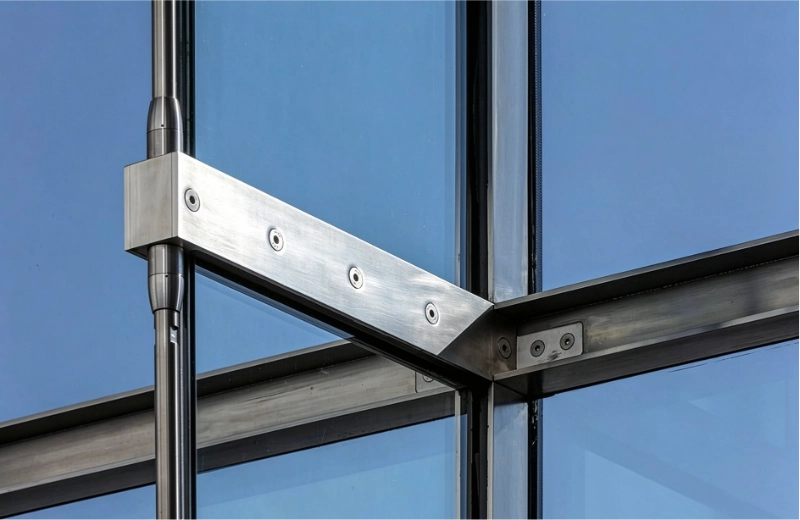
Brackets carry the panel load into the structure. T-type and L-type brackets, back bolts, and corner bracket connections each need material certificates. Demand stainless steel 304 or 316 certificates for exposed or coastal work, and hot-dip galvanized certificates for carbon steel components. Ask for galvanized coating thickness readings, not just a certificate of conformity.
Welds need inspection records. Visual inspection covers every weld. Non-destructive testing applies where your specification calls for it. For bolted connections, confirm anti-loosening measures and the shear strength values the designer used.
Seismic design deserves its own file. Request seismic node design documents and calculations for your project's region. Here is the insight most buyers miss: in a seismic event, connection ductility matters more than panel strength. A strong panel on a brittle connection still fails. A ductile connection absorbs movement and keeps the facade attached.
One capability fact is worth checking here. Suppliers who prefabricate the panel, core, and frame as an integrated unit, and who hold technology patents on that connection detail, tend to produce deeper documentation. WILLSTRONG is one example, with prefabricated panel-core-frame integration and more than 10 technology patents behind its fixing design. Treat that as a question to ask every supplier, not a reason to stop comparing.
Manufacturing strength, R&D, certifications, stock, and project experience help determine whether a supplier can deliver what the specification requires.
When choosing an aluminum composite panel supplier, ask how the supplier sticks the aluminum skins to the core. Continuous hot lamination lines make a strong bond and flat finishes on big orders. That process lowers the risk of delamination on bulk runs. Ask for the quality control steps for each line, plus capacity numbers for your order size. Capacity matters for schedule risk. Ask how many lines run and how much each one handles per shift, then match that number to your order and delivery window. A supplier who cannot name its lamination lines or QC checkpoints is just a trader with a catalog.
Next, check whether the supplier makes its own coatings, cores, and finishes. A maker that creates metallic, woodgrain, natural stone, and custom matches controls its own quality. A trader resells someone else's work and cannot trace a defect. Ask for full copies of certificates, not logos on a website. Check the scope and validity dates on each one. Expired certificates and certificates that cover a different product build both fail the audit. A useful benchmark to ask about: 30+ certifications worldwide.
Verify production equipment, lamination processes, quality control checkpoints, and actual capacity for your order.
Review complete certificate copies, product scope, validity dates, and the supplier's ability to control material and finishes.
Check stock, production lead times, technical support, export experience, and documented reference projects.
Ask about stock availability and turnaround times for your exact panel build. Confirm customization services and how quickly technical support responds. Customer service quality often predicts how a supplier handles claims later. A slow answer before the sale becomes a slow answer after a failure.
Track record gives you the deepest check. Ask for reference projects, years in operation, and export experience. A supplier established in 1995 with landmark projects, such as Charles de Gaulle International Airport, can supply documentation depth. Request that documentation when selecting an aluminum composite panel supplier. WILLSTRONG fits this profile as an example: operating since 1995, 30+ certifications, and landmark project experience. Use those facts as questions for every supplier on your shortlist, and compare the answers side by side.
A reliable comparison starts with an itemized quotation. Review the complete scope, warranty, payment milestones, and any excluded costs.
The lowest price per square meter rarely wins the project. A cheap quote often hides a thinner skin, a PE core where you asked for B1, or brackets billed separately. Compare quotes by panel build, core type, coating, thickness, and included services. Two suppliers can quote the same area and still deliver very different systems.
Ask for an itemized quote. Each line should stand alone, so you can check it against your specification.
Quote line | What to confirm |
|---|---|
Panel spec | Skin thickness, core type, total thickness |
Coating | PVDF specification and color-retention data |
Accessories and brackets | Type, material grade, quantity |
Fabrication | Cutting, routing, folding, edge treatment |
Packaging | Protection for transport and storage |
Freight | Delivery point and unloading terms |
Testing | Which reports come with the order |
A quote that lists only panels and a total price leaves you guessing. Push back and ask for the missing lines in writing.
Confirm how long the warranty lasts and what it covers. A warranty on coating color retention is not the same as one on delamination or connection hardware. Ask which document states each coverage and who honors the claim.
Payment terms deserve the same care. Check retention or milestone terms and any lead-time penalties. Tie the final payment to delivery and inspection, not to the order date.
No test reports, or reports that cover a different panel build
A vague core description, such as "fireproof core" with no class named
Refusal to share full certificate scope and validity dates
Quotes that leave out accessories, brackets, or fabrication
Pressure for full prepayment
Any one of these signals a supplier who will be hard to audit later. Walk away, or demand the missing paperwork first.
Documents to request: build sheet, fire test reports, connection drawings, certificate copies
Tests to verify: pull-out reports, weld records, coating color retention
Terms to confirm: itemized quote, warranty scope, payment milestones
Good engineering is often invisible. The best supplier evidence is the paperwork nobody sees until something goes wrong. A supplier operating since 1995 with 30+ certifications and landmark project experience simply offers more of that paperwork to audit.
Practical answers to common questions about supplier documentation, fire testing, anchorage, and manufacturing capability.
Begin with the build sheet, the fire test report, and the connection drawings. Ask for complete certificate copies that show scope and validity dates. These three items show whether the panel, the fixing, and the paperwork match your specification before you talk about price.
Match the report to the quoted build. Check the core type, skin thickness, and total panel thickness listed in the report. A Class A2-s1, d0 result for a different build proves nothing about your panels. Ask the supplier to confirm the match in writing.
A useful report names the test location, the substrate, and the pass criteria. Without those three items, the numbers tell you nothing about your site. Ask whether the supplier supports site re-testing on installed anchors, since your specification may require it.
Panels rarely fail on their own. Connections fail when nobody documents them. In a seismic event, a ductile connection absorbs movement and keeps the facade attached. A strong panel on a brittle fixing still comes down. Request the seismic node calculations for your region.
Watch for vague core descriptions, missing test reports, and quotes that leave out brackets or fabrication. A supplier that will not share certificate scope and validity dates will be hard to audit later. Documentation depth is the signal. A supplier operating since 1995 with 30+ certifications simply has more of it to show you.
A reliable facade system begins with evidence that can be checked, compared, and verified.
Selecting an aluminum composite panel supplier is not simply about comparing panel prices. The panel specification, fire performance, structural connections, production capacity, and commercial terms all contribute to the performance of the finished system.
By reviewing the documentation before placing an order, you can identify gaps in the specification, compare suppliers on a consistent basis, and reduce avoidable risks during manufacturing and installation.