

 Arabic
 Spain
Spain Germany
 France
 Japan
Japan Portuguese
 Russian
 Chinese
 Thailand
 Vietnam
 Indonesia
 India
IndiaNews
THE PIONEER IN FACADE SOLUTIONS


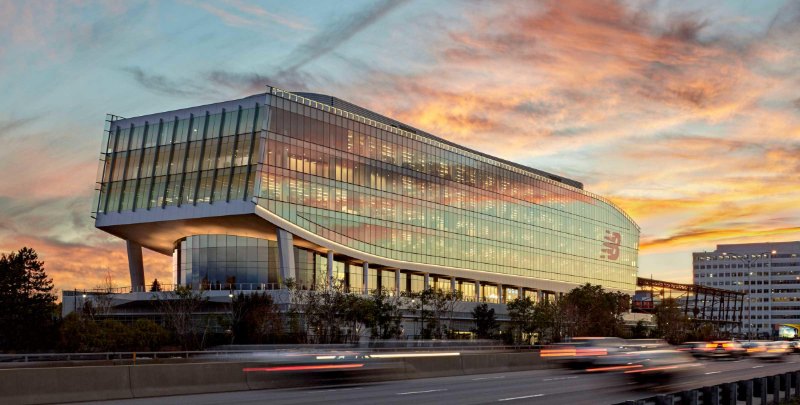
As modern architecture continues to pursue distinctive visual identities, Chameleon Colors Aluminum Composite Panels (ACP) have become an increasingly popular choice for premium building facades. Unlike conventional solid-color panels, these advanced composite panels create dynamic color transitions that change with viewing angle and lighting conditions, giving buildings a vibrant and ever-changing appearance.
For architects, designers, and project developers looking for reliable facade materials, WILLSTRONG® ACP offers high-quality aluminum composite panel solutions that combine exceptional durability with advanced coating technologies suitable for landmark architectural applications.
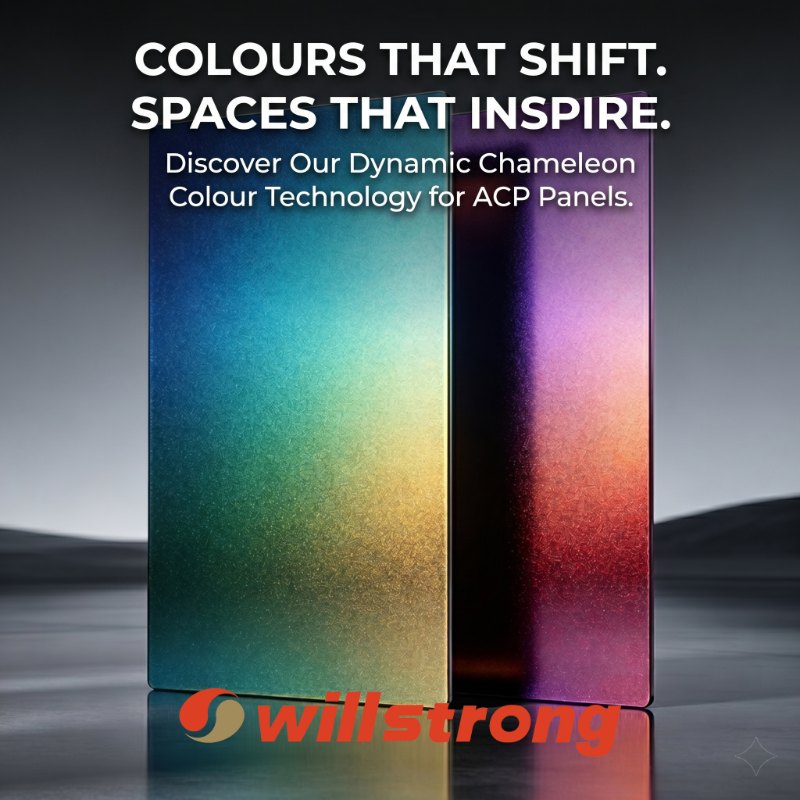
Chameleon Colors refer to a specialized surface coating technology applied to Aluminum Composite Panels (ACP) that produces continuous color shifts as the viewing angle or light source changes. Depending on the formulation, a panel may transition from gold to green, blue to purple, or red to gold without using LEDs or electronic components.
This visual effect is achieved entirely through optical engineering rather than pigments that simply absorb or reflect a single color.
Compared with standard PE-coated ACP, Chameleon Colors belong to the premium category of architectural coatings. They are commonly designed with PVDF or FEVE resin systems that meet AAMA 2605 weatherability requirements, making them suitable for long-term outdoor applications where both appearance and durability are critical.
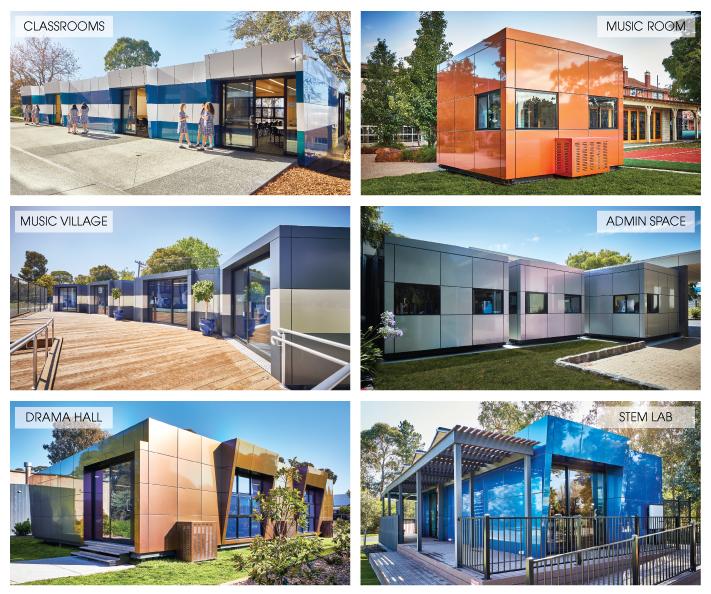
Typical applications include:
· Landmark building facades
· Luxury shopping centers
· High-end residential developments
· Airport terminals
· Museum and exhibition spaces
· Interior decoration for transportation vehicles
· Corporate headquarters
These projects require not only structural performance but also a memorable architectural identity.
The fascinating color-changing appearance is based on thin-film optical interference.
When sunlight strikes the coating surface, part of the light reflects from the outer surface of the interference pigment, while another portion passes through the transparent coating and reflects from the lower interface. The two reflected light waves travel different optical distances and interfere with one another.
The interference condition can be expressed as:
2nd cosθ = mλ
Where:
· n = refractive index of the thin film
· d = coating thickness
· θ = refraction angle
· m = interference order
· λ = reflected wavelength
As the viewing angle changes, the optical path changes accordingly, causing different wavelengths to be reinforced while others are suppressed. The observer therefore sees different colors from different positions.
This is the same physical principle responsible for the colors seen on soap bubbles and butterfly wings, but engineered with precision for architectural coatings.
The core material responsible for the color-changing effect is the interference pearl pigment.
Unlike ordinary metallic pigments, interference pigments consist of transparent substrates coated with extremely thin layers of metal oxides such as titanium dioxide.
Common substrate materials include:
· Natural mica
· Synthetic mica
· Alumina
· Silica
· Glass flakes
Among these, alumina substrates are widely regarded as the premium option because of their higher refractive index, stronger reflectivity, and superior gloss.
The thickness of the titanium dioxide coating directly determines the reflected color.
For example:
· 80–100 nm typically produces red reflection
· 100–130 nm creates purple reflection
· 130–160 nm generates blue reflection
· 160–190 nm creates green reflection
· 190–220 nm produces second-order gold
Manufacturers often combine interference pigments with trace amounts of transparent absorption pigments to fine-tune the primary color while maintaining dramatic angle-dependent color travel.
A high-quality Chameleon ACP is much more than colored paint applied to aluminum.
A typical coating system includes:
1. Aluminum coil (3003 or 5052 alloy)
2. Anti-corrosion primer
3. Chameleon color coat containing interference pigments
4. Transparent PVDF or FEVE clear coat
One of the industry's most important hidden requirements is pigment orientation.
During coating, the microscopic pearl flakes must align nearly parallel to the panel surface. Poor orientation causes:
· Cloudy appearance
· Lower color saturation
· Weak flop effect
· Reduced visual depth
Achieving proper orientation depends on careful control of resin shrinkage, solvent evaporation rate, coating shear force, and oven airflow during production.
Because Chameleon Colors are typically used on prestigious architectural projects, weather resistance is equally as important as appearance.
The most common resin systems include:
PVDF coatings have become the architectural industry standard for premium exterior facades thanks to:
· Excellent UV resistance
· Outstanding chemical resistance
· Long-term color stability
· Compliance with AAMA 2605
FEVE coatings offer similar weatherability while providing:
· Higher transparency
· Better interference color clarity
· Improved gloss retention
· Enhanced color depth
Compared with modified polyester coatings, both PVDF and FEVE deliver significantly better long-term performance in demanding outdoor environments.
Producing Chameleon Colors ACP requires much tighter process control than standard ACP production.
Interference pigments are first dispersed using controlled high-shear mixing.
Unlike conventional pigments, grinding is strictly prohibited, since excessive mechanical force permanently damages the interference flakes and destroys the color-shifting effect.
After mixing, coatings are filtered through nylon mesh before application.
The aluminum coil typically passes through the following sequence:
· Surface cleaning
· Chemical pretreatment
· Primer coating
· Cooling
· Chameleon color coating
· Cooling
· Clear coat application
· Final curing
· Protective film lamination
· Recoiling
During curing, Peak Metal Temperature (PMT) is carefully controlled, generally between 224°C and 241°C, ensuring complete resin curing without coating degradation.
Modern coating lines also divide the oven into multiple temperature zones, allowing solvents to evaporate gradually and giving interference pigments sufficient time to align correctly.
One of the greatest technical challenges of Chameleon Colors is maintaining consistent appearance across production batches.
Quality control typically includes:
· Pigment particle size
· Resin viscosity
· Aluminum coil thickness
· Surface roughness
Operators continuously monitor:
· Coating viscosity
· Wet film thickness
· Instant color values
· PMT
· MEK resistance
Completed panels undergo comprehensive testing including:
· Multi-angle spectrophotometer measurements
· Adhesion testing
· Pencil hardness
· Impact resistance
· Gloss measurement
· Accelerated UV weathering
· Salt spray testing
· Color difference (Delta E)
Premium Chameleon coatings generally achieve:
· Delta E ≤ 0.5 within production batches
· Flop Index ≥15
· Excellent adhesion
· Long-term weather resistance suitable for exterior architecture
Even experienced manufacturers must carefully control several potential defects.
Cloudy appearance
Usually caused by poor pigment orientation or improper solvent balance.
Weak color shift
May result from insufficient interference pigment loading or damaged pigment flakes.
Color inconsistency
Often related to natural variations in pigment batches and requires formulation adjustments.
Orange peel texture
Typically indicates inadequate leveling or improper coating viscosity.
Poor outdoor durability
Can occur when lower-grade resin systems replace architectural-grade PVDF or FEVE coatings.
Maintaining stable production requires close coordination between coating formulation, coil coating equipment, and quality inspection.
Established in 1995, WILLSTRONG® has become one of China's leading facade solution providers, serving projects around the world.
Its product portfolio includes:
· Aluminum Composite Panels
· Fire-resistant composite panels
· Aluminum honeycomb systems
WILLSTRONG® products have been used in internationally recognized projects, including Charles de Gaulle International Airport, demonstrating proven performance in demanding architectural environments.
The company's aluminum composite panels combine lightweight construction, excellent flatness, weather-resistant fluorocarbon coatings, antibacterial and antistatic surface options, nano self-cleaning technology, and fire-resistant solutions to meet diverse project requirements.
Standard specifications include:
· Standard thickness: 4 mm
· Optional thickness: 3 mm
· Standard width: 1220 mm
· Optional width: 1500 mm
· Standard lengths: 2440 mm and 3200 mm
· Maximum customized length: 8000 mm
These flexible dimensions allow architects and fabricators to optimize installation efficiency while minimizing material waste.
Chameleon Colors Aluminum Composite Panels represent one of the most sophisticated decorative surface technologies available for modern architecture. Through carefully engineered interference pigments, advanced PVDF or FEVE resin systems, precision coil coating processes, and rigorous quality control, these panels create dynamic color-changing effects without sacrificing long-term durability.
As architectural design increasingly emphasizes individuality and visual impact, Chameleon ACP provides designers with an effective way to create iconic building envelopes that appear different throughout the day as sunlight and viewing angles change.
Whether for landmark commercial buildings, luxury developments, transportation hubs, or exhibition spaces, selecting a trusted manufacturer with proven coating expertise is essential. Learn more about WILLSTRONG® ACP and discover advanced aluminum composite panel solutions engineered for demanding architectural applications.

 Leave a Message