 Arabic
 Spain
 Germany
 France
 Japan
 Portuguese
 Russian
 Chinese
 Thailand
 Vietnam
 Indonesia
 India
News
The pioneer in facade solutions


Many architectural cladding manufacturers give out physical samples and technical advice. Metal suppliers like AMS and GKD send samples and offer technical assistance. PAC-CLAD offers color samples and literature to order, an expert contact form, and a rep finder. EQUITONE offers samples and supports architects through specialist field and technical consultants.
These services are important. Architects and designers check color accuracy and impact resistance before construction. Specifiers confirm that a product fits the project's climate and substrate. Getting material samples early takes the guesswork out of construction documents.
This guide lists architectural cladding manufacturers by material. It explains how to ask for samples and technical consultation services. It also shows how to judge what arrives. Architects and builders can then specify cladding with confidence.

Essential considerations when requesting cladding samples and technical support.
Many cladding manufacturers give free samples and technical help. Ask for samples early to check color and quality.
Ask several suppliers for samples. Compare them side by side to choose the best product.
Write a clear request that includes your project location, material, finish, and timeline. Clear requests get better answers.
Test samples in real sunlight and weather. Check color, thickness, and edges against the product data.
Ask detailed technical questions before you choose. Good suppliers look over drawings and give clear guidance on installation.
Compare manufacturers according to their cladding materials, sample options, and technical consultation services.
The sample and consultation options change with the material. Metal suppliers often have formal sample desks and named engineering contacts. Panel and finish suppliers rely more on swatch libraries and drawing review. Grouping architectural cladding manufacturers by material helps specifiers send the right request from the start.
AMS invites customers with questions to request samples, pricing and availability, and technical assistance for metal façade cladding. PAC-CLAD offers color samples and literature to order, an expert contact form, and a rep finder for locating architectural sales representatives. GKD adds value on metal mesh cladding by advising on the best uses for its woven products.
EQUITONE offers samples and supports architects through specialist field and technical consultants plus online technical resources. Barclay ASC represents Swisspearl fiber cement, Fundermax HPL, and Cladding Corp terracotta, and structures its support in five stages: consultation and material selection, sampling, specs and detailing support, budgeting and bidding, and on-site installation support. That staged model covers the full arc of a façade project.
| Manufacturer | Material category | Sample availability | Consultation type |
|---|---|---|---|
| AMS | Metal façade cladding | Sample requests accepted | Technical assistance |
| GKD | Metal mesh cladding | Not stated | Advice on best applications |
| PAC-CLAD | Metal cladding | Color samples and literature to order | Expert contact form, rep finder |
| EQUITONE | Fiber cement | Samples offered | Field and technical consultants |
| Barclay ASC (Swisspearl, Fundermax, Cladding Corp) | Fiber cement, HPL, terracotta | Sampling | Consultation and material selection, specs and detailing support |
Each option fits a different stage. Metal specialists suit early finish selection and attachment review. Panel and finish suppliers suit specification and drawing coordination. Together they show how product supply and technical consultation services vary across cladding materials.
A clear request helps suppliers understand the project, identify suitable materials, and provide useful technical information.
Most suppliers follow a similar path for requests. A specifier first finds manufacturers by material type, then goes to the supplier's sample request page and reads the listed steps. Next, they fill out the request form with details about the project and the panels they need. Teams should ask for several panel types or finishes so they can compare options side by side. The supplier then ships the samples, and the team waits for delivery before checking them.
A helpful tip: ask for material samples from more than one supplier to compare quality before placing a large order. This habit helps teams pick better products and lowers risk later in the schedule.
Booking a technical consultation can happen at the same time. Architects can set up time with technical experts through the manufacturer's contact form to look at cladding options for the next project. Some suppliers also take consultation requests by email, where teams can talk about upcoming projects and ask for technical resources.
A complete request gives the supplier enough context to respond well. Teams should list the project location, the cladding material and finish, performance requirements, the timeline, and specific technical questions. Clear project-specific requirements help the supplier match product information to the actual building conditions.
Response times differ by company. Specifiers should plan around these differences and build sample lead time into the schedule.
Good guidance from a supplier often starts with a well-written request. The more precise the brief, the more useful the reply. This approach supports sound selection and keeps the specification process moving.
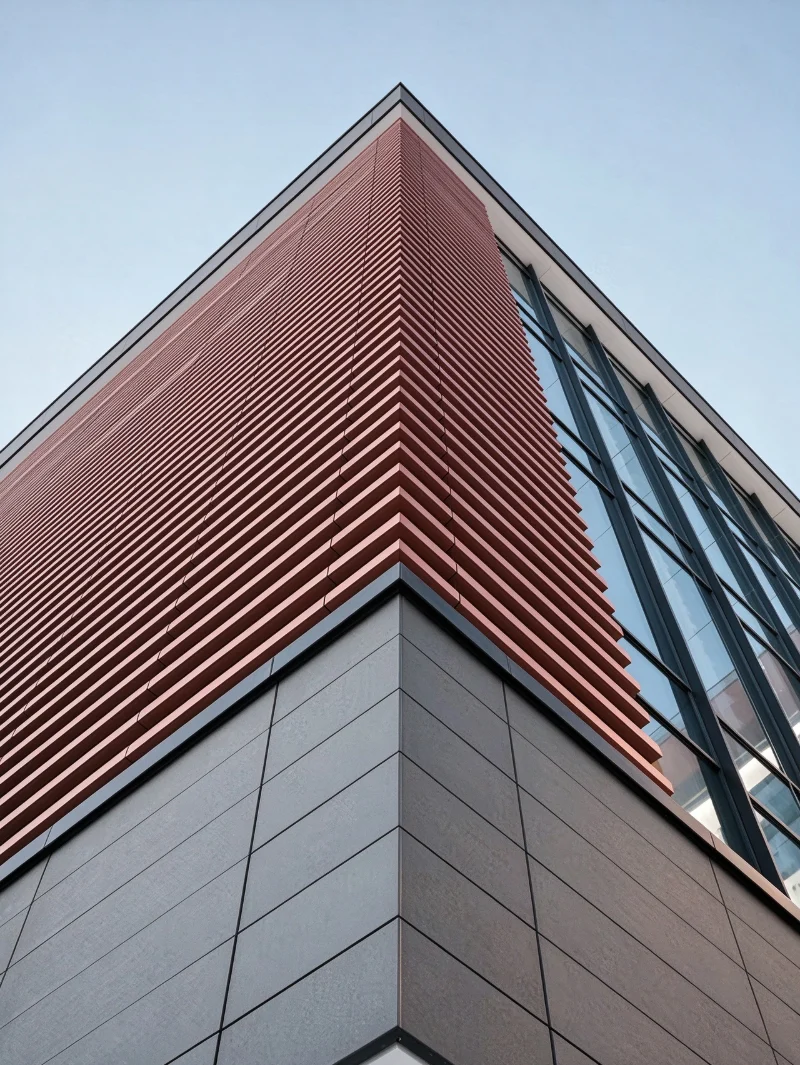
Physical samples and supplier guidance both need to be evaluated against project requirements before a specification is finalized.
A sample only helps if it matches the product you specified. Evaluators should check the finish accuracy, color consistency, thickness tolerance, and edge quality against the product data sheet. The label should confirm the material type, profile, dimensions, and pre-finishing. Looks alone can fool you.
Color judgment needs real conditions. Teams should mount samples on the intended wall and view them at different times of day, under sun and overcast sky. A south-facing wall shows this clearly: one clear-finished panel can look almost bleached at midday and richer in late afternoon. Photos taken on-site help with later comparison, and side-by-side checks against trim, windows, and stone reveal undertone clashes.
Color, finish, thickness, and edge quality should be checked against the product data sheet and the actual project conditions.
Strong consultation shows deep product knowledge, a willingness to review shop drawings, quick response, and clear installation guidance. A capable technical team explains how a panel performs on a given substrate and climate. Being open matters here.
Suppliers who are open about their processes tend to build more reliable partnerships.
Evaluators should test response time with a specific question before specification. They should also ask whether the supplier offers installer training and after-sales advice.
Other manufacturers take different routes, and the right fit depends on project stage and material.
Verify delivered materials, review installation details, and prepare specific questions before approving a cladding system.
A good consultation starts with documents, not opinions. Specifiers should make sure certificates match the items that were delivered. They check heat and batch numbers on packaging against the mill or CE certificates for anchors, bolts, sleeves, and plates. They confirm the stainless steel grade or coating matches the project specs, using a magnet check and label photos as backup. Adhesive anchor cartridges need the same careful check: expiry dates must be valid, and storage temperatures should stay within 5–25 °C, backed by batch numbers and temperature logs. Corrosion protection at cut edges and penetrations also needs a named primer or sealant, a lot number, and close-up photos.
| Verification topic | What to confirm |
|---|---|
| Certificates vs. delivered items | Match heat and batch numbers on packaging to certificates |
| Stainless steel grade or coating | Verify grade per specification; magnet check and labels |
| Adhesive anchor cartridges | Valid expiry dates; storage at 5–25 °C |
| Corrosion protection | Approved primer or sealant at cut edges and penetrations |
Joint width design, adhesive thickness control, application temperature, and skin-over time belong on the same checklist. So does failure behavior. Adhesive failure separates at the bond interface, cohesive failure breaks inside the adhesive layer, and substrate failure means the wall itself detaches. Teams should ask how each mode is tested and documented.
Specific questions produce specific answers. Architects can ask what substrate preparation the system requires, what joint widths and tolerances the manufacturer recommends, and how crews control adhesive thickness on site. They should confirm the acceptable application temperature range and the skin-over time before assembly. Thermal movement belongs in the same conversation: aluminum expands at 23 micrometres per metre per degree Kelvin, so a 6-metre panel facing a 40°C swing moves roughly 5.5mm. Joints must absorb that movement.
A second round covers documentation. Does independent testing back the performance claims? How much real-world history does the product have? What fire and code documentation confirms approved applications? How do panels connect to windows, flashing, and moisture-control layers? When should details be finalized before fabrication? Answers reveal the depth of technical expertise behind the sample. Strong application guidance shows in drawing review and clear installation steps, not in brochures. Teams that record these answers build a defensible basis for the specification and a clear record of the guidance received.
Ask about substrate preparation, joint dimensions, application conditions, thermal movement, independent testing, fire documentation, and installation details before the specification is finalized.
Samples and technical consultation are widely available across architectural cladding manufacturers, yet the depth of each varies by material category and company. Metal specialists, panel suppliers, and finish providers each structure their customer support services differently.
Architects should request samples early. Physical samples bridge the gap between digital renders and reality, letting teams inspect grain, color accuracy, and material density under true project lighting. Buyers should also prepare specific questions and ask for evidence, including current test reports from independent laboratories.
Evaluate both the physical sample and the quality of support services. Then contact manufacturers directly using the request steps outlined above. That approach turns cladding solutions from catalog images into verified specifications.
Common questions about cladding samples, supplier response times, and technical consultation.
AMS accepts sample requests, and PAC-CLAD offers color samples and literature to order. EQUITONE offers samples, and Barclay ASC includes sampling in its staged service model. Construction professionals who need a finish reference fast should confirm lead times when they send the request, because response times differ by company and material.
Each company does it differently. PAC-CLAD offers color samples and literature to order, and EQUITONE offers samples. Other suppliers handle sample requests on a case-by-case basis. Construction professionals should ask about cost and shipping when they contact the sales team, then work that lead time into the project schedule.
AMS offers technical assistance, and GKD advises on the best applications for its metal mesh cladding. PAC-CLAD provides an expert contact form and a rep finder. Construction professionals can reach these teams through contact forms or direct sales channels before specification.
Yes. Barclay ASC includes specs and detailing support in its staged service model, and EQUITONE supports architects through specialist field and technical consultants. Construction professionals should confirm this scope early.
Construction professionals should list the project location, cladding material and finish, performance requirements, timeline, and specific technical questions. A clear brief helps the supplier match product data to real building conditions. Teams should also request samples from more than one supplier so they can compare finish accuracy and edge quality side by side.
Samples and technical consultation help architects and builders move from initial material comparisons to verified specifications. Request samples early, evaluate them under real project conditions, and confirm technical details before fabrication.
Comparing both the physical material and the quality of supplier support gives project teams a clearer basis for selecting architectural cladding solutions.