 Arabic
 Spain
 Germany
 France
 Japan
 Portuguese
 Russian
 Chinese
 Thailand
 Vietnam
 Indonesia
 India
News
The pioneer in facade solutions


Desert facades fail as a whole system. UV radiation breaks down coatings, hot and cold swings stress joints and connections, wind-blown sand wears down exposed surfaces, and low humidity harms insulation and sealants together, not just one material alone.
Desert facades fail as a whole system. UV radiation breaks down coatings, hot and cold swings stress joints and connections, wind-blown sand wears down exposed surfaces, and low humidity harms insulation and sealants together, not just one material alone.
This article lists the material types and manufacturers most often chosen for desert projects. It also explains the standards used to judge them. Architects, builders, and owners can use the same checklist: UV stability, thermal cycling, sand erosion, moisture and condensation control, code compliance, and cost.
The comparison stays technical and practical. It helps teams choosing among the best facade material manufacturers for a real project, not a product ad.
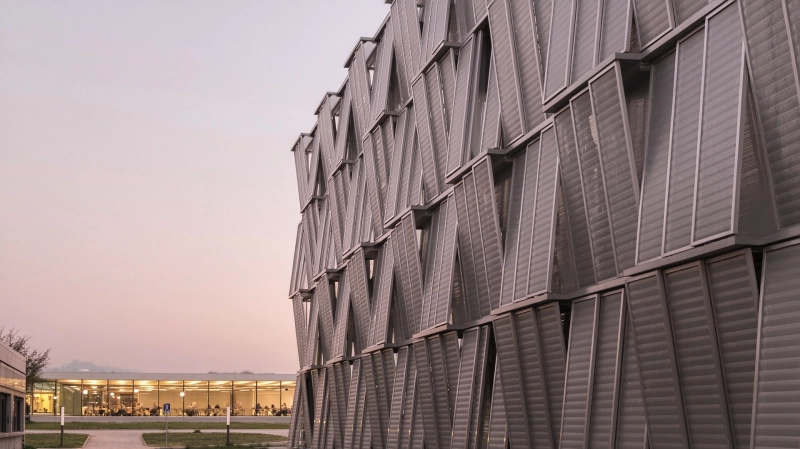
Desert conditions attack the complete facade assembly. Material selection must account for several environmental stresses acting together.
Desert conditions attack the whole facade assembly at the same time. Strong UV radiation breaks down coatings and pigments. Big day-night temperature changes make panels, sealants, and connections expand and shrink. Wind-blown sand grinds away exposed surfaces. Very low humidity dries out sealants and insulation. A material that passes one test can still fail the system when the other loads act together.
UV stability is what separates surface-coated products from through-colored ones. Surface coatings fade because UV radiation breaks down the pigment on top. Through-colored fiber cement panels carry mineral pigments through the full panel thickness, so fading, warping, and moisture damage stay limited across desert and coastal climates. Desert regions see over 300 days of direct sunlight, and similar southwestern installations show very little color change after long high UV exposure. Accelerated testing supports the same conclusion: exterior HPL cladding passes 3000-hour Xenon arc testing, which simulates long-term outdoor exposure and confirms resistance to fading and degradation. A 50-micron PMMA UV protection film shields the decorative pigments underneath and improves long-term color stability.
Thermal cycling adds mechanical stress. Panels, joints, and fixings expand and contract with each day-night swing.
Sand abrasion then wears down coatings, sealant surfaces, and exposed edges. Buyers should check coating warranties and abrasion test data, not just color charts.
Low humidity reduces some moisture risks, yet condensation can still form at thermal bridges and cold joints in conditioned buildings. Four thermal terms explain why. Thermal conductivity (λ value) measures how easily heat passes through one meter of a material at a one Kelvin temperature difference; a lower λ means better insulation, and common insulating materials sit around 0.03 to 0.04 W/mK. Thermal resistance (R value) is layer thickness divided by λ; a higher R means better resistance. Thermal transmittance (the K or U value) is the heat flow through one square meter of the complete assembly per degree of temperature difference; a lower U means less heat loss, and modern wall envelopes often reach 0.15 to 0.25 W/m²K.
Thermal bridging is the extra heat flow that skips around insulation through slabs, mullions, or fixings. The dew point is the temperature at which air reaches saturation and water condenses. Condensation risk rises where a cold joint or bridge drops a surface below that dew point. Buyers should ask for λ, K, and R values, insulation core type and thickness, thermal break design, and dew point analysis for each junction.
Six criteria help buyers compare materials, manufacturers, and complete facade assemblies under desert conditions.
Six criteria guide the evaluation, and each one applies to the whole assembly rather than to a single panel. UV and color retention come first, because desert sun attacks pigments and coatings every day. Thermal cycling resistance follows, since daily expansion and contraction stress joints and fixings. Sand abrasion resistance covers exposed surfaces and edges. Moisture and condensation behavior matters at cold joints and thermal bridges. Fire and building code compliance decides whether a system can enter the project at all. Cost closes the list, and it should reflect installed performance, not the panel price alone.
Color retention and resistance to coating degradation.
Movement tolerance across panels, joints, and fixings.
Resistance at exposed surfaces, edges, and finishes.
Condensation behavior and thermal bridge management.
Fire ratings, test reports, and regional approvals.
Panels, insulation, fixings, labor, and maintenance.
UV testing itself follows defined methods. Colorimeters and spectrophotometers compare samples before and after exposure, and spectrophotometers read reflectance across roughly 400 to 700 nm to quantify change in Lab* or Yxy coordinates. ASTM D4329 sets the chamber procedure with fluorescent UV lamps under controlled temperature and humidity. One question separates durable finishes from fragile ones: does the color sit inside the material or on top of it? Inorganic mineral pigments fused into ceramic or stone resist UV because they contain no organic compounds for radiation to break down.
Buyers should ask for fire certifications, coating warranties, thermal test reports, and references from hot-climate projects. Code compliance varies by market, so the same panel may carry different approvals in different regions. Cost comparisons should include fixings, sealants, insulation, and installation labor.
Three symbols appear in every specification, and mixing them up breaks the calculation. Thermal conductivity (λ) describes heat flow through a homogeneous material. Thermal resistance (R) describes a layer, and thermal transmittance (U or K) describes the complete assembly. Insulation cores differ in performance:
| Core type | R-value per inch | Notes |
|---|---|---|
| EPS | R-3.8 to R-4.2 | More vapor permeable, helps assemblies dry |
| XPS | R-5 | Moisture resistant, higher density |
| Polyurethane foam | High insulating capacity | Expands to fill cavities and seal gaps |
| Mineral core | Noncombustible | Fire resistance plus thermal and acoustic control |
Buyers should also confirm insulation thickness, thermal break design, and infrared thermography reports. A numerical model counts as validated when the relative difference between simulated and measured temperatures stays under 10 percent. Teams comparing the best facade material manufacturers for desert work should treat that threshold as a documentation test, not a marketing claim.
Dense stone and ventilated rainscreen assemblies offer thermal mass, natural color stability, and long-term surface durability.
Stone gets attention in hot-climate reviews for one main reason: mass. Dense stone panels take in heat slowly and let it go slowly. So the facade smooths out the day-night temperature swing instead of passing it straight through. Stone also stands up to heat and UV without a coating, because the color runs through the material. A ventilated rainscreen assembly adds an air cavity behind the panels. That cavity lets heat escape before it reaches the insulation. The result is a wall with strong thermal performance and low risk of surface damage.
Stone works well for low-rise and mid-rise buildings, where the structural frame can carry the load without extra design work. Ventilated facades with mechanical fixings give the best mix of drainage, ventilation, and serviceability. Taller buildings ask more of the structure, and engineers must check the dead load and the fixing capacity early in design.
Stone has a noncombustible rating in most markets, which helps with fire code compliance. Buyers should still confirm the specific test report for the chosen stone type and thickness, because approvals differ by region and by assembly. Anchors, brackets, and the cavity detail also fall under code review. Those components decide whether the system passes as a whole.
Cost sits at the premium end among facade options. The panel price is only part of the story. Heavy stone raises structural steel, lifting, and installation labor costs. The project schedule also stretches because each panel needs careful setting. Teams should compare installed cost, not material cost. Stone fits landmark and thermal-critical projects where durability and appearance justify the investment. Cost-critical mid-rise work often favors lighter systems.
Fired mineral bodies offer stable color and hard surfaces, while ventilated cavities help reduce heat transfer.
Ceramic and terracotta panels keep their color because the pigment is inside the fired body, not on a coating. UV radiation has no organic layer to break down, so the surface keeps its tone through years of direct sun. The firing process also gives the panel a hard, dense skin that resists sand abrasion at exposed edges and faces. These two properties make the category a natural fit for hot, dry climates.
Terracotta adds a ventilated rainscreen detail that helps in desert heat. The air cavity behind each panel lets hot air rise and escape before it reaches the insulation. This back ventilation lowers the heat load on the wall assembly and reduces condensation risk at cold joints. Ceramic panels suit low-rise and mid-rise envelopes, and they also work on retrofit projects where a light, thin cladding layer helps.
Ceramic and terracotta carry a noncombustible rating in most markets, which supports fire code compliance for exterior walls. Buyers should confirm the test report for the specific panel and fixing system, because approvals differ by region and by assembly. Installation relies on mechanical rails, clips, or a bonded carrier system. The chosen system decides drainage, ventilation, and service access, so it deserves review alongside the panel itself.
Cost sits in the mid-to-premium range. The panel price is moderate, yet the substructure, brackets, and careful setting add labor. Terracotta also needs breakage allowance during transport and installation. Teams should compare installed cost and check references from hot-climate projects before committing.
Mineral-based panels offer UV stability and abrasion resistance, with moisture detailing remaining an important design consideration.
Fiber cement boards and high-performance concrete (HPC) panels work well in hot climates because they are made of minerals. Cement, cellulose fiber, and silica form a dense, non-organic body. UV radiation has no organic coating to break down, so the panel color lasts through years of direct sun. The same dense surface resists sand abrasion on exposed faces and edges. HPC panels go further with a tightly packed structure that limits water absorption and slows surface staining.
Moisture behavior separates careful specifications from risky ones. Fiber cement takes in some water at cut edges and unsealed joints. Desert air dries those edges fast, yet a conditioned building can still pull moisture inward at cold joints. Buyers should specify sealed edges, drained cavities, and a ventilated rainscreen that lets the assembly dry. HPC panels handle moisture well because their low porosity limits uptake. Both categories suit low-rise and mid-rise envelopes, and thin fiber cement sheets work well on retrofit projects where added dead load matters.
Both materials carry a noncombustible rating in most markets, which supports fire code compliance for exterior walls. Buyers should confirm the test report for the specific panel, thickness, and fixing system, because approvals differ by region and by assembly. Installation relies on mechanical rails, clips, or a drained carrier system. That substructure decides drainage, ventilation, and service access, so it deserves review alongside the panel.
Cost sits in the mid range. Panel prices stay moderate, and the mineral feedstock keeps supply stable. Labor and substructure still drive the installed figure, and fiber cement needs a breakage allowance during transport. Teams should compare installed cost and request references from hot-climate projects before committing.
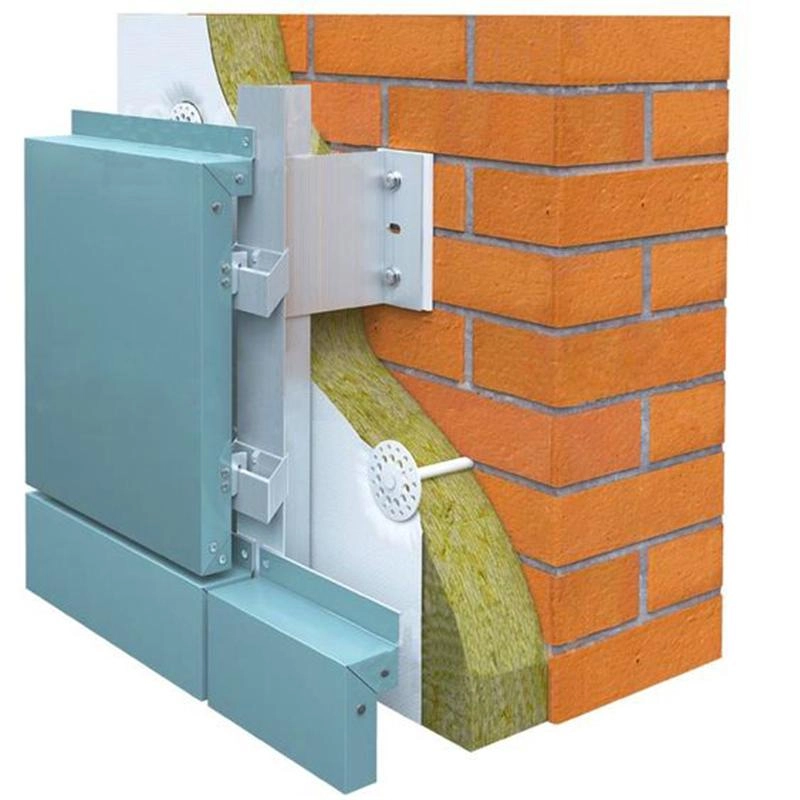
Metal facade systems combine a lightweight skin, protective coating, and core. Each component affects the final performance.
Metal systems cover a wide family: solid aluminum sheet, aluminum-magnesium-manganese alloys, and aluminum composite panels (ACP). Each one pairs a light metal skin with a coating and a core. That layered build explains both the desert strengths and the failure points. The metal carries load and sheds heat fast. The coating decides how long the color lasts. The core decides fire behavior and thermal performance.
PVDF (polyvinylidene fluoride) coating is the standard choice for desert metal facades. The resin resists UV breakdown far better than polyester coatings. Pigments stay locked in the film, so color retention holds through years of direct sun. A PVDF finish also shrugs off sand abrasion at exposed faces and edges. Buyers should check the coating thickness and the warranty terms, because a thin film fails sooner than a thick one.
Aluminum-magnesium-manganese alloys add strength without much weight. The alloy resists corrosion and holds its shape through thermal cycling. Solid aluminum sheet performs well too, though it needs a stiffening detail on large spans.
ACP takes a different path. Two aluminum skins bond to a core, and the sandwich delivers flatness and rigidity at low weight. The core choice drives performance. A polyethylene core suits signage and shopfronts. A mineral core (A2 or B1) brings fire safety to the facade. Insulation behind the panel matters just as much. Polyurethane foam expands to fill cavities and seal gaps. EPS offers moderate R-value per inch and lets assemblies dry. XPS brings moisture resistance and higher density. Thermal break design then separates the metal substructure from the interior, so heat does not bypass the insulation through brackets and rails.
WILLSTRONG serves as one engineering example in this category. The company started in 1995 and now holds a place among the TOP 100 China facade solutions, with 30+ certifications and projects in 80+ countries. Its reference list includes Charles de Gaulle International Airport and the USTP Gymnasium. The ACP line uses a mineral core and reaches EN 13501-1 Class A2-s1,d0 or B-s1,d0, depending on the core. Panel thickness runs from 2.5 mm to 6 mm. Those facts describe a tested product range, not a claim of universal fit.
Fire compliance drives most metal facade decisions in the Gulf region. UAE projects predominantly follow the European classification system, and A2-s1,d0 stands as the preferred benchmark. Metal cladding systems with non-combustible cores meet EN 13501-1 when the detailing is correct. Facades in the UAE and Qatar also face NFPA 285, and exterior wall systems there fall under BS 8414. The table below groups the common standards for metal systems.
| Building element | Standard | Scope |
|---|---|---|
| Facade assembly | NFPA 285 | Full-scale wall assembly fire propagation |
| Exterior wall system | BS 8414 | Large-scale facade fire test |
| Product classification | EN 13501-1 | Reaction to fire, A2-s1,d0 benchmark in the UAE |
| Panel product | ASTM E84 | Surface burning characteristics |
| Panel product | BS 476 | Fire resistance and surface spread of flame |
Buyers should request the test report for the exact panel, core, and fixing system. A certificate for one core type does not cover another. Coating warranties deserve the same scrutiny, and hot-climate project references confirm real-world behavior.
Cost sits in the mid range for ACP and rises for solid aluminum and alloy sheet. Panel price is only one line. Substructure, thermal breaks, insulation, sealants, and installation labor drive the installed figure. Teams should compare installed cost and confirm that the specified core matches the fire strategy for the building height and use.
Inorganic clay composition, through-body pigments, and on-site workability make MCM another option for desert facade projects.
Modified clay material (MCM) begins as inorganic clay mineral, and a controlled process changes it into flexible sheets and panels. The pigment is inside the clay body, not on a surface film. So UV radiation has no organic coating to break down, and the color lasts through long sun exposure. The clay body also resists heat well, so panels keep their shape through daily thermal cycling. Sand abrasion meets a dense mineral surface at exposed faces and edges.
MCM has a Class A2 fire rating, which supports exterior wall compliance in most markets. Gulf region developers choose this category for towers, retail envelopes, and mid-rise work where a noncombustible skin matters. The material works with ventilated rainscreen assemblies, and it bends and cuts on site with standard tools. That flexibility helps on retrofit projects, where irregular openings and existing structures need custom fitting. Teams adding thermal mass during a remodel should place dense material where shade and ventilation reach it, not behind large unshaded windows.
Buyers should confirm the fire test report for the exact panel and fixing system, because approvals differ by region and by assembly. Installation uses mechanical rails or adhesive carriers, and the chosen substructure decides drainage, ventilation, and service access. Cold joints and thermal bridges still need a dew-point check. A calculation sheet should show predicted surface temperature at least 3 °C above the indoor dew point, and infrared thermography at a temperature difference of at least 10 °C should confirm the result.
Cost sits in the mid range. Panel prices stay moderate, and on-site workability cuts fabrication waste. Substructure, sealants, and labor still drive the installed figure. Teams should compare installed cost and ask for references from hot-climate projects before committing.
A side-by-side review of five facade material categories, including thermal performance, UV resistance, fire compliance, cost, and suitable applications.
The table below compares the five material categories using the same columns. Thermal figures describe the whole assembly, not just the panel. Insulation cores have a conductivity of about 0.03 to 0.04 W/mK, and modern wall envelopes often reach a U value of 0.15 to 0.25 W/m²K. Stone and MCM add mass, which shifts heat flow over time instead of blocking it outright. Metal systems depend on the core and the thermal break for their numbers.
| Material category | Typical λ / K / R performance | UV and sand resistance | Fire rating | Code compliance | Cost range | Best-fit project type |
|---|---|---|---|---|---|---|
| Stone cladding | High mass; cavity ventilation lowers heat load; R depends on insulation behind | No coating to fade; dense surface resists abrasion | Noncombustible in most markets | Regional test reports; anchor and cavity review | Premium | Landmark and thermal-critical low- to mid-rise |
| Ceramic and terracotta | Ventilated cavity cuts heat load; R set by insulation layer | Through-body color; hard fired skin | Noncombustible in most markets | Panel and fixing system reports | Mid to premium | Mid-rise new-build and light retrofit |
| Fiber cement and HPC | Mineral body; R set by insulation and cavity | Mineral pigments; dense, low-porosity surface | Noncombustible in most markets | Panel, thickness, and fixing reports | Mid | Mid-rise and retrofit with load limits |
| Metal cladding and ACP | Core-dependent; EPS R-3.8 to R-4.2 per inch, XPS R-5 per inch, foam fills cavities | PVDF coating resists UV and abrasion | A2-s1,d0 or B-s1,d0 mineral core | EN 13501-1, NFPA 285, BS 8414, ASTM E84, BS 476 | Mid; higher for solid alloy sheet | High-rise, complex geometry, signage |
| MCM cladding | Clay body resists heat; R set by insulation and cavity | Pigment inside clay; dense surface | Class A2 | Regional panel and fixing reports | Mid | Towers, retail, irregular retrofit |
Stone works best on projects where mass and long service life justify the structural cost. Ceramic and terracotta fit mid-rise envelopes that need stable color and a ventilated cavity. Fiber cement and HPC work well on retrofits where added dead load stays limited. Metal and ACP systems cover tall buildings, complex shapes, and tight schedules, and the core choice should match the fire strategy. MCM fits Gulf-region towers and irregular retrofits that reward on-site workability.
Thermally, each option reaches similar U values once insulation and thermal breaks are correct. The difference lies in how each system handles heat over the daily cycle. Teams shortlisting the best facade material manufacturers should compare installed assemblies, not panel datasheets. A wall that meets the target U value with a verified dew-point margin fits any of these categories.
Technical documents and system verification help confirm whether a supplier can support the complete facade assembly.
A supplier's paperwork decides whether a facade system can enter the project. Buyers should ask for thermal test reports that show λ, K, and R values for the whole assembly, not just the panel. Fire certifications must match the exact panel, core, and fixing system, because a certificate for one core type does not cover another. Coating warranties should state film thickness and color-retention terms. Project references from hot climates show how the system holds up under real UV and thermal cycling loads.
The document set also includes a dew point analysis for every junction and an infrared thermography report from a finished installation. Teams comparing the best facade material manufacturers for desert work should treat these files as pass-or-fail items. A missing report leaves a thermal bridge unverified.
System-level checks start with thermal break design. Brackets and rails must separate the metal substructure from the interior, so heat does not skip around the insulation. Buyers should confirm the insulation core type and thickness against the target U value. EPS, XPS, polyurethane foam, and mineral cores each have different R-values per inch, and the specified thickness must match the calculation.
Dew point analysis then shows whether any cold joint drops below saturation. A calculation sheet should place predicted surface temperature at least 3 °C above the indoor dew point. Infrared thermography at a temperature difference of at least 10 °C should confirm the result on site. WILLSTRONG supplies these engineering capabilities alongside its mineral-core ACP line, which reaches EN 13501-1 Class A2-s1,d0 and ships with the matching test documentation.
Stone works well for important buildings that need steady temperatures, because its weight slows the daily heat swing. Ceramic, terracotta, and MCM keep their color all the way through the panel. Fiber cement and HPC give a mineral surface to retrofits that can't handle much extra weight. Metal ACP pairs PVDF coating with a mineral core for tall buildings with complex shapes.
Match the material to the project. Landmarks are worth stone. New mid-rise buildings fit ceramic or fiber cement. Retrofits benefit from how easily MCM works. Projects with tight budgets do better with ACP. Teams comparing the best facade material manufacturers should look at installed assemblies, checked dew-point margins, and test reports that match.
Practical answers to common questions about facade materials, thermal values, condensation control, and fire standards in desert climates.
No single material is best everywhere. Stone's mass slows the daily heat swing. Ceramic, terracotta, and MCM carry pigment inside the body, so UV has nothing to break down. Metal systems depend on PVDF coating and a mineral core. Fiber cement and HPC offer a mineral surface at moderate weight. Each category fits a different project type.
Buyers should request λ, K, and R values for the complete assembly, not the panel alone. Insulation cores sit near 0.03 to 0.04 W/mK, and modern envelopes often reach a U value of 0.15 to 0.25 W/m²K. The supplier should also confirm core type, thickness, and thermal break design.
A dew-point analysis should show predicted surface temperature at least 3 °C above the indoor dew point. Infrared thermography at a temperature difference of at least 10 °C then confirms the result on the finished wall. Both documents belong in the submittal package.
Gulf projects mainly follow EN 13501-1, and A2-s1,d0 serves as the preferred benchmark. Tall assemblies also face NFPA 285 and BS 8414. Panel products commonly carry ASTM E84 and BS 476 reports. Buyers must match each certificate to the exact panel, core, and fixing system.
A mineral core brings noncombustible fire behavior, and a PVDF coating resists UV fading and sand abrasion. WILLSTRONG supplies its ACP line with EN 13501-1 Class A2-s1,d0 or B-s1,d0 ratings and thicknesses from 2.5 mm to 6 mm, backed by matching test documentation.
Desert facade performance depends on more than selecting a durable panel. UV stability, thermal cycling, sand abrasion, moisture control, fire compliance, and installed cost must be considered together.
The right material is the one that meets the project's environmental demands, structural requirements, and technical documentation standards as part of a complete facade assembly.