 Arabic
 Spain
 Germany
 France
 Japan
 Portuguese
 Russian
 Chinese
 Thailand
 Vietnam
 Indonesia
 India


A facade that performs well at handover may tell a different story five or ten years later. Sealant exposed to sunlight, rain, humidity, and repeated temperature changes gradually accumulates environmental and mechanical stress.
When cracking, discoloration, or edge separation eventually appears, the visible defect is only the starting point of an investigation. The real challenge is to distinguish normal surface aging from a loss of elasticity, a weakened bond, or a joint that was never suited to its service conditions. Understanding that difference is essential to choosing a repair that addresses the cause rather than simply covering the symptom.
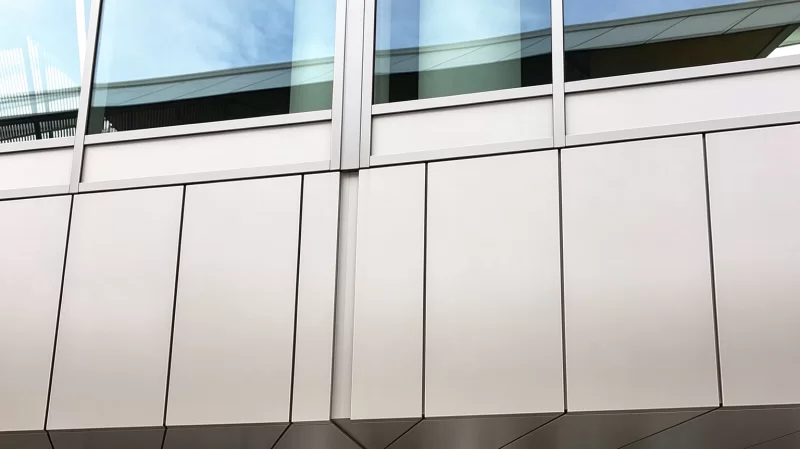
Why Do Facade Joints Fail Years After Installation?
Visible cracks and leaks are evidence of a problem, but they do not necessarily reveal its original cause.
A facade joint can remain watertight for years before the first signs of failure appear. A small crack develops along the sealant edge. A section begins to separate from the aluminum panel. Water stains emerge around an interior opening after prolonged rain, even though the exterior joint still looks mostly intact.
These symptoms are often treated as evidence that the sealant has reached the end of its service life. However, the visible damage does not always reveal the original cause.
Environmental Exposure
Facade sealants operate in a changing environment. Ultraviolet radiation, temperature fluctuations, moisture, wind-driven rain, and repeated joint movement gradually challenge the material and its bond with adjacent substrates.
Joint and Installation Conditions
At the same time, the performance of the joint depends on its original geometry, surface preparation, installation conditions, and the movement allowed by the surrounding facade system.
Replacing the sealant is not always enough.
Replacing the sealant without understanding these factors can lead to repeated failures. The new material may perform no better if the joint continues to experience excessive movement, poor adhesion, or an unsuitable configuration.
The engineering question is therefore not simply how long a sealant should last. It is how to determine whether a failure results from material aging, interface problems, joint design, installation quality, or a combination of these factors.
What Changes as Sealant Ages?
Environmental exposure, repeated deformation, and changes in elastic recovery can affect sealant behavior over time.
Ultraviolet Radiation and Environmental Exposure
Exterior sealants are exposed to sunlight, moisture, and atmospheric conditions throughout their service life. Depending on the sealant chemistry and formulation, prolonged ultraviolet exposure and environmental aging can change the material's surface appearance and mechanical properties.
Possible signs include discoloration, surface hardening, cracking, or changes in flexibility. However, appearance alone is not a reliable measure of remaining service life. Some visual changes may have limited effects on functional performance, while less obvious deterioration can affect movement accommodation or adhesion.
Assess Functional Performance
The relevant question is whether the sealant can still perform its intended function under the joint's actual exposure conditions. Product data, documented weathering tests, inspection findings, and the history of the installed joint should be considered together.
Temperature Cycling and Repeated Movement
Facade joints expand and contract as temperatures change. Aluminum panels, supporting frames, glass, and other adjacent materials may also respond differently to the same temperature variation because their thermal expansion characteristics differ.
Over many seasons, the sealant experiences repeated extension and compression. Wind pressure and suction can add further movement as panels and supporting components deflect.
A sealant that accommodates these movements when newly installed may respond differently after years of exposure. Its elasticity, strength, or ability to recover its original shape may change, depending on the material and environmental conditions.
One inspection cannot capture every service condition.
This is why a single inspection cannot fully explain long-term performance. A joint that appears undamaged on a mild day may be subjected to greater deformation during a hot afternoon or a period of strong winds. The design must account for the expected range of movement, while maintenance inspections should look for evidence that the joint is no longer accommodating it effectively.
Elastic Recovery: More Than Returning to Shape
Elastic recovery describes a material's ability to return toward its original shape after deformation. For facade sealants, recovery behavior matters because joints repeatedly change width during service.
If recovery decreases, the sealant may retain some deformation after a movement cycle. Depending on the material, test method, joint geometry, and exposure history, this can indicate a change in its mechanical behavior.
However, elastic recovery should not be interpreted in isolation. A favorable laboratory result does not guarantee that an installed joint will remain watertight. Actual performance also depends on adhesion to the substrates, sealant depth, joint width, surface preparation, and the magnitude of movement.
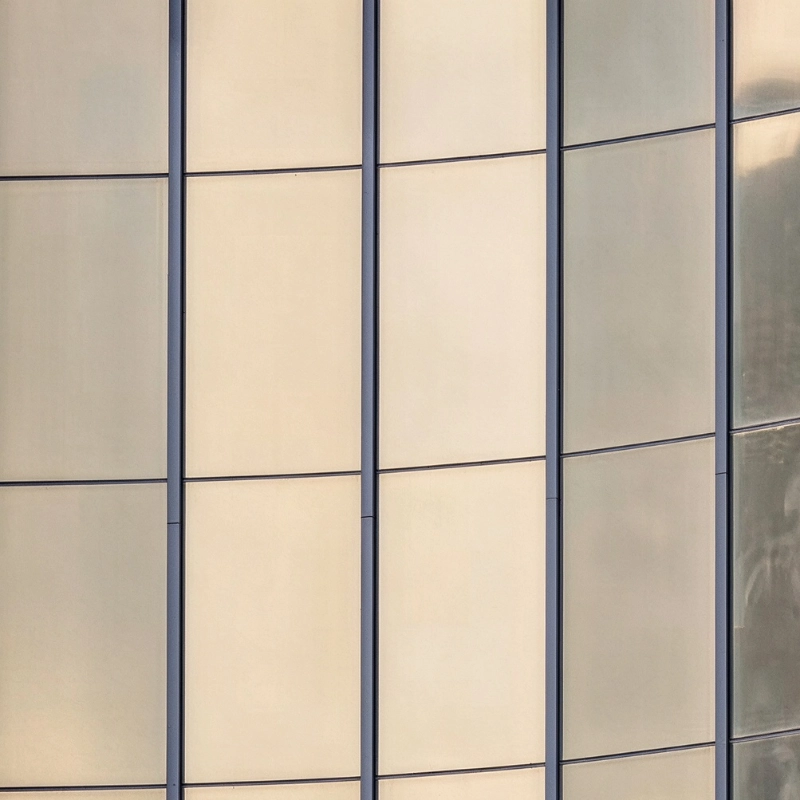
Adhesion Failure vs. Cohesive Failure: Identify Where the Joint Breaks
The location and pattern of damage help distinguish an interface problem from a tear within the sealant itself.
When a facade sealant joint deteriorates, the location of the damage provides important diagnostic evidence.
Adhesion Failure
Adhesion failure occurs when the sealant separates from the substrate, such as the edge of an aluminum panel or another adjoining material. Possible contributing factors include contamination, inadequate surface preparation, unsuitable primer selection, incompatible coatings, moisture during installation, or movement beyond the joint's intended capability.
In these cases, the sealant material may remain relatively intact while the interface fails. Replacing it with a different product will not necessarily solve the problem if the same substrate preparation or joint movement issues remain.
Cohesive Failure
Cohesive failure occurs when the sealant tears within its own body while remaining bonded to the substrate on either side of the damaged area. This may be associated with excessive deformation, material deterioration, unsuitable joint geometry, or other stresses acting on the sealant.
Neither failure mode automatically proves that the sealant itself was defective. The cause must be assessed against the installation details, material specifications, movement demands, and environmental exposure.
Record where separation occurs, not just where it is visible.
Inspection should therefore document exactly where separation occurs, whether the damage is continuous or localized, and whether it appears near corners, panel intersections, or other areas where geometry and movement may differ. Photographs and location records help establish patterns that are difficult to recognize from an isolated repair.
Field Inspection and Weathering Tests: From Symptoms to Evidence
A reliable diagnosis combines on-site observations, installation records, and appropriate technical testing.
A useful diagnosis combines on-site observations with appropriate technical testing.
Start by mapping visible defects across the facade. Record cracking, edge separation, surface changes, water staining, and any differences between orientations or building elevations. Areas receiving stronger sunlight or more severe wind-driven rain may show different exposure patterns, but location alone does not establish causation.
Next, review the original joint design and installation records where available. Check the specified sealant, joint width and depth, backing material, primer requirements, substrate finish, and installation conditions. Previous repairs are also relevant: repeated failure in the same location may indicate an unresolved system issue rather than a simple material aging problem.
Where the Cause Remains Uncertain, Testing Can Provide Further Evidence
l Adhesion testing: Assess the bond between the sealant and the actual substrate, following the applicable project requirements and test procedures.
l Sealant condition assessment: Examine whether the material has hardened, cracked, torn, or changed in flexibility.
l Weathering tests: Evaluate resistance to defined environmental exposures, such as ultraviolet radiation, heat, and moisture, using suitable standardized methods.
l Movement and joint assessment: Compare the installed geometry and observed damage with the expected movement range and original design assumptions.
Laboratory weathering tests can help compare material performance under specified conditions, but they do not translate directly into an exact number of years in service. Field exposure varies, and accelerated testing cannot reproduce every combination of sunlight, moisture, temperature cycling, and structural movement.
The strongest diagnosis combines test results with the condition of the installed joint. If a sealant has deteriorated, the investigation should also determine whether the joint was correctly designed and installed in the first place.
Service Life Belongs to the Joint System
Sealant durability depends on the interaction between material properties, interfaces, geometry, installation, and exposure.
A facade sealant's service life is not determined by the material alone. It emerges from the interaction between the sealant, the substrates, the joint geometry, installation quality, and environmental exposure.
This distinction changes how maintenance should be planned. Instead of waiting for visible leakage and then replacing the affected sealant, building teams can establish inspection records, monitor recurring defect locations, and investigate early signs of separation or cracking.
Three questions should guide the decision.
A maintenance decision should consider three questions: Is the material showing signs of aging? Is the bond with the substrate still reliable? And can the joint still accommodate the movement expected from the facade system?
Material or Adhesion Problems
If the material has deteriorated, replacement may be necessary. If adhesion has failed because of contamination or incompatible surfaces, substrate preparation and material compatibility must be addressed.
Movement or Design Problems
If movement exceeds the original design assumptions, simply applying new sealant may reproduce the same failure.
Design for Exposure and Make Maintenance Verifiable
Coordinated facade detailing and traceable installation records help establish the conditions in which sealant joints must perform.
For aluminum composite panels, fire-resistant composite panels, and aluminum honeycomb facade systems, sealant detailing should be coordinated with panel construction, supporting frames, fixings, drainage paths, and expected movement. The joint must accommodate the behavior of the facade assembly while maintaining the intended weather barrier.
Material selection should account for the actual substrate finishes and environmental conditions. Installation procedures should define surface preparation, primer use where required, backing materials, joint dimensions, and acceptable application conditions. Quality records should make these requirements verifiable rather than leaving them to visual judgment alone.
Panel Interfaces and Supporting Details
Established in 1995, WILLSTRONG® works with facade systems including aluminum composite panels, fire-resistant composites, and aluminum honeycomb systems. For projects using these materials, coordinating panel interfaces and supporting details helps establish the conditions in which sealant joints must perform.
WILLSTRONG®'s project portfolio includes applications at international landmarks such as Charles de Gaulle International Airport . Such project references provide context for evaluating facade applications, but sealant durability on any specific project should be verified through relevant technical documentation, inspection records, and project-specific evidence rather than inferred from the building name alone.
When evaluating a facade supplier or maintenance contractor, ask for clear panel and joint details, substrate compatibility guidance, installation inspection procedures, and traceable records of any corrective work. These documents help connect the original design intent with the condition of the facade after years of exposure.
Diagnose the Cause Before Replacing the Sealant
Long-term facade reliability begins with identifying the cause of deterioration rather than treating the visible defect alone.
Understand the failure before choosing the repair.
Facade sealant joints age under the combined effects of weather, movement, material behavior, and installation conditions. Cracks and leaks are visible symptoms, but the underlying cause may lie in the sealant, the bond, the joint geometry, or the wider facade system.
A reliable maintenance strategy looks beyond the damaged bead. It examines how the joint was designed, how it was installed, what conditions it has experienced, and where the failure actually occurred.
A durable facade is not one that never needs maintenance; it is one whose failures can be understood before they become recurring problems.