 Arabic
 Spain
 Germany
 France
 Japan
 Portuguese
 Russian
 Chinese
 Thailand
 Vietnam
 Indonesia
 India
News
The pioneer in facade solutions


A facade can look consistent when a building opens and still develop visible color differences years later. Understanding resin composition, pigments, coating thickness, curing conditions and environmental exposure helps project teams evaluate long-term color retention.
A facade can look consistent when a building opens and still develop visible color differences years later. Panels exposed to direct sunlight may fade faster than those under deep overhangs. South- and west-facing elevations may age differently from shaded walls, while adjacent panels can gradually lose their original color match.
For architects, facade consultants and building owners, this raises a practical question: if aluminum composite panels use PVDF coating, why can their appearance still change over time?
The answer is that long-term color retention depends on more than the coating name. Resin composition, pigment stability, coating thickness, application quality, curing conditions and the building's exposure environment all influence how a coated panel ages.
Understanding these factors helps project teams evaluate facade materials based on measurable performance rather than relying on a single specification.
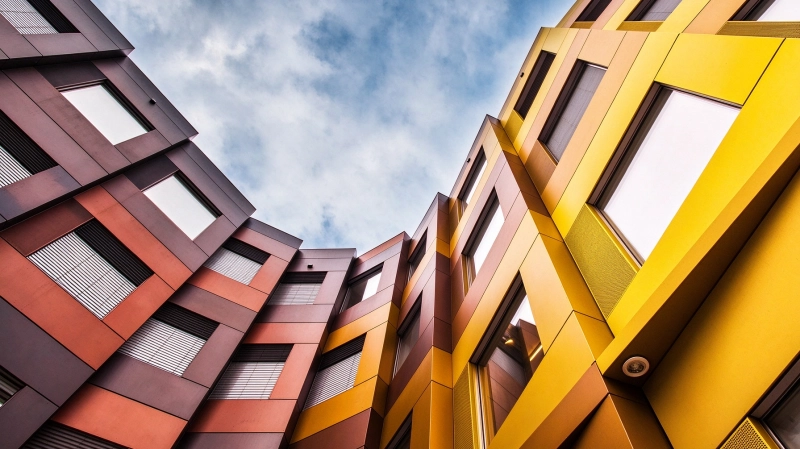
Color fading is influenced by environmental exposure, coating chemistry, pigment stability and building geometry. Understanding these variables helps explain why panels installed on the same building may age differently.
Color fading is not simply a cosmetic issue. On large commercial buildings, airports and public facilities, even a moderate difference between adjacent panels can become noticeable across an entire elevation.
The main driver is prolonged environmental exposure. Solar ultraviolet radiation can gradually degrade susceptible components in an organic coating. Heat accelerates certain chemical reactions, while moisture and airborne pollutants can contribute to surface deterioration.
Pigments also matter. Different pigments have different resistance to ultraviolet radiation, heat and chemical exposure. Two coatings with similar initial colors may therefore show different color changes after years outdoors.
Building geometry adds another variable. A panel facing strong afternoon sunlight experiences a different exposure history from one protected by an overhang. Ventilation, local climate, orientation and surrounding structures can all affect the conditions experienced by the coating.
This explains an important point: color retention is a system-level performance outcome, not a property guaranteed by the word PVDF alone.
Resin quality, coating construction, film thickness and pigment selection all influence the finished surface. Each factor should be evaluated against documented project requirements.
PVDF, or polyvinylidene fluoride, is widely used in architectural coatings because of its resistance to weathering and its ability to maintain surface appearance under demanding outdoor conditions.
However, specifying PVDF coating does not automatically make two products equivalent.
The first question is what resin system the coating actually uses. Fluorocarbon coatings can differ in binder composition, formulation and the proportion of PVDF in the resin system. The quality and compatibility of pigments, additives and other coating ingredients also affect the final performance.
For project teams, the relevant distinction is between a coating described as PVDF and a coating whose composition and performance can be verified against the project specification.
When comparing suppliers, request technical documentation identifying the coating system, the applicable performance standard and the basis used to state PVDF content. Where a specific resin percentage is required, confirm whether the figure refers to the binder resin rather than the entire coating formulation.
This avoids a common procurement mistake: comparing percentages that have been calculated on different bases.
Coating structure and curing processes also influence long-term performance.
A two-coat, one-bake system generally involves applying primer and topcoat before a combined curing stage. A three-coat, two-bake system commonly includes primer, an intermediate or color-related coating layer, and a topcoat, with curing stages defined by the coating manufacturer's process.
The additional layer and curing stage can support particular requirements for appearance, coating construction or durability. However, the number of coats alone does not establish which system will perform better.
Actual results depend on the complete coating formulation, the function of each layer, intercoat compatibility, application consistency and whether the specified curing conditions are achieved.
Curing is especially important. If the production line does not maintain the required metal temperature and curing time, the coating may not develop the intended properties. Oven air temperature alone is not necessarily a reliable indication of the temperature reached by the aluminum coil.
For this reason, procurement specifications should identify the required coating system and applicable performance criteria rather than treating “three-coat, two-bake” as an automatic guarantee of longer service life.
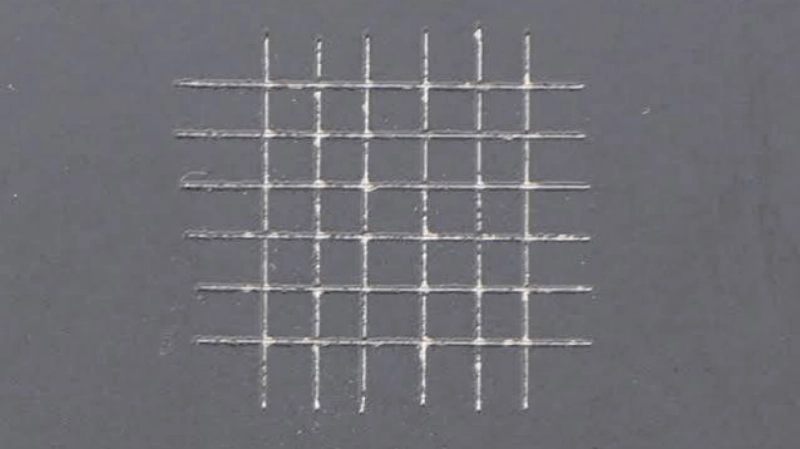
Coating thickness is another factor that deserves careful attention.
If the dry film is below the specified range, the coating may provide less protection than intended, and variations in coverage can become more significant. Excessive thickness, however, does not automatically improve durability. Depending on the coating system and process, it may introduce application or curing problems.
The correct target is therefore the thickness specified for the complete coating system, not the largest achievable number.
When evaluating aluminum composite panels, ask suppliers to provide the specified dry film thickness for the relevant coating layers and explain how compliance is monitored during production. Measurement methods and acceptance limits should be consistent with the applicable specification.
It is also important to distinguish the coating thickness from the overall panel thickness. A thicker composite panel does not necessarily have a more weather-resistant surface.
Resin is only part of the equation. Pigment selection can strongly influence how well a color withstands prolonged exposure.
Some pigments maintain their appearance under ultraviolet radiation more effectively than others. Metallic, pearlescent and other special-effect finishes may also respond differently to viewing angle, lighting and changes in surface condition.
This creates a practical challenge for architectural projects. A color selected from a small sample may look different when applied across thousands of square meters of facade.
For projects with strict color requirements, the team should confirm the actual coating system and pigment specification, approve representative samples, and define acceptable color variation. If different production batches are needed, batch consistency should be considered before installation.
A color match at delivery is useful, but it is not sufficient evidence of long-term color retention.
Resin formulation, coating layers, film thickness, curing conditions and pigment selection should be reviewed together. A single parameter cannot establish long-term performance on its own.
A new panel can look excellent without demonstrating how it will perform after years outdoors. Initial appearance, coating quality and weathering performance require different forms of evidence.
A newly manufactured panel can have excellent color consistency without necessarily demonstrating how it will perform after years of outdoor exposure.
This is why material evaluation should distinguish three separate questions:
Does the panel match the approved color, gloss and finish?
Does the coating comply with the specified composition, thickness, application and curing requirements?
Does the coating retain acceptable appearance and properties under relevant exposure conditions?
Each question requires different evidence.
Accelerated weathering tests and natural outdoor exposure data can help assess coating durability. However, test conditions, exposure duration, evaluation methods and acceptance criteria must be considered when comparing results. Accelerated test hours should not be converted directly into a guaranteed number of outdoor service years without validated correlation data.
Similarly, color difference and gloss retention are related but distinct measures. A coating may experience a measurable color shift while retaining much of its gloss, or its surface appearance may change in other ways without an equivalent change in color.
The useful engineering question is therefore not simply whether a coating passes a test. It is whether the test method and acceptance criteria reflect the project's appearance requirements, environmental exposure and expected maintenance strategy.
A durable facade specification defines acceptable change over time, not just an attractive surface on day one.
A structured selection process helps project teams compare suppliers objectively and confirm whether the proposed aluminum composite panel is suitable for its intended service environment.
Before approving an aluminum composite panel for a long-term facade application, project teams can follow a structured evaluation process.
First, define the exposure conditions. Consider building orientation, local solar radiation, temperature variation, moisture, airborne pollutants and the consequences of visible color differences across large elevations.
Second, verify the coating system. Review the fluorocarbon resin formulation, relevant PVDF content requirements, pigment system and specified number of coats and curing stages.
Third, confirm production controls. Check how coating thickness, curing conditions, surface preparation and batch consistency are monitored. Request documentation appropriate to the project's technical requirements.
Fourth, review weathering evidence. Compare test reports using the same or technically comparable methods. Confirm the tested coating system, specimen details, exposure conditions and evaluation criteria instead of relying on a headline durability claim.
Finally, establish acceptance criteria. Specify initial color tolerances, gloss requirements where relevant, and the applicable weathering performance requirements. Approve representative samples before production and retain reference samples when appropriate.
These steps make supplier evaluation more objective. They also help prevent a situation in which the cheapest or most visually appealing sample is selected without sufficient evidence of long-term suitability.
Coating performance should be considered within the complete material specification, with project requirements and technical evidence reviewed before approval.
For facade projects, the coating should be evaluated as part of the material specification rather than as an isolated marketing feature.
WILLSTRONG®, established in 1995, works with aluminum composite panels, fire-resistant composite materials and aluminum honeycomb systems. Its facade portfolio provides a starting point for project teams to discuss surface finishes, material requirements and the technical information needed for specification review.
For projects considering aluminum composite panels, the appropriate next step is to match the proposed coating system with the building's exposure conditions and documented performance requirements. Resin composition, coating construction, thickness, curing controls and weathering evidence should be reviewed against the actual project specification.
WILLSTRONG®'s project experience includes Charles de Gaulle International Airport, demonstrating the company's involvement in demanding architectural environments.
The specific material and coating requirements of any new project should still be verified independently rather than inferred from a previous project's name or application.
The objective is straightforward: select a panel system whose documented characteristics align with the building's design intent, environmental conditions and long-term maintenance expectations.
Long-term facade color retention depends on the complete coating system, the quality of production controls and the environmental conditions encountered during service.
PVDF coating can be an effective choice for aluminum composite panel facades, but long-term color retention is not determined by resin type alone.
Fluorocarbon resin composition, pigment stability, coating thickness, application consistency and curing conditions all contribute to the result. Building orientation and environmental exposure then influence how that coating performs in service.
For architects, contractors and procurement teams, the most reliable approach is to verify the complete coating specification, review relevant weathering evidence and establish clear acceptance criteria before production.
Good facade engineering does not assume that color will never change. It determines how that change will be controlled, evaluated and managed over the life of the building.